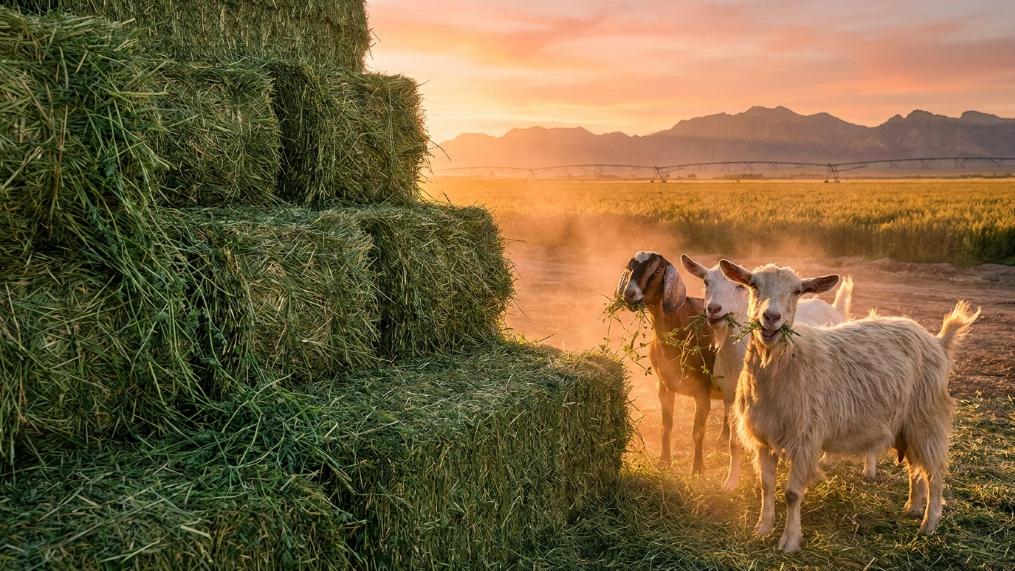
If you raise goats in California, alfalfa hay will likely become the backbone of your feeding program. But not all alfalfa is equal—and feeding it the wrong way can cost you milk production, animal health, and money. This guide breaks down exactly how to buy, evaluate, and feed alfalfa hay for goats on California farms, using real-world ranch experience and practical numbers you can apply immediately.
Why California Goat Owners Choose Alfalfa Hay
Alfalfa (Medicago sativa) is a legume hay, not a grass. That distinction matters because it delivers significantly more nutrition per pound than most other hays.
- Protein: Typically 16–20% crude protein (ideal for milk and growth)
- Calcium: High levels support lactation and bone development
- Digestibility: Soft leaves are highly digestible and palatable
California produces some of the best alfalfa hay in the world. Regions like the Imperial Valley and San Joaquin Valley (Fresno, Tulare, Kings, Kern) offer long growing seasons, intense sunlight, and controlled irrigation—perfect conditions for dense, leafy hay.
That’s why when you buy alfalfa hay in California for goats, you’re often getting higher consistency and better nutrient density than in many other states.
Is Alfalfa Hay Good for Goats? (The Honest Answer)
Yes—alfalfa hay is excellent for goats, but only when matched to the right animal and fed correctly.
It shines in high-demand situations like milk production and growth. But overfeeding or feeding it to the wrong goats can cause serious health issues.
| Goat Type | Alfalfa Recommended? | Notes |
|---|---|---|
| Dairy does (milking) | ✅ Yes, up to 50–100% | Boosts milk yield and body condition |
| Pregnant/lactating does | ✅ Yes | Supports fetal and kid development |
| Growing kids | ✅ Yes | High protein supports growth |
| Dry does | ⚠️ Mix with grass hay | Avoid excess calories |
| Wethers | ❌ Limit to <10% | High risk of urinary calculi |
| Bucks | ⚠️ Use sparingly | Watch calcium-to-phosphorus ratio |
Think of alfalfa like premium fuel—it’s powerful, but not every engine needs it full-time.
How Much Alfalfa Should You Feed a Goat Per Day?
The general rule: goats eat 2–4% of their body weight in dry matter daily. Alfalfa can make up part or all of that depending on the goat.
- Lactating doe (150 lbs): 4–5 lbs/day total feed; 2–4 lbs can be alfalfa
- Pregnant doe (late gestation): 3–4 lbs/day; ~50% alfalfa
- Growing kid: Free-choice alfalfa + starter grain
- Dry doe: 2–3 lbs/day; mostly grass hay, small alfalfa portion
- Bucks/wethers: Primarily grass hay; minimal alfalfa
Simple Feeding Schedule
- Morning: 50% of daily hay
- Evening: Remaining 50%
- Optional: Small midday feeding in hot Central Valley summers
In hot California climates, goats often eat more during cooler hours—adjust accordingly.
Can Too Much Alfalfa Make a Goat Sick?
Yes—overfeeding alfalfa can cause real health problems.
Common issues include:
- Bloat: Rapid fermentation causes gas buildup
- Enterotoxemia: Overnutrition triggers toxin-producing bacteria
- Urinary calculi: Mineral imbalance, especially in males
- Obesity: Excess calories in low-activity goats
Warning Signs
- Swollen left abdomen
- Grinding teeth or restlessness
- Reduced appetite
- Difficulty urinating (emergency)
What To Do If Bloat Occurs
- Remove feed immediately
- Encourage movement
- Administer anti-bloat treatment (simethicone)
- Call a vet if severe
Prevention Tips
- Introduce alfalfa gradually over 7–10 days
- Never feed moldy or dusty hay
- Balance with grass hay when needed
- Provide free-choice minerals
Alfalfa vs. Other Hays for Goats
| Hay Type | Protein % | Best For | Drawbacks |
|---|---|---|---|
| Alfalfa | 16–20% | Dairy does, growing kids | High calcium, higher cost |
| Orchard Grass | 8–12% | Wethers, dry does | Lower protein |
| Timothy | 7–11% | Maintenance feeding | Lower calcium |
| Bermuda | 8–10% | Southern California climates | Low protein |
| Mixed (Alfalfa + Orchard) | 12–15% | Most goats | Balanced but variable quality |
If you’re unsure, mixed hay is often the safest choice for small farms.
What to Look for When Buying Alfalfa Hay in California
Hay Grades
- Supreme: Leafy, soft, very high protein
- Premium: Excellent quality, slightly more stem
- Good: Moderate nutrition, more fiber
- Fair: Coarse, low nutritional value
Visual Indicators
- Color: Bright green = high nutrient retention
- Leafiness: More leaves = more protein
- Smell: Fresh, slightly sweet
- Cleanliness: No mold, dust, or weeds
Cuttings Explained
- 1st cutting: More stem, lower protein
- 2nd cutting: Balanced quality
- 3rd+ cutting: Leafy, highest protein (common in Imperial Valley)
California Price Ranges (2026)
- Central Valley: $220–$350 per ton
- Southern CA: $300–$450 per ton
- Retail bales: $18–$35 depending on quality
Where to Buy Alfalfa Hay for Goats in California
Finding the right supplier matters as much as choosing the right hay.
Central Valley (Fresno, Tulare, Kings, Kern)
- Largest production region
- Best prices and bulk availability
- Ideal for direct farm purchases
Southern California
- Often sourced from Imperial Valley
- Higher prices due to transport
- Bermuda + alfalfa mixes common
Bay Area & Northern California
- More expensive due to logistics
- Smaller bales common
- Focus on consistent supply over price
Questions to Ask Your Hay Supplier
- What cutting is this?
- Is there a forage test available?
- Where was it grown?
- Any rain damage or mold?
Buying Options
- Direct farms: Best pricing, bulk deals
- Feed stores: Convenient, higher cost
- Hay auctions: Variable quality, good deals
- Delivery services: Ideal for large operations
Storing Alfalfa Hay on Your California Property
Proper storage protects both quality and safety.
- Keep dry: Use tarps or barns
- Elevate: Pallets prevent ground moisture
- Ventilation: Avoid heat buildup
In dry inland areas, hay can last 12+ months. In coastal zones, humidity can reduce shelf life to 6–9 months.
Signs of Spoilage
- Musty smell
- Visible mold
- Excess dust
Feeding Alfalfa Hay to Goats — Practical Tips from California Farmers
- Transition slowly: 7–10 days when switching feed
- Use feeders: Reduce waste by up to 30%
- Free-choice minerals: Essential in California soils (low selenium areas)
- Monitor body condition: Adjust feeding regularly
Experienced California goat owners often combine alfalfa with orchard grass to balance nutrition and cost.
Frequently Asked Questions About Alfalfa Hay for Goats in California
Do goats do well on alfalfa hay?
Yes, goats do very well on alfalfa hay, especially dairy goats, pregnant does, and growing kids. Its high protein and calcium support milk production and growth. However, it should be limited for bucks and wethers due to mineral imbalance risks.
Can goats bloat on alfalfa hay?
Yes, goats can bloat on alfalfa, particularly if introduced too quickly or fed in excess. Bloat occurs due to rapid fermentation. Prevent it by gradual transitions, feeding dry hay, and avoiding sudden dietary changes.
What is the best hay to give a goat?
The best hay depends on the goat. Alfalfa is ideal for dairy and growing goats, while grass hays like orchard or timothy are better for maintenance. Many owners use a mix to balance nutrition and cost.
Can too much alfalfa make a goat sick?
Yes, too much alfalfa can cause bloat, obesity, and urinary calculi, especially in male goats. Feeding balanced diets and limiting alfalfa for low-need animals helps prevent health issues.
Where can I buy alfalfa hay in California?
You can buy alfalfa hay from Central Valley farms, feed stores, hay brokers, and auctions. Direct farm purchases offer the best pricing, while feed stores provide convenience for smaller quantities.
What is the difference between alfalfa hay and grass hay for goats?
Alfalfa is a legume hay with higher protein and calcium, while grass hays are lower in nutrients but safer for maintenance feeding. Alfalfa supports production; grass hay supports balance.
How much does alfalfa hay cost in California?
Prices typically range from $220 to $450 per ton depending on region and quality. Retail bales usually cost $18–$35. Central Valley prices are generally lower than coastal areas.
Can baby goats eat alfalfa hay?
Yes, baby goats (kids) can eat alfalfa hay once they begin nibbling solid food. Its high protein supports growth, but it should be introduced gradually alongside milk and starter feed.