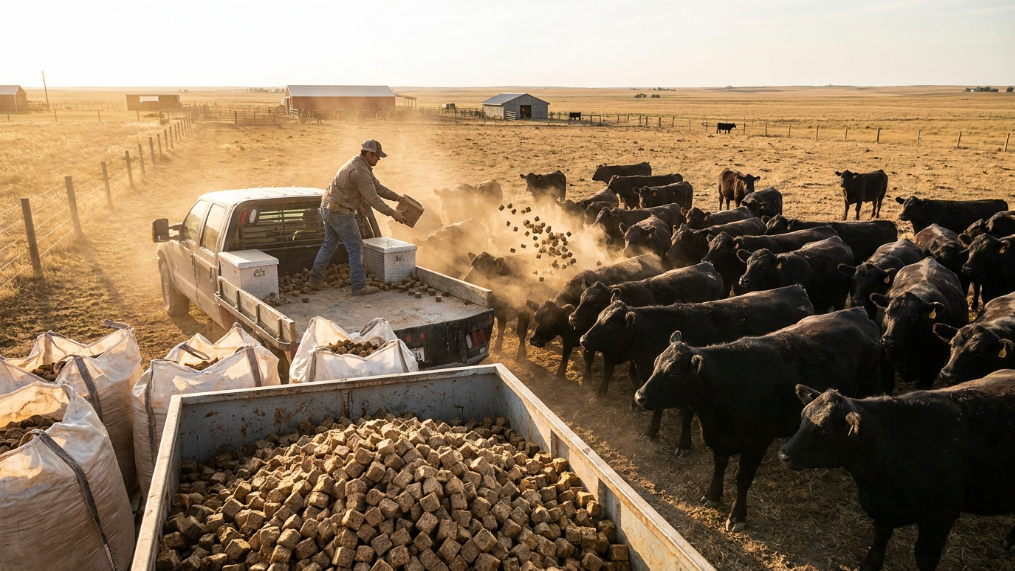
Feed costs are the single biggest line item on most cattle operations — and if you’re buying cattle cubes in small quantities from whatever’s sitting on the shelf at your local co-op, you’re leaving real money on the table. Whether you’re running 15 cows on a hobby farm or managing a 500-head commercial herd in the Texas Panhandle, sourcing bulk cattle cubes the smart way can cut your per-unit feed cost by 20–40% while keeping your herd’s nutrition dialed in.
This guide covers everything you need to buy cattle cubes for sale in the USA with confidence: product types, bulk pricing, where to order, how much to feed, storage, state-by-state sourcing, and answers to every question you’d want answered before writing a check for a ton of range cubes.
What Are Cattle Cubes? (And Why They Matter)
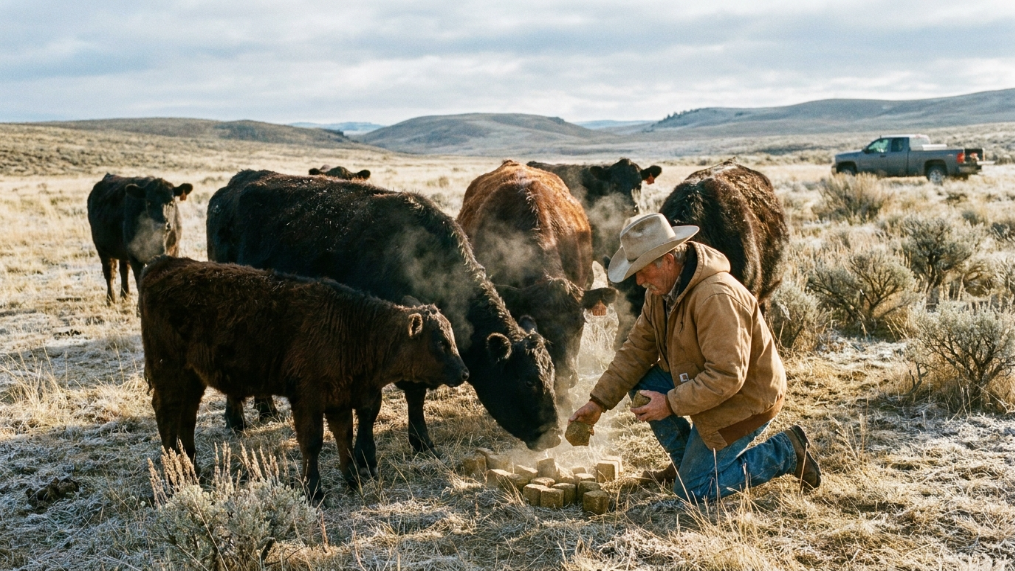
Cattle cubes — also called range cubes, protein cubes, or feed cubes — are compressed blocks of ground feed ingredients shaped into cylindrical pellets, typically 1.5 to 2 inches long. The most common formulations are built around protein sources like cottonseed meal, soybean meal, corn gluten, distillers grains, and urea, combined with roughage, binding agents, and added vitamins and minerals.
How Cubes Differ from Hay, Loose Feed, and Pellets
Hay delivers fiber and energy but is inconsistent in protein content, especially in drought years. Loose feed mixes (mash) blow in the wind, sort unevenly, and create waste in bunk feeders. Pellets are smaller and tend to absorb moisture faster in the field. Cubes occupy the sweet spot: they’re dense enough to scatter from a truck or feed buggy on pasture, durable enough to resist crumbling in the bag, and they deliver a consistent dose of protein in every bite.
That last point matters more than it sounds. When you hand-feed cubes by broadcast or toss them from a moving pickup, dominant cows and weaker ones compete, but each mouthful delivers the same nutritional value — unlike a mixed ration where cattle sort out the good stuff and leave filler behind.
Why Ranchers Prefer Cubes for Supplemental Feeding
Range cattle on native grass or dormant winter pasture often need a protein bridge — a supplement that doesn’t replace forage but helps the rumen microbes digest low-quality roughage more efficiently. A 20–28% protein cube fed at 1–3 lbs per head per day accomplishes exactly that without disrupting grazing behavior. It also conditions cattle to come to the feeder or the feed truck, which makes handling, health checks, and moving pastures significantly easier.
Common Protein Percentages and What They Mean
- 20% Crude Protein (CP): Maintenance supplement for cows on adequate forage; the most widely sold and affordable option
- 28% CP: The workhorse of the industry — appropriate for supplementing mature cows on low-quality winter forage, stocker cattle, or cows approaching calving
- 38% CP: High-density supplement used in smaller quantities; cost-effective on a per-pound-of-protein basis for operations where transportation or storage space is limited
- Custom blends: Some mills offer 32%, 36%, or custom mineral-fortified cubes depending on regional deficiencies (e.g., low selenium in the Pacific Northwest, low copper in Florida)
Practical takeaway: Know your forage protein before choosing a cube. Pull a hay test or send a forage sample to your state extension lab. If your native grass is running 6% CP in January, a 28% cube at 2 lbs/head/day will fill the gap without overfeeding.
Types of Cattle Cubes Available in the USA
Here’s a breakdown of the main product categories you’ll encounter when shopping bulk cattle cubes for sale across the USA:
| Type | Protein % | Best Use Case | Approx. Price per Ton (2026) |
|---|---|---|---|
| 20% Range Cubes | 20% | Maintenance, adequate forage conditions | $380–$460/ton |
| 28% Protein Cubes | 28% | Winter supplement, stocker programs | $430–$520/ton |
| 38% Hi-Pro Cubes | 38% | High-stress, small ration scenarios | $490–$580/ton |
| Cottonseed Meal Cubes | 36–41% | Cotton Belt operations, cost-effective protein | $400–$510/ton |
| All-Natural / Non-GMO | 20–28% | Premium/specialty markets, natural beef programs | $520–$680/ton |
| Medicated Cubes | 20–28% | Ionophore inclusion (Rumensin/Bovatec) for coccidiosis or gain | $460–$560/ton |
Note: Prices reflect bulk ton pricing FOB supplier. Freight, regional demand, and commodity markets shift these figures seasonally. Corn and soybean meal prices have the largest influence on cube cost.
A Note on Medicated Cubes
Cubes containing Rumensin (monensin) or Bovatec (lasalocid) are popular in stocker and backgrounding programs because they improve feed efficiency by 5–10% and reduce the risk of coccidiosis. They require a Veterinary Feed Directive (VFD) in some formulations, so confirm with your vet before ordering. Never feed Rumensin-containing products to horses — it’s lethal to equines.
Practical takeaway: For most cow-calf operations, a standard 20% or 28% cube covers 90% of supplementation needs. Save the 38% and medicated options for targeted situations — stocker turnout, drought stress, or a specific herd health protocol.
How Much Do Cattle Cubes Cost? (Bulk Pricing Breakdown)
Feed pricing fluctuates with commodity markets, but here are realistic 2026 benchmarks for buying cattle cubes for sale in bulk across the USA.
Per-Unit Pricing at Different Quantities
| Purchase Volume | Approx. Price (28% Cubes) | Notes |
|---|---|---|
| 50 lb bag (retail) | $22–$30/bag ($0.44–$0.60/lb) | Tractor Supply, farm store |
| 500 lbs (pallet) | $200–$270 ($0.40–$0.54/lb) | Co-op or online order |
| 1 ton (2,000 lbs) | $430–$520/ton ($0.22–$0.26/lb) | Most common bulk threshold |
| 2–5 tons | $400–$490/ton | Volume discount applies |
| 10+ tons | $360–$450/ton | Mill-direct or co-op pricing |
How Bulk Buying Cuts Costs
The jump from retail bag pricing to per-ton pricing is dramatic — you can cut your cost-per-pound nearly in half by ordering even a single ton directly from a feed mill versus buying 50 lb bags off the shelf. The economics get even better when you coordinate with neighboring ranchers to meet minimum order thresholds that unlock mill-direct pricing.
Regional Price Variation
- Texas/Oklahoma: Most competitive pricing in the country due to high volume and local cottonseed availability; 28% cubes often run $410–$480/ton delivered
- Kansas/Nebraska: Corn-belt advantage keeps energy-based cubes affordable; expect $420–$490/ton
- Florida/Southeast: Higher freight costs and humidity challenges push prices to $450–$540/ton
- Montana/Wyoming/Northern Plains: Remoteness adds freight premium; $470–$560/ton is common
- Midwest (Missouri, Iowa): Mid-range at $430–$510/ton
How Much Is a Ton of Cattle Cubes?
A ton of standard 28% protein range cubes in the USA runs $430–$520 delivered for single-ton orders in most major cattle states. Mill-direct pricing on 5+ ton orders can bring that down to $360–$460/ton depending on region and formulation. If you’re seeing retail prices above $560/ton for standard cubes, it’s worth calling two or three local mills for a quote — you’re likely overpaying.
When to Buy for the Best Price
Commodity prices — especially soybean meal and corn — drive cube costs. Historically, purchasing in late summer to early fall (August–October), before the winter feeding rush, captures slightly lower prices before demand spikes. Avoid buying right after a drought declaration in your region — prices jump fast and supplies tighten.
Practical takeaway: Call three suppliers, get tonnage quotes, and commit to at least one ton at a time. The price difference between a 50 lb bag and a ton order is significant enough to justify building storage capacity.
Where to Buy Cattle Cubes in Bulk in the USA
Online Suppliers
Online sourcing has improved dramatically for bulk livestock feed. Key platforms and suppliers to know:
- AgriSupply.com — National reach, bulk bag and pallet ordering, ships standard UPS freight for smaller orders
- Orscheln Farm & Home (online store) — Strong Midwest presence, competitive pricing on range cubes
- Valley Vet Supply — Primarily health products but carries feed supplements; good for smaller operations mixing an order
- Direct mill websites — Many regional mills (Purina Land O’ Lakes distributors, ADM Alliance Nutrition, Cargill Animal Nutrition dealers) have online quote request forms for 1-ton+ orders
Shipping realities: Bulk cattle cubes ship best by freight (LTL) on pallets. A single ton on a pallet typically costs $80–$180 to ship within the continental US depending on distance. For orders under 500 lbs, UPS ground is viable. For 2+ tons, flat-rate freight quotes from carriers like Estes or XPO are worth getting.
Local & Regional Feed Stores and Mills
For most ranchers, the best bulk cattle cubes deal is local. Here’s how to find it:
- Search “feed mill near me” or “livestock feed co-op [your county]” — many independent mills don’t advertise heavily online
- Contact your county Farm Bureau — they often have preferred supplier relationships and group buying programs
- Ask your county extension agent — they know every feed supplier in the area and can point you to competitive options
- Check the USDA’s Agricultural Marketing Service (AMS) for registered feed dealers in your state
Local sourcing advantages: no freight cost, fresher product (shorter time between milling and feeding), flexible payment terms for established customers, and the ability to order custom mineral packages or medicated formulations.
Farm Supply Chains
- Tractor Supply Co. (TSC): Carries Purina, Southern States, and store-brand range cubes in 50 lb bags. Convenient for small operations but priced at retail. Not practical for large-volume bulk buying.
- Atwoods Ranch & Home: Strong presence in Oklahoma, Kansas, and Texas. Occasionally offers pallet pricing or special orders through store managers.
- Southern States Cooperative: Member-owned co-op with 1,300+ locations across the Southeast and Mid-Atlantic. Membership discounts on bulk orders; excellent for Virginia, North Carolina, Kentucky operators.
- MFA Incorporated: Missouri-based co-op serving the Midwest with competitive bulk feed pricing for members.
Practical takeaway: Chain stores are your backup and emergency source. For planned, bulk buying, local mills and co-ops almost always beat chain retail pricing. [LINK: how to find a local cattle feed mill guide]
How to Calculate How Much You Need (Feeding Rate Guide)
How Many Pounds of Cattle Cubes Per Cow Per Day?
Standard supplemental feeding rates for range/protein cubes:
| Cattle Category | Daily Cube Rate | Notes |
|---|---|---|
| Mature cow, maintenance | 1–2 lbs/head/day | Adequate forage available |
| Pregnant cow, late gestation | 2–3 lbs/head/day | Last 60–90 days before calving |
| Lactating cow | 2–4 lbs/head/day | Peak milk production demand |
| Stocker cattle (400–700 lbs) | 1–2 lbs/head/day | Supplement to pasture or hay |
| Bulls | 2–4 lbs/head/day | Pre-breeding conditioning |
These rates assume cubes are a supplement, not a complete diet. If forage is severely limited (drought), rates may increase and you should consult a nutritionist.
Sample Bulk Order Calculation
Scenario: 50-cow herd, late winter supplementation, 28% cubes at 2 lbs/head/day, 90-day feeding period.
50 cows×2 lbs/day×90 days=9,000 lbs=4.5 tons
At $480/ton (delivered), that’s $2,160 for the season — or about $43 per cow for 90 days of winter supplementation. Compare that to buying 50 lb bags at $26 each: you’d need 180 bags totaling $4,680 — more than double the cost.
Storage Requirements for Bulk Orders
- 1 ton (bagged, 50 lb bags): 40 bags, fits in a standard 8×8 ft dry storage corner
- 5 tons (bulk bin): Requires a 275–500 bushel grain bin or commodity shed section
- 10+ tons: Dedicated feed storage building recommended; moisture control is critical
[Image placement 2: A clean, covered bulk feed bin on a working cattle ranch with 28% range cube bags stacked alongside. Alt text: “Bulk cattle cube storage bin and bagged range cubes at a Texas cattle operation”]
Practical takeaway: Calculate your full seasonal need before ordering. A 4–5 ton order for a mid-size herd saves thousands versus bag-by-bag buying and qualifies for mill-direct pricing at most suppliers.
Cheapest Ways to Feed Cattle Without Sacrificing Nutrition
What Is the Cheapest Feed to Fatten Cattle?
The honest answer: it depends on what you’re paying for forage locally. But here’s a realistic cost-per-pound-of-gain comparison for common options:
| Feed Source | Typical Cost/Ton | Est. Feed Conversion | Cost per Lb of Gain |
|---|---|---|---|
| Native pasture (owned) | $0–$50/ton equivalent | N/A | Lowest possible |
| Corn silage | $40–$80/ton | 6–8 lbs per lb gain | $0.12–$0.32 |
| Ground corn | $180–$240/ton | 7–9 lbs per lb gain | $0.63–$1.08 |
| 28% Cattle Cubes | $430–$520/ton | Supplement only | Varies |
| Cottonseed (whole/hulls) | $200–$320/ton | High fiber, slow gain | $0.50–$0.90 |
| Quality hay | $120–$220/ton | 14–18 lbs per lb gain | $0.84–$1.98 |
Cattle cubes aren’t a fattening feed on their own — they’re a protein bridge that makes other forages work harder. The cheapest gain strategy for most grass-based operations is: quality native pasture or hay + 1–2 lbs/day of 20–28% cubes to keep rumen function optimized. Adding a small cube ration to dormant winter grass improves digestibility of that forage by 15–25%, meaning your hay goes further.
For rapid gain in a feedlot-style program, high-starch energy feeds (corn, silage) with a protein supplement outperform cubes alone in cost-per-gain. But for range cattle, cubes remain the most practical and cost-effective protein delivery system available.
Protein Supplementation Strategy for Grass-Fed Herds
- Summer grazing (good pasture): Most cows need no supplemental protein when pasture CP is above 8–10%; save cubes for the animals with highest demand (late-gestation cows, stocker calves)
- Fall/Winter (dormant pasture): Native grass CP often drops to 4–6%; a 28% cube at 1.5–2 lbs/day bridges this gap cost-effectively
- Drought: Push cube rates up and consider shifting to a complete supplemental program — the economics change when forage disappears entirely
Practical takeaway: Don’t feed cubes when you don’t need to. A simple forage test tells you when supplementation is necessary and at what rate. Overcubing is expensive and can cause loose feces (the classic “wet manure” sign of protein oversupply in cattle).
Bulk Buying Tips — How to Get the Best Deal on Cattle Cubes
Minimum Orders That Unlock Wholesale Pricing
Most feed mills and regional distributors offer tiered pricing:
- 1 ton: First significant discount threshold vs. bag retail
- 5 tons: Mill-direct pricing available at many operations
- 10+ tons: Negotiate custom terms, possible monthly delivery contracts
Buying Co-ops and Neighbor Pooling
If you’re running 20 head and can’t justify a 5-ton minimum order alone, reach out to two or three neighboring ranchers about splitting a mill-direct order. It’s common practice, especially in tight rural communities. Your local Farm Bureau chapter or cattlemen’s association often facilitates group purchases.
Negotiating with Local Mills
Walk in and introduce yourself. Ask about:
- Milling schedule (fresh batches vs. aged stock)
- Custom mineral additions (they often charge $15–$30/ton to add your specific mineral package)
- Payment terms for established accounts
- Delivery windows and fuel surcharge policies
Mills value consistent, repeat customers. A handshake agreement to buy 3 tons per quarter beats hunting a deal every season.
Timing Your Purchase
- Best window: August–October, post-harvest, pre-winter rush
- Worst window: December–February, peak demand, constrained supply
- Opportunistic: Watch USDA commodity price reports — when soybean meal drops 10–15%, cube prices follow 4–6 weeks later
Questions to Ask Your Feed Supplier Before Buying
- What is the mill date on this batch?
- What are the guaranteed analysis specs on the tag?
- Does this formulation include any ionophores or medications?
- What is your return/exchange policy if product arrives damaged?
- Can you provide a Certificate of Analysis on request?
Practical takeaway: Treat your feed supplier like a business partner, not just a vendor. The ranchers who get the best pricing, freshest product, and most flexible delivery terms are the ones who built a relationship before they needed a favor.
Top FAQs About Cattle Cubes
Q: What are 20% cattle cubes?
A: 20% cattle cubes are compressed feed supplements containing a minimum of 20% crude protein by weight. They’re the most widely sold range cube formulation in the USA and are designed as a maintenance supplement — meaning they’re intended to fill the protein gap when forage quality drops below cattle requirements, not to replace hay or pasture. Typical ingredients include cottonseed meal, soybean meal, grain byproducts, urea, and added vitamins and minerals. They’re cost-effective for the majority of cow-calf operations during winter months when dormant grass drops to 4–7% crude protein. Fed at 1–2 lbs per head per day, they keep rumen microbe populations healthy and improve the digestibility of low-quality roughage by 15–25%.
Q: How many pounds of cattle cubes per cow per day?
A: For a standard mature cow on winter range or dormant pasture with adequate hay available, 1.5–2 lbs per head per day of 28% protein cubes covers most supplementation needs. Lactating cows or cows in late pregnancy may need 2.5–3.5 lbs per day. Stocker cattle on pasture typically receive 1–2 lbs/day. Always adjust rates based on a forage test — if your hay or pasture is already running 10%+ crude protein, you likely don’t need to supplement at all. Overfeeding protein cubes causes loose manure, wastes money, and doesn’t improve gain. When in doubt, feed at the lower end and watch body condition scores over 3–4 weeks.
Q: How much is a ton of cattle cubes?
A: In 2026, a ton of 28% protein range cubes delivered to your location averages $430–$520 in most major cattle states. Texas and Oklahoma tend to be on the lower end; remote or northern states run higher due to freight. Single-bag retail pricing works out to $880–$1,200 per ton equivalent — nearly double the bulk rate. Mill-direct pricing on 5+ ton orders can drop as low as $360–$450/ton. Prices are directly tied to commodity markets, particularly soybean meal and corn byproduct prices, so expect 10–15% seasonal swings. Check USDA’s Agricultural Prices report monthly if you’re managing a large operation and trying to time major purchases.
Q: What is the cheapest feed to fatten cattle?
A: On a cost-per-pound-of-gain basis, corn silage and high-quality stockpiled fescue are typically the most economical options for rapid fattening. Whole cottonseed is another cost-effective energy and fat source in cotton-producing states. Cattle cubes alone are not an efficient fattening feed — they’re protein supplements best used alongside high-energy forage or grain. For range-based operations where you’re not pushing aggressive daily gain, the cheapest program is good-quality pasture (owned land) supplemented with 1.5–2 lbs of 20% cubes in winter. This costs roughly $40–$60 per cow per season and maintains body condition without expensive grain inputs.
Q: Can you feed cattle cubes as a complete diet?
A: No, not practically or economically. Cattle cubes are formulated as protein supplements, not complete diets. Feeding enough cubes to meet a cow’s total energy needs (roughly 20–28 lbs/day of cubes) would be cost-prohibitive and nutritionally unbalanced — most cube formulations are low in energy density relative to cost. Cattle need roughage (hay, pasture, silage) as the foundation of their diet to maintain proper rumen function. Fiber from forage drives cud chewing, saliva production, and rumen pH stability. Some high-fiber complete cube products exist for emergency feeding (drought, transport), but they’re not designed for routine use. Always pair cubes with adequate forage.
Q: Do cattle cubes expire or go bad?
A: Yes. Properly stored in cool, dry conditions, bagged range cubes have a usable shelf life of 3–6 months. Bulk bin storage extends this slightly if bins are covered and moisture-controlled. The main threats are moisture (causes mold and mycotoxin development), heat (accelerates fat oxidation and vitamin degradation), and rodent/insect contamination. Signs of spoiled cubes include white or gray mold growth, off odor (musty, rancid, or ammonia-like), clumping, or visible insect infestation. Never feed moldy cubes — mycotoxins can cause abortions, immune suppression, and feed refusal. If you find mold in a pallet, contact your supplier immediately. Mill date should be visible on the tag; don’t accept product older than 60 days without a discount.
Q: What is the difference between range cubes and cattle cubes?
A: The terms are used interchangeably by most ranchers and suppliers. “Range cubes” typically implies the product is designed for broadcast feeding on pasture — tossed from a truck or feeder with minimal equipment — and is physically larger and more durable to resist crumbling. “Cattle cubes” is a broader term that can include range cubes as well as smaller, more refined pellets used in bunk feeding or feedlot settings. In practice, when a Texas rancher says “range cubes” and an Iowa farmer says “cattle cubes,” they’re often describing the same 28% protein compressed supplement. Always check the guaranteed analysis tag, not the marketing name, to know exactly what you’re buying.
Q: Are cattle cubes better than loose mineral supplements?
A: They serve different purposes and work best together. Loose mineral supplements deliver microminerals (copper, zinc, selenium, manganese) and macrominerals (calcium, phosphorus, salt) that cubes often provide only in limited quantities. Cattle cubes deliver crude protein to support rumen function and body condition. A complete supplementation program typically includes both: a 28% cube for protein supplementation in winter, plus free-choice loose mineral available year-round. Relying on cubes alone without a mineral program risks deficiencies that show up as reproductive failures, weak calves, poor hair coats, and reduced immunity — often 60–120 days after the deficiency begins, making the cause hard to identify. [LINK: complete cattle mineral supplementation guide]
Cattle Cube Feeding Schedule (Seasonal Guide)
Spring and Summer (April–August)
When pastures are green and growing, crude protein in grass typically runs 12–18% — well above cattle maintenance requirements. Most cow-calf pairs don’t need cube supplementation during this window. Reserve cubes for:
- Late-weaned calves transitioning to grass
- First-calf heifers that are still growing while nursing
- Bulls in pre-breeding conditioning (increase to 3–4 lbs/day, 60 days before turnout)
Fall and Winter (September–February)
This is when cubes earn their keep. As grass dormancy sets in and forage CP drops below 8%, start your supplementation program. Recommended timing:
- September–October: Begin at 1 lb/head/day as a “bunk check” habit
- November–February: Increase to 1.5–2.5 lbs/head/day based on forage quality and body condition score
- January–February: Pre-calving cows in last trimester get 2.5–3 lbs/day to support fetal development and colostrum quality
Pre-Breeding and Calving Season
The 60 days before and after calving are the most nutritionally critical of the year. A cow that calves in thin body condition (BCS below 4.5) cycles later, breeds back slower, and weans a lighter calf. Push cube rates 30–45 days before your calving start date and maintain through peak breeding to maximize conception rates.
Stocker and Backgrounding Phase
Stocker cattle turned onto spring pasture or backgrounded on hay plus supplements respond well to 1.5–2 lbs/day of 28% cubes. This maintains daily gains of 1.5–2.5 lbs/day without the infrastructure of a full feedlot program.
Practical takeaway: Build a simple feeding calendar at the start of each year. Map out when each class of cattle needs supplemental cubes and calculate your total seasonal need in advance. Pre-ordering before the winter rush saves both money and logistics headaches.
Understanding Feed Labels — What to Look for When Buying
Every bag of cattle cubes sold in the USA must carry a guaranteed analysis tag. Here’s how to read it:
- Crude Protein (CP) minimum: The floor, not a target. “Not less than 28%” means the batch meets or exceeds this level — but reputable mills often run 29–30% to ensure compliance
- Crude Fat minimum: Typically 2–4% in standard cubes; a fat source improves palatability and provides energy
- Crude Fiber maximum: Usually capped at 12–15%; high fiber can indicate low-quality filler ingredients
- Moisture maximum: Look for 12% or less; higher moisture shortens shelf life and means you’re paying for water weight
- Vitamin A: Should be listed in IU/lb; range cubes should provide 10,000–20,000 IU/lb minimum
- Phosphorus: Listed as a minimum percentage; 0.5–0.8% is typical for a well-formulated cube
- Salt: Included as a palatability control mechanism to prevent overconsumption
How to Spot Low-Quality Fillers
Watch for these red flags on the ingredient list:
- “Grain products” or “roughage products” listed without specifics (vague language masks quality variation)
- Urea listed as the primary protein source (urea is cheaper but can be overused; natural protein sources are more reliable)
- Missing vitamin/mineral guarantees
- No mill address or manufacturer contact on the tag
[Image placement 3: Close-up of a cattle cube feed tag showing guaranteed analysis, ingredient list, and mill date. Alt text: “Cattle cube feed tag showing 28% crude protein guaranteed analysis and ingredient list”]
Practical takeaway: Request a Certificate of Analysis (CoA) from your supplier for any large bulk order. Reputable mills provide these on request. If a supplier refuses, that’s a red flag.
How to Store Bulk Cattle Cubes Properly
Bag Storage vs. Bulk Bins
Bagged cubes (50 lb sacks) are easier to manage for operations under 5 tons/season. Stack on wooden pallets to allow air circulation, cover with a tarp, and keep off dirt floors. A standard 20×20 ft dry storage room handles 5–6 tons of bagged product comfortably.
For operations buying 5+ tons at a time, bulk commodity bins or grain bins with sealed bottoms are more efficient. A 300-bushel bin holds roughly 2.5–3 tons of cubes. Bins must be covered, sealed against moisture intrusion at the base, and ideally positioned on a concrete pad.
Moisture and Mold Prevention
- Relative humidity above 70% accelerates mold growth in stored cubes
- Never store cubes directly on dirt or concrete without a vapor barrier
- Check stored product monthly — probe the interior of stacked bags for heat (a sign of mold activity)
- In humid climates (Florida, Gulf Coast), plan to turn inventory every 60–90 days
Shelf Life Expectations
- Cool, dry storage (below 70°F, under 65% RH): 4–6 months usable shelf life
- Warm or humid storage: 6–10 weeks before quality degradation becomes a risk
- Bulk bins in hot climates: Fat oxidation can begin in 8–12 weeks; buy in quantities you’ll use within that window
Recommended Storage Equipment
- Covered commodity shed: Best all-around solution for mid to large operations
- galvanized grain bins (300–500 bushel): Cost-effective for 3–5 ton capacity
- Wooden pallet + poly tarp: Minimum viable storage for small operations; rotate stock constantly
- Rodent control: Essential regardless of storage method — rats and mice contaminate and destroy stored feed quickly
Practical takeaway: Match your storage capacity to your buying frequency. There’s no financial benefit to buying 10 tons at a discount if you lose 1–2 tons to spoilage from inadequate storage. Build or rent storage before scaling up your bulk orders.
State-by-State Cattle Cube Availability (Regional Spotlight)
Texas
The largest cattle state in the USA and the most competitive market for bulk cattle cubes. Major suppliers include Purina Land O’ Lakes dealers, ADM Alliance Nutrition distributors, and independent mills throughout the Panhandle, Hill Country, and South Texas brush country. Look for Nutrena, Ridley, and local cotton gin byproduct cubes. The Texas Department of Agriculture runs the Texas Department of Agriculture’s Go Texan program, which sometimes highlights local feed producers. Many gin-affiliated mills in the Rio Grande Plains offer cottonseed meal cubes at significant discounts over standard formulations.
Oklahoma
Home to a robust co-op network including Oklahoma Farm Bureau and multiple Farmers Union co-ops. Oklahoma State University Extension maintains an excellent cattle nutrition resource library and can connect producers with regional feed suppliers. Competitive 28% cube pricing is available through local elevators, especially in the western part of the state.
Kansas
The Kansas Livestock Association connects producers with regional feed sources. Corn-based and distillers grain-fortified cubes are common and competitively priced given the state’s corn production base. Many Kansas feed mills offer custom cube formulations on large orders.
Nebraska
Similar to Kansas in feed sourcing advantages. The Nebraska Cattlemen association and University of Nebraska Extension both provide producer resources including preferred vendor lists. Distillers dried grains (DDGs) from ethanol plants are incorporated into many Nebraska cube formulations, keeping protein costs low.
Florida
Florida’s subtropical climate makes moisture management in feed storage critical. Major suppliers include Florida Farm Bureau co-op, Southern States distribution, and specialty tropical grass supplement manufacturers. Mineral profiles differ significantly from western states — copper and zinc levels in Florida soils are often lower, so look for cubes with enhanced mineral packages. The Florida Cattlemen’s Association maintains a vendor directory.
Montana and Wyoming
Remote geography means freight costs are the primary pricing challenge. The Northern Plains Resource Council and Montana Stockgrowers Association are useful networks for finding group buying opportunities. Local mills in Billings, Great Falls, and Bozeman serve the region; some producers along rail corridors can access delivered pricing that competes with national distributors.
Missouri
MFA Incorporated (Missouri Farmers Association) is the dominant co-op feed supplier in the state with competitive bulk cube pricing for members. Missouri is a strong cow-calf state with well-developed extension resources — the University of Missouri Extension’s livestock team offers free feed cost analysis tools for producers.
Colorado
Colorado Cattlemen’s Association connects producers with regional suppliers. The Front Range has competitive pricing through several large distributors; mountain operations face freight premiums. The Colorado Department of Agriculture occasionally offers agricultural input cost-sharing programs worth checking annually.
Practical takeaway: Your state cattlemen’s association and land-grant university extension service are underutilized resources. Both maintain supplier networks and market information that can directly cut your feed costs.
Ready to Lock In Your Bulk Cattle Cube Deal?
You now have everything you need to buy cattle cubes for sale in the USA smarter than 90% of producers: the right product type for your operation, realistic ton pricing benchmarks, a feeding calculator you can run in your head, storage requirements, and regional sourcing options from Texas to Montana.
Your next step is simple: Don’t wait until you’re running low in January when everyone else is ordering and prices peak. Calculate your seasonal need now (herd size × daily rate × feeding days), identify two or three local mills or online suppliers to quote, and place your bulk order before the fall rush.
→ Compare Bulk Cattle Cube Suppliers and Request a Free Quote
→ Use Our Cattle Feed Cost Calculator to Size Your Orde
→ Download Our Seasonal Feeding Calendar Template
A well-fed herd is a profitable herd. The ranchers who manage feed costs through smart bulk buying consistently outperform those who buy reactively at retail. Lock in your price, build your storage, and get ahead of the season.
Last updated: May 2026. Pricing ranges reflect current market conditions and are subject to change based on commodity markets. Always confirm current pricing with your supplier before placing an order.