
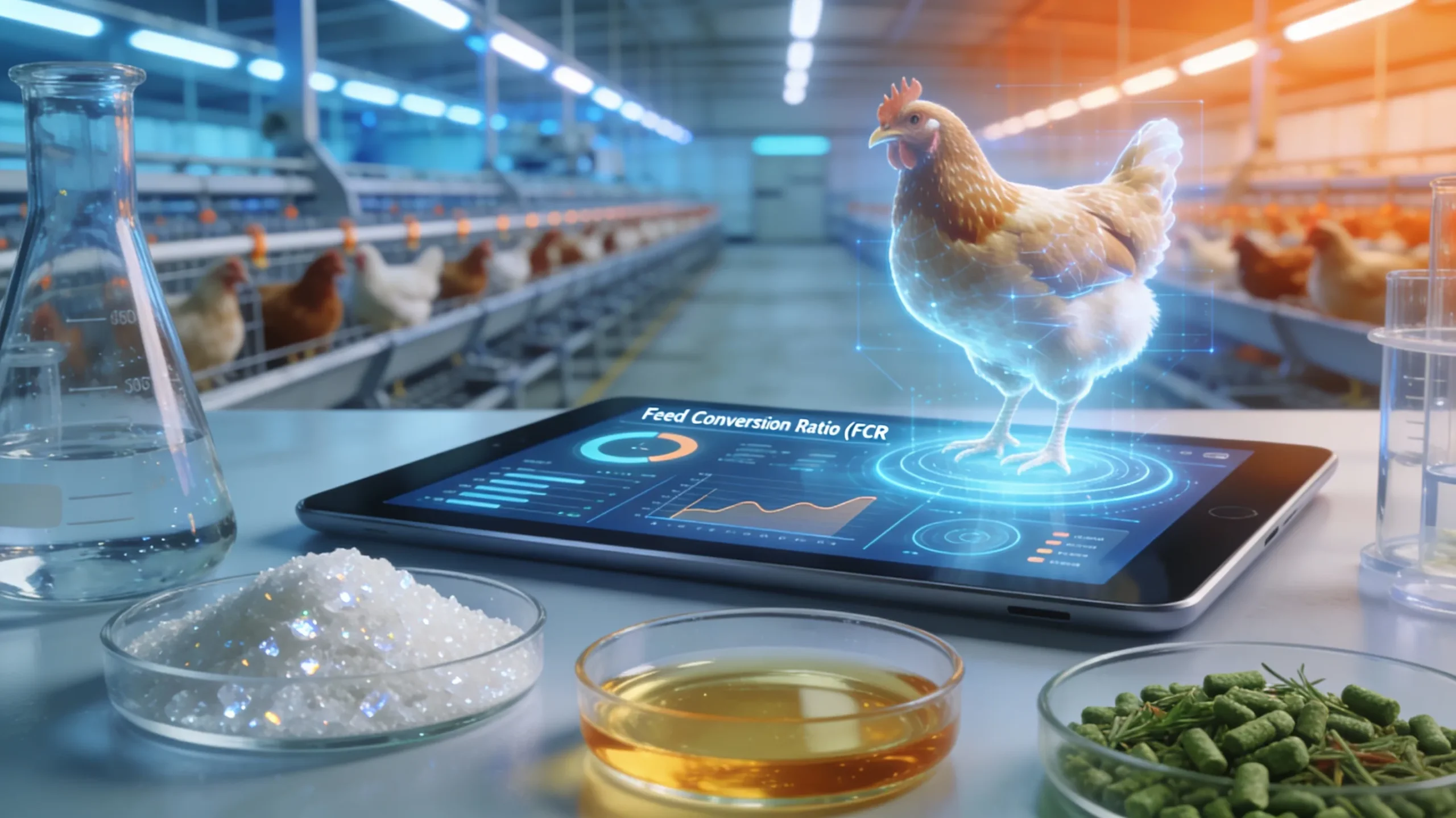
The global poultry industry in 2025 has moved beyond simple caloric intake. Today, the focus is on “Precision Nutrition” – a data-driven approach where every gram of feed is optimized for maximum bioavailability. As feed costs continue to represent 60-70% of total production expenses, high-quality poultry feed supplements are no longer optional additives; they are the primary drivers of Feed Conversion Ratio (FCR) and farm profitability.
Whether you are a commercial farm manager or an international distributor, understanding the shift toward antibiotic-free growth and metabolic enhancers like Guanidinoacetic Acid (GAA) is essential for maintaining a competitive edge in the 2025 market.
The Evolution of Poultry Nutrition in 2025
The 2025 landscape is defined by the total replacement of antibiotic growth promoters (AGPs) with biological alternatives. The market is currently valued at over $50 billion, driven by a surge in demand for organic and “clean-label” poultry products. Modern supplements now focus on three pillars: gut integrity, metabolic efficiency, and immune resilience.
Core Nutritional Supplements: The Foundation of Growth
To achieve the genetic potential of modern breeds like Ross 308 or Cobb 500, a standard grain diet is insufficient. You must supplement with specific micro-ingredients that bridge the “nutritional gap.”
Vitamins and Electrolytes
In tropical and sub-tropical climates, heat stress remains the leading cause of mortality and reduced egg production. Electrolyte supplements (Sodium, Potassium, and Bicarbonate) are critical for maintaining osmotic balance. Vitamins A, D3, E, and B-complex are vital for skeletal development and metabolic health, particularly during the first 14 days of a chick’s life.
Amino Acids and Protein Enhancers
Lysine and Methionine remain the “limiting amino acids” in poultry diets. However, 2025 has seen a massive shift toward Guanidinoacetic Acid (GAA). As a precursor to creatine, GAA allows the bird to bypass the energy-intensive process of creatine synthesis, directing that energy toward muscle (meat) deposition instead. This results in a measurable 3-5% increase in broiler weight gain.
Advanced Feed Additives: Beyond Basic Nutrition
The most significant ROI in modern poultry farming comes from “intelligent” additives that modify the bird’s internal environment.
Probiotics and Gut Health
The “No Antibiotics Ever” (NAE) movement has made probiotics like Bacillus subtilis and Lactobacillus the gold standard. These “good bacteria” outcompete pathogens like E. coli and Salmonella, ensuring that the intestinal villi remain healthy for maximum nutrient absorption.
Enzymes and Nutrient Liberation
Phytase technology has advanced significantly. In 2025, “super-dosing” phytase is a common practice to unlock phosphorus bound in plant phytate, which not only reduces the need for expensive dicalcium phosphate but also minimizes environmental phosphorus excretion – a key regulatory requirement in 2025.
Herbal and Phytogenic Solutions
Herbal poultry feed supplements containing oregano oil, thymol, and carvacrol are seeing a 15% year-on-year growth. These natural compounds act as powerful antioxidants and mild antimicrobials, appealing to the growing consumer demand for “natural” chicken.
B2B Sourcing: Manufacturers and Compliance
For businesses looking to buy poultry feed supplements in bulk, the logistics of sourcing are as important as the chemistry of the product.
Top Manufacturers and Suppliers
India and China remain the primary hubs for global production. Indian manufacturers are leading the way in herbal poultry feed supplements and chelated minerals, while Chinese factories dominate the amino acid and GAA sectors. When selecting a supplier, ensure they hold GMP+ and ISO 22000 certifications to meet international safety standards.
Regulatory and Tax Information (HSN/GST)
For international trade, the HSN Code for poultry feed supplements is generally 2309. In jurisdictions like India, most poultry feed and certain supplements fall under the 0% to 5% GST bracket, though it is crucial to verify if the supplement is classified as a “feed” or a “medicine” to avoid tax liabilities.
Technical Comparison: Liquid vs. Powder Formulas
| Feature | Powder Supplements | Liquid Feed Supplements |
|---|---|---|
| Application | Mixed in the Feed Mill | Administered via Water Lines |
| Stability | High (Longer Shelf Life) | Moderate (Requires stabilizers) |
| Absorption | Slower (Digestion required) | Rapid (Direct absorption) |
| Use Case | Routine growth maintenance | Stress recovery/Sick flocks |
Frequently Asked Questions (FAQ)
What is the best broiler poultry feed formula?
The best formula in 2025 utilizes a “phase-feeding” approach: Starter (high protein), Grower (balanced), and Finisher (high energy + GAA). Always consult with a nutritionist to adjust for local ingredient availability like maize or soybean meal prices.
How does GAA improve growth?
Guanidinoacetic acid (GAA) is the only precursor of creatine. By providing it directly, you save the bird’s metabolic energy and amino acids (arginine and glycine), allowing them to be used for protein synthesis instead of energy production.
Where can I buy poultry feed supplements in bulk?
B2B platforms and direct manufacturer websites are the most cost-effective. Focus on suppliers in Bangalore, Hyderabad, and China’s Shandong province for the most competitive “all-in-one” formula prices.
Maximizing ROI in 2026
The path to 2026 and beyond requires a transition from “feeding birds” to “managing metabolism.” By integrating high-quality poultry feed supplements – specifically focusing on GAA, probiotics, and precision enzymes – farmers can achieve a lower FCR and higher carcass yield. In a market where margins are razor-thin, the quality of your feed additives is the ultimate differentiator.
