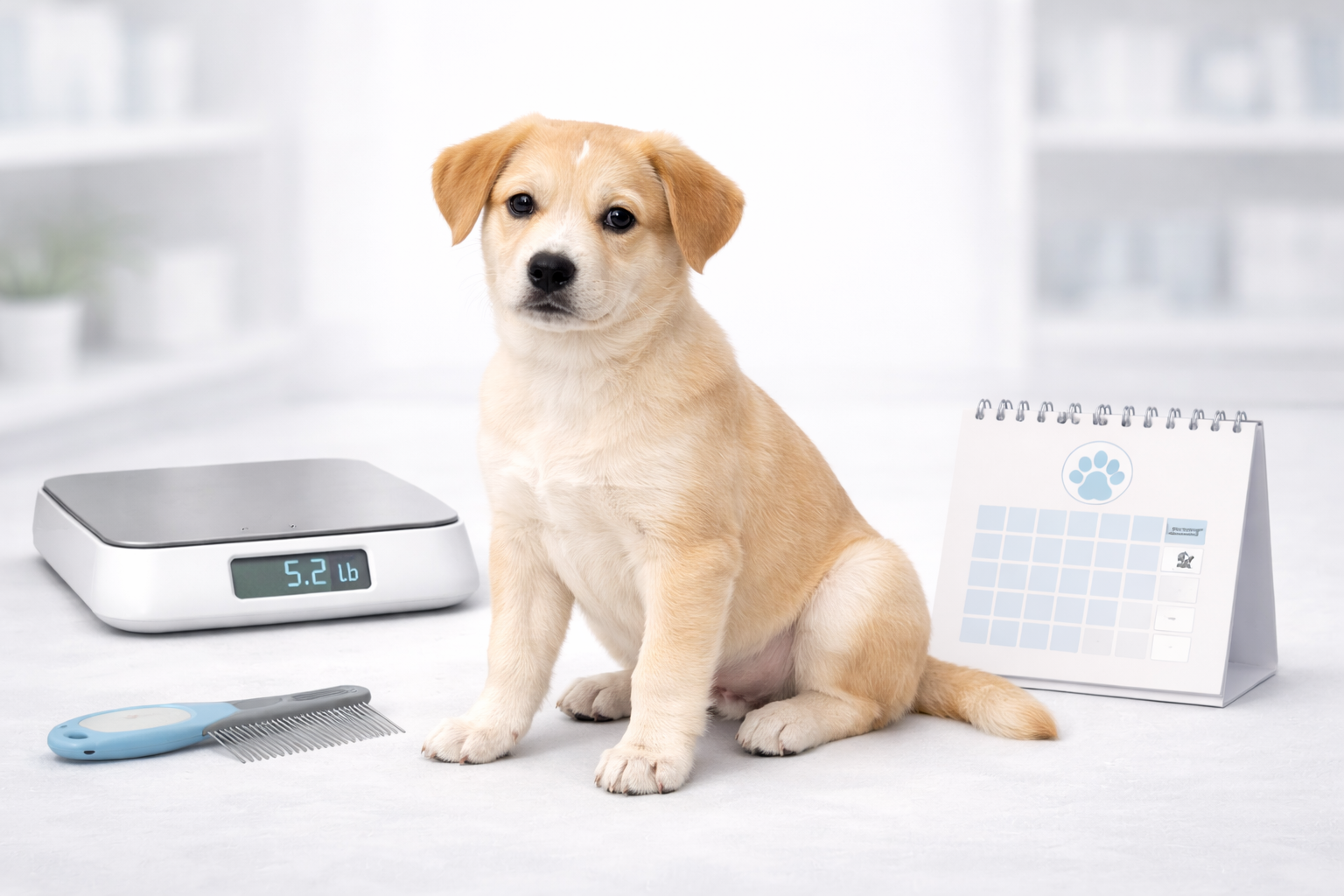
Bringing home a puppy is exciting-until you spot fleas. The stressful part is that puppies aren’t just “small dogs.” Their skin is thinner, their bodies lose fluids faster, and their nervous system and liver are still developing. That’s why flea problems can hit them harder, and why the wrong product can cause serious side effects.
Age and weight matter more than brand names because most flea medications are approved only above a specific age and within specific weight ranges. Using a product “close enough” to the minimum age/weight-or using an adult product-can turn a fixable problem into an emergency.
This guide walks you through safe, step-by-step decisions: what you can do right now, what to avoid, and how to choose an option that fits your puppy’s age and current weight-without risky shortcuts. You’ll also learn how to reduce fleas in your home and how to protect all pets in the household while keeping your puppy’s safety as the priority.
Why Flea and Tick Control Is Riskier in Puppies
Puppies are more vulnerable for a few key reasons:
- Immature metabolism (liver and kidneys): Many medications are processed and cleared more slowly in very young animals. A product that’s tolerated by adult dogs may build up or hit harder in a puppy.
- Developing nervous system: Some parasite-control ingredients act on insects’ nervous systems. If a puppy is too young or too small for a given product, the risk of neurologic side effects can be higher.
- Thin skin and higher absorption: Topicals applied to the skin can be absorbed more easily in small, young puppies-especially if applied incorrectly, over-applied, or if puppies lick each other.
- Higher risk from the fleas themselves: Fleas can cause anemia (low red blood cells) in tiny puppies faster than you’d expect, and itching can lead to skin infections.
Because of these factors, conservative prevention is often the safest path: choose products strictly labeled for your puppy’s age and weight, avoid “extra” applications, and focus heavily on non-chemical control when puppies are too young for medication.
Flea Treatment Safety by Age (Core Section)
Newborn to 4 Weeks
What is NOT approved:
Most flea medications are not approved for newborns and very young puppies. This includes many spot-on topicals, chewables, sprays, and collars intended for older puppies or adults. Even products marketed as “gentle” can be unsafe if the label doesn’t specifically include your puppy’s age.
Safe non-chemical steps (supportive, low-risk):
- Flea combing: Use a fine-toothed flea comb once or twice daily. Comb slowly, especially around the neck, tail base, and belly. Dip the comb into warm soapy water to trap fleas.
- Warm, gentle cleaning only when necessary: If your veterinarian says bathing is appropriate, keep it brief, use puppy-safe products (or plain warm water), and avoid chilling. Very young puppies can become cold quickly, which is dangerous.
- Change and wash bedding: Wash bedding in hot water (if fabric allows) and dry thoroughly. Replace heavily infested bedding if it can’t be effectively cleaned.
- Environmental control: Vacuum frequently around whelping areas. Dispose of vacuum contents promptly.
Treating the mother as indirect protection:
If the nursing mother dog can safely receive a veterinarian-recommended flea control product labeled for her, it often reduces the flea burden in the environment and lowers what reaches the puppies. This should be done carefully, because puppies can be exposed through close contact and licking. Your veterinarian can help choose a mother-safe option and timing.
Call a vet urgently if: the puppy seems weak, pale-gummed, lethargic, isn’t nursing well, or you see heavy flea loads. Young puppies can become dangerously anemic.
4 to 7 Weeks
Limited options:
This age range is a “gray zone.” Some products may become available, but choices are still limited and approvals vary widely. Many medications remain off-limits until 8 weeks or later.
Short-acting products and strict weight rules (no dosing details):
If a veterinarian recommends a product for this age, it will typically be one explicitly labeled for young puppies and used strictly within the puppy’s current weight range. The key safety points are:
- Use only products that clearly list your puppy’s age range on the label.
- Follow weight restrictions exactly-no estimating.
- Prevent licking or cross-exposure between littermates after topical application, if a topical is used.
When to stop and call a vet:
Stop using any product and contact a veterinarian right away if you notice:
- drooling, vomiting, diarrhea
- tremors, wobbliness, unusual sleepiness, agitation
- skin redness, hives, intense scratching at the application site
- trouble breathing or collapse (emergency)
If fleas are heavy and the puppy is small or unwell, veterinary care isn’t just about comfort-it can be necessary for safety.
8 Weeks and Older
Why this is the most common starting point:
Eight weeks is a common minimum age for many puppy-labeled flea products. At this stage, puppies are typically more stable in temperature regulation, have more mature metabolism, and weigh enough to fit into approved weight bands more often.
Categories of products that may become available:
Depending on your country and product approvals, options may include:
- Topical spot-on products labeled for puppies above a certain age/weight
- Oral flea control medications (chewable/tablet) labeled for puppies above a certain age/weight
- Shampoos or rinses specifically labeled for puppies (these may help remove fleas but usually do not provide long-lasting prevention)
- Environmental treatments to reduce reinfestation (often the biggest missing piece)
Not every category is right for every puppy. Health status, breed sensitivities, parasite risk in your region, and household pets all matter.
Importance of weighing the puppy on the same day:
Weigh your puppy the day you treat. Puppies grow fast. A weight range that fit last week may be wrong today. If you don’t have a pet scale, you can weigh yourself holding the puppy, then subtract your weight-still, a veterinary scale is best when precision matters.
6 Months and Older
Expanded options:
By six months, many dogs have access to a broader set of products and longer-duration options, depending on labels and veterinary guidance.
Why longer-duration products are delayed until this stage:
Some longer-acting products (including certain collars and extended-duration medications) are intentionally labeled for older puppies because:
- older puppies are less likely to be underweight for their age
- their skin barrier and metabolism are more mature
- they’re less likely to be exposed through constant close contact with littermates
- risk/benefit may shift as dogs spend more time outdoors and face higher parasite exposure
Even at six months, “more convenient” doesn’t automatically mean “safest.” Label directions and your veterinarian’s advice still come first.
Weight Matters More Than People Realize
Many flea products use weight banding, meaning a single package is approved for a range (for example, small puppy vs. medium puppy ranges). This matters because the same ingredient can have a very different effect in a tiny body.
Weight banding explained simply:
Think of it like seatbelts in cars: the restraint works only if it fits. With flea products, the “fit” is the weight range. Outside that range, the safety margin can shrink.
Risks of under- and over-treatment:
- Under-treatment: may not control fleas well, which can prolong itching, skin infection risk, and household infestation.
- Over-treatment: increases the chance of side effects, especially neurologic signs or gastrointestinal upset, and can be more dangerous in smaller puppies.
Why “almost at the weight limit” is still a no:
“Almost” doesn’t count. If the label says a minimum weight, wait until your puppy truly meets it. Puppies can gain quickly, and a short delay combined with strong non-chemical control is often safer than pushing a borderline product choice.
If your puppy’s weight is close to a cutoff-or fluctuates because of illness-talk to a veterinarian before treating.
What If My Puppy Has Fleas but Is Too Young for Medication?
If your puppy is too young for approved flea medication, you still have practical, safer ways to reduce fleas fast and protect your home.
Step-by-step safe response plan
- Confirm it’s fleas.
Fleas are small, fast, and dark. You may also see “flea dirt” (tiny black specks) that turn reddish-brown when moistened on a white paper towel. - Use a flea comb daily (or more).
This is often the safest immediate step for very young puppies. Comb over a light towel, and trap fleas in warm soapy water. - Clean bedding and nesting areas.
Replace or wash bedding frequently. Keep the puppy warm and dry-young puppies chill easily. - Control the environment aggressively.
Fleas spend much of their life cycle off the pet. Your puppy can be re-infested quickly if your home remains a flea-friendly zone.- Vacuum rugs, cracks, baseboards, and furniture daily during the first phase.
- Wash pet bedding, blankets, and soft toys.
- Consider limiting the puppy to a smaller, easy-to-clean area temporarily.
- Treat all animals in the home appropriately.
If you have other pets, they may be the main flea reservoir. Treating adult pets with veterinarian-recommended, species-appropriate products (and keeping them away from the puppy until safe) can dramatically reduce overall flea pressure. - Monitor your puppy’s condition.
Call a veterinarian promptly if your puppy seems weak, pale, unusually sleepy, has diarrhea/vomiting, is not eating well, or the flea burden is heavy.
Environment control basics (bedding, vacuuming)
- Vacuuming removes eggs and stimulates pupae to emerge, making them easier to remove or control. Dispose of vacuum debris carefully.
- Laundry: hot wash + thorough drying when possible.
- Consistency matters: a few days of effort helps, but most flea life cycles require sustained control to prevent rebound.
Treating all animals in the home
- Use only products labeled for each species (dog vs. cat), age, and weight.
- Keep recently treated pets from sleeping with or grooming the puppy if the product label warns about contact exposure.
- If you have cats, be extra cautious: some dog flea products are dangerous to cats.
When veterinary intervention is required
Seek veterinary help the same day if:
- the puppy is very young with a heavy flea load
- gums look pale or white
- the puppy is weak, cold, or not nursing/eating well
- you suspect the puppy had contact with an inappropriate product (including a cat product or an adult dog product)
- there are tremors, wobbliness, seizures, or breathing trouble (emergency)
In some cases, the safest plan involves veterinary-supervised treatment plus supportive care, rather than at-home experimentation.
Flea vs Tick Risk in Puppies
Fleas and ticks both matter, but they aren’t identical problems. Flea control focuses on stopping biting, itching, allergic reactions, and household infestation. Tick risk depends more on outdoor exposure, local tick populations, and tick-borne disease prevalence.
In puppies, the safest approach is to match prevention to real risk:
- A mostly indoor puppy in a low-tick area may need a different plan than a puppy hiking in tall grass.
- Some products cover fleas only; others cover fleas and ticks; approvals differ by age and weight.
When owners ask about tick treatment, the same safety logic applies: use only products labeled for your puppy’s age and weight, and don’t combine products unless a veterinarian specifically tells you to. If you’re in a high-risk region, your veterinarian may discuss tick treatment as part of an overall parasite plan, especially once your puppy reaches approved ages and weight bands. For households with multiple pets and outdoor exposure, discussing tick treatments in the broader prevention plan can help avoid gaps and unsafe product stacking. If a tick is found attached, safe removal and monitoring are important, and your veterinarian can advise whether a specific tick treatment approach is appropriate for your puppy’s stage.
What to Avoid (Clear Warnings)
These are the most common ways well-meaning owners accidentally cause harm:
- Adult dog products on puppies: Never use adult formulations or products labeled for older dogs on young puppies.
- Cat products on dogs (and dog products on cats): Some ingredients are tolerated by dogs but can be toxic to cats. Cross-contact (snuggling, grooming) can also be a risk.
- Essential oils and “natural” remedies: Many are irritating or toxic to pets, especially puppies. “Natural” does not mean safe.
- DIY chemical remedies: Avoid home-mixed sprays, concentrated chemicals, or off-label insecticides in living spaces where puppies crawl and lick surfaces.
- Collars not labeled for age/weight: Flea/tick collars can be long-acting and potent. Only use collars specifically approved for your puppy’s age and weight, and watch for skin irritation.
- Multiple products at once: Stacking products can increase side effect risk. Don’t combine preventives unless your veterinarian advises it.
If you suspect your puppy was exposed to an unsafe product, contact a veterinarian or pet poison helpline immediately. Bring the packaging so the ingredients can be identified quickly.
How to Choose the Safest Option (Decision Framework)
Use this checklist to slow things down and make a safer decision-especially when you feel urgency.
Safety checklist
- Age (in weeks): Exact age matters for label approvals.
- Current weight (today): Weigh the puppy the same day.
- Health status: Any illness, vomiting/diarrhea, poor appetite, or weakness increases caution.
- Litter situation: Are there littermates who will lick each other? Is the mother present?
- Mother treated: If nursing, has the mother been treated safely under veterinary guidance?
- Environment: Is the home already infested? Are there carpets, upholstery, or other pets?
- Other animals: Dogs, cats, rabbits, ferrets-each has different safety rules.
“If / then” guidance (without medical orders)
- If your puppy is under 8 weeks, then prioritize flea combing, bedding/laundry, and environmental control-and contact a vet before using any medication.
- If your puppy meets an approved age and weight for a product, then choose only a puppy-labeled option and follow label directions exactly.
- If you have cats in the home, then double-check species safety and prevent cross-contact after treating any pet.
- If fleas are heavy or your puppy seems unwell, then veterinary care is the safest next step because young puppies can deteriorate quickly.
- If you’re considering combining products, then pause and ask your veterinarian first to avoid accidental overdosing or interactions.
FAQs (Direct Answers)
When can puppies start flea and tick treatment?
Many puppies can start certain flea-control products around 8 weeks, but this varies by product and region. Some options may be approved earlier, while others require older ages. The safest rule is: use only what the label approves for your puppy’s exact age and current weight, and ask your veterinarian if you’re unsure-especially for very young, small, or sick puppies.
What flea treatment is safe for puppies under 8 weeks?
In many cases, the safest approach for puppies under 8 weeks is non-chemical control: flea combing, careful cleaning of bedding, frequent vacuuming, and treating the mother and other household pets with veterinarian-approved products when appropriate. Because approvals vary, any medication choice under 8 weeks should be guided by a veterinarian and the product label-never by online advice or leftover products.
How much does a puppy have to weigh?
There isn’t one universal minimum weight. Most products use weight ranges, and the minimum depends on the specific product. Weigh your puppy on the same day you plan to treat, and only use a product if your puppy clearly fits the labeled weight band. If your puppy is close to the cutoff, wait and use environmental measures while you confirm the safest option with your veterinarian.
What kills fleas on puppies instantly (safe context)?
The fastest safe relief for very young puppies is usually physical removal: flea combing and cleaning the environment to reduce re-infestation. Some shampoos labeled for puppies may remove fleas during the bath, but they often don’t provide long-lasting prevention and can be risky if the puppy gets chilled or if the product isn’t age-appropriate. If you need rapid control because fleas are heavy, the safest “fast” option is veterinary guidance-especially for small or unwell puppies.
Should I always call a vet first?
If your puppy is very young, very small, sick, or the flea burden is heavy-yes, calling a veterinarian first is the safest choice. Even when your puppy is older, a vet can help you avoid the most common mistakes: wrong age approvals, wrong weight band, unsafe combinations, and dog/cat product mix-ups. When in doubt, it’s better to pause and ask than to guess.
Conclusion
Fleas can feel urgent-and they are-but most serious problems happen when owners rush and use a product that doesn’t match a puppy’s age and weight. Puppies are uniquely sensitive, and “small differences” in age or size can matter a lot. When your puppy is too young for medication, you still have safe, effective steps: combing, cleaning, and controlling the environment while you get veterinary guidance.
Your safest strategy is simple: verify age, weigh today, read the label, avoid mixing products, and protect every pet in the household in a coordinated way. When in doubt, pause and ask your veterinarian.