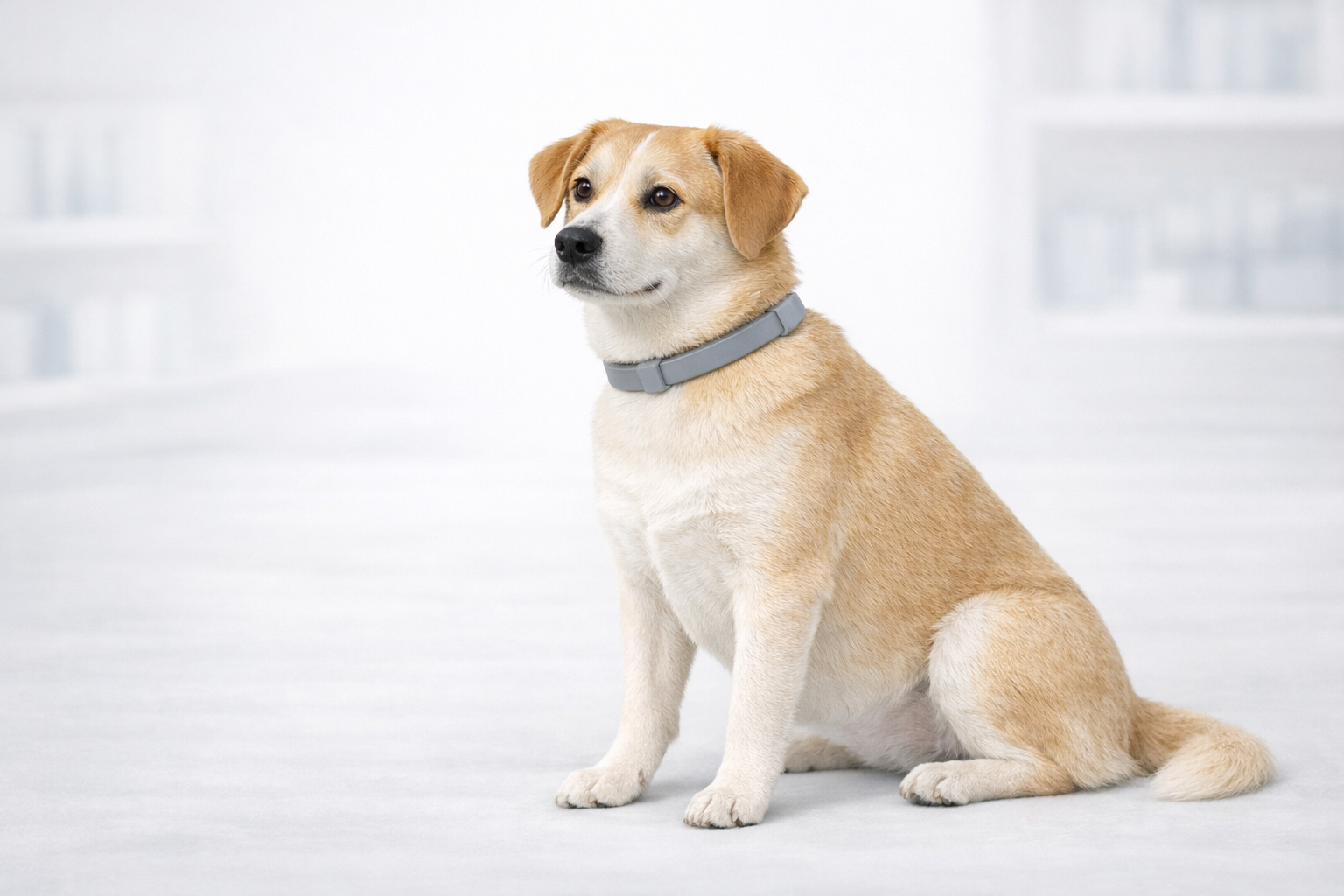
Flea collars are wearable parasite-control products designed to provide longer-lasting protection than many sprays or shampoos. People often choose them for convenience: once it’s on, you don’t have to remember a monthly dose as often. But it’s important to set expectations. A collar can be a solid prevention tool for many dogs, yet it may not be enough by itself when there’s a heavy, active infestation in the home or when multiple pets are involved.
This guide gives you a neutral framework to decide whether a collar fits your dog’s lifestyle, your household, and your risk level. We’ll cover how these products work, what “up to X months” really means, realistic strengths and weak spots, and the safety steps that matter most-including fit checks, irritation monitoring, and contact precautions for homes with children and cats. Always follow label instructions and talk to your veterinarian, especially if your dog is young, medically complex, or has had reactions to parasite products before.
Key Takeaways
- Do they work? In many dogs, collars can reduce flea exposure over time, but results depend on correct fit, environment, and the overall infestation level.
- Best for consistent, long-duration prevention when remembering monthly treatments is difficult.
- They’re not an instant “clean-up” tool for a severe home infestation-home treatment and veterinary guidance may be needed.
- Fit matters: too loose reduces effectiveness; too tight risks irritation and discomfort.
- Monitor the neck area for redness, itching, or hair loss, especially in the first days to weeks.
- Consider contact exposure in households with children and cats; wash hands after handling and follow label precautions.
- Counterfeits and low-quality products are a real issue-buy from reputable sources and replace damaged collars.
- If your dog seems unwell or unusually restless after starting one, remove it and call your vet.
What a Flea Collar Actually Is (and what it isn’t)
A flea collar is a delivery device. Instead of applying a liquid to the skin or giving a pill by mouth, the collar holds active ingredients in a band that releases small amounts over time. Think of it as continuous, low-dose exposure intended to protect your dog over weeks or months.
What it is:
- A slow-release or continuously acting product worn around the neck
- Designed for ongoing prevention and control
- Often chosen for long duration and ease of use
What it isn’t:
- Not a guaranteed “one-step cure” for a major household infestation
- Not automatically safer or riskier than other methods-safety depends on ingredients, correct use, and your dog’s health
- Not the same across all products (ingredients, distribution across the body, and how long they last can vary widely)
“Kills” vs “repels,” in plain language
Some collars primarily kill fleas after contact; others also repel or reduce how many parasites attach. “Repel” doesn’t mean an invisible force field-it usually means fleas are less likely to stay on the dog long enough to bite and reproduce.
What “up to X months” really depends on
“Up to” is a best-case estimate. Duration can be shorter based on:
- Fit and wear time (loose collars or intermittent use reduce performance)
- Environment (high flea pressure can overwhelm any single tool)
- Bathing/swimming (some products tolerate water better than others; labels differ)
- Coat type and skin oils (distribution can vary from dog to dog)
How Collars Work (simple science + practical meaning)
Most collars rely on one of two practical pathways:
- Spread across the coat/skin:
Active ingredient moves from the collar area across the skin surface and coat-often with the help of your dog’s natural skin oils and movement. This can help provide broader protection than the neck alone. - Localized concentration with gradual distribution:
Some products maintain higher activity near the neck and shoulders first, then distribute over time.
Why coverage can be uneven with low-quality products
Distribution isn’t magic; it depends on formulation and correct use. With poorly made products, you may get:
- Stronger effect near the collar and weaker effect toward the rear of the body
- Shorter-lived control than promised
- Inconsistent results between dogs
What you should notice when it’s working
Owners often expect to see fleas disappear overnight. That’s not a realistic benchmark for many collar-based products. More practical signs include:
- Fewer flea sightings over 1–2 weeks, especially after regular grooming checks
- Less scratching (though itching can have many causes, so don’t assume)
- Cleaner flea comb results over time
- Reduced new bites if your dog is in a moderate exposure environment
If you see no improvement after a reasonable period-or you’re finding many fleas daily-assume the problem may be bigger than what a single collar can solve.
Effectiveness: Best Use Cases vs Weak Spots
1) Prevention for moderate exposure
This is the most realistic “sweet spot.” If your dog occasionally encounters fleas (parks, daycare, neighborhood walks) and your home isn’t currently infested, a collar can be a convenient prevention tool. Consistency is its main advantage: it works when it’s worn correctly, without relying on monthly reminders.
2) Dogs where monthly application is hard (compliance benefit)
Some families struggle with spot-on timing, kids’ schedules, or a dog that won’t sit still for application. In these cases, a collar can improve consistency-one of the biggest predictors of success in parasite control. For owners who miss doses, flea collars may offer a steadier baseline of protection.
3) High tick regions (realistic expectations)
Some collars are designed to help with ticks as well as fleas. In tick-heavy areas, a collar can be part of a layered plan-especially for dogs that hike or work outdoors. Still, no product makes a dog “tick-proof.” You should still:
- Do daily tick checks after outdoor activity
- Understand that speed of kill/repellency varies by product
- Talk to your vet about regional tick-borne disease risk
Limitations you should plan for
- Severe, active infestations: If fleas are established in the home, you’re dealing with eggs and immature stages in carpets, bedding, and furniture. Even a very effective on-dog product may not solve the environmental reservoir quickly.
- Multiple pets: If one pet is untreated, fleas can persist.
- Outdoor sources: Wildlife and neighborhood animals can keep “re-seeding” fleas.
If your dog is actively covered in fleas or the home has a known infestation, a veterinarian-guided plan often works best: treating all pets, addressing the home environment, and sometimes combining methods for a defined period.
Safety: What’s Common, What’s Rare, and What To Do
(Plain-language safety section)
Most dogs tolerate properly used products well, but reactions can happen. The key is to watch early and act quickly if something seems off.
Common: local skin irritation
You may notice:
- Redness or mild rash under the collar
- Itching at the neck
- Hair thinning where the collar sits
What to do:
Remove the collar. If the skin looks dirty or oily, gently wash the area with mild soap and water and pat dry. Then call your veterinarian for advice, especially if irritation doesn’t improve within a day or if your dog seems very uncomfortable.
Less common: general behavior changes
Some dogs may show:
- Restlessness
- Unusual tiredness
- Increased scratching that doesn’t look like normal adjustment
- Acting “not like themselves”
What to do:
Remove the collar and contact your vet. If your dog seems significantly unwell, seek urgent veterinary care.
Children contact precautions (simple and practical)
Because these products are designed to release active ingredients over time, contact exposure matters:
- Wash hands after handling the collar or touching the neck area, especially before eating.
- Avoid letting children sleep face-to-face against the dog’s collar area.
- Store packaging safely and follow the label’s specific guidance.
Multi-pet households, especially cats
This is a big one. Some dog parasite products can be dangerous to cats if cats lick, cuddle, or groom the treated dog, or if the product contains ingredients cats can’t tolerate.
Practical steps:
- Read the label carefully for species warnings.
- If you have cats that groom the dog or cuddle tightly, consider a different method or create a short “separation window” after handling and fitting the collar (and wash hands).
- If any pet shows signs of illness, remove the product and call your veterinarian.
Brief entanglement/choking risk management
Any collar can snag. To reduce risk:
- Ensure proper fit (not too loose) and trim excess length if the label allows.
- Supervise dogs during rough play, crate training, and outdoor brushy areas.
- Consider breakaway-style safety designs if appropriate for your dog’s lifestyle and the product’s instructions.
Fit and Best Practices (this section wins rankings)
Correct fit is one of the biggest controllable factors for both safety and performance with flea collars.
The two-finger rule
- You should be able to slide two fingers between the collar and your dog’s neck.
- Too tight: rubbing, pressure marks, discomfort.
- Too loose: reduced contact and distribution, plus snag risk.
Check weekly-especially for growing dogs
Puppies and young dogs grow fast. Re-check fit every week, and after grooming appointments. A collar that was perfect last month can become too tight or too loose.
Replace if damaged and avoid counterfeits
- Replace the collar if it cracks, loses flexibility, or the clasp wears out.
- Counterfeit products may have incorrect ingredient levels or poor materials. Buy from reputable retailers and keep the packaging so you can reference lot numbers if needed.
Bathing and swimming notes
Water exposure affects products differently:
- Frequent bathing or swimming can shorten the effective duration for some collars.
- Don’t assume waterproof means “no impact.”
- Follow label instructions about bathing frequency, shampoo type, and whether the collar should be removed.
Quick daily/weekly routine
- Daily: quick glance at fit and skin comfort.
- Weekly: remove briefly (if label allows), inspect neck skin, check for odor, stiffness, or damage; re-fit correctly.
- Monthly: confirm you’re still within the product’s stated duration and that your dog’s flea checks are improving, not worsening.
Why It Didn’t Work (Troubleshooting)
Use this “Cause → Fix” list to troubleshoot without guessing.
- Collar too loose / worn incorrectly → Refit with the two-finger rule; trim excess length if permitted; ensure it stays on continuously.
- Heavy infestation already in the home → Treat the environment (vacuum, wash bedding) and talk to your vet about a broader plan; a single tool may not be enough.
- Didn’t treat all pets → Ensure every dog and cat is protected with a species-appropriate product; untreated pets keep the cycle going.
- Bathing/swimming too frequent → Check label guidance; reduce water exposure if possible or choose a method less affected by bathing.
- Product quality/counterfeit → Purchase from reputable sources; inspect packaging; consider switching to a vet-recommended product line.
- Unrealistic expectation about instant results → Give it time while doing flea comb checks; if fleas remain abundant after a reasonable window, escalate the plan with your veterinarian.
If you’re seeing fleas daily despite correct use, it’s a signal to reassess the whole system: dog, home, other pets, and local exposure.
Collars vs Spot-ons vs Oral Chews: How to Choose
No single method is “best” for every dog. The right choice depends on lifestyle, household contacts, medical history, and how reliably you can apply or give a treatment.
TABLE #1
| Method | Best for | Duration | Water/bathing impact | Contact exposure | Common mistakes | When to pick |
|---|---|---|---|---|---|---|
| Collar | Owners wanting long-duration, low-maintenance prevention; dogs with inconsistent monthly compliance | Often weeks to months (varies by product) | Can reduce duration for some products; label-dependent | Ongoing skin/coat contact at neck area; consider kids/cats | Too loose, removed often, counterfeit products, expecting instant clean-up | Choose when convenience and consistency are priorities and the household can manage contact precautions |
| Spot-on topical | Households comfortable with monthly routine; dogs who tolerate skin application | Usually about a month | Bathing/swimming can reduce performance depending on product and timing | Wet application site initially; avoid contact until dry | Applied to hair not skin, bathed too soon, missed schedule | Choose when you can reliably apply monthly and need flexible product options |
| Oral chew/tablet | Dogs who dislike topicals or collars; households concerned about residue on coat | Often about a month (some longer) | Not affected by bathing | Minimal coat contact exposure | Missed doses, assuming it repels (many kill after biting), not treating all pets | Choose when bathing is frequent, coat contact is a concern, or the dog won’t tolerate topical application |
A veterinarian can help you match method to risk: for example, a high-exposure dog in a tick region may need a different plan than a mostly indoor dog with occasional yard time.
FAQ (answer directly)
Do vets recommend flea collars for dogs?
Sometimes, yes-especially when they’re a good match for the dog’s lifestyle and the owner’s ability to apply treatments consistently. Many veterinarians focus less on the “format” and more on whether the product is appropriate for the pet, used correctly, and part of a plan that addresses the home and all pets when needed.
What are the disadvantages of flea collars?
Main disadvantages include: variable performance between products, reduced effectiveness if the collar fits poorly, possible skin irritation, and contact exposure considerations in households with children or cats. There’s also a snag/entanglement risk common to any collar.
What is the controversy with flea collars?
The controversy usually centers on safety concerns, reports of adverse reactions, and the wide quality gap between products. Some discussions also involve improper use, counterfeit goods, or using dog products in ways that increase cat exposure. A practical approach is to choose reputable products, follow label directions, and monitor your dog closely at the start.
How safe are flea collars for dogs?
For many dogs, they can be used safely when the product is appropriate and the collar is fitted correctly. Mild skin irritation is one of the more common issues. Serious reactions are less common but possible with any parasite-control product. If you notice a concerning change, remove the collar and contact your veterinarian.
Conclusion
Used thoughtfully, flea collars can be a helpful tool-especially for steady prevention when monthly dosing is hard to maintain. They’re not a universal fix, and they may fall short in severe infestations where the home environment and other pets keep the flea life cycle going. Safety and success both improve when you choose a reputable product, fit it correctly, check the neck area regularly, and follow label instructions.
Talk to your vet if:
- Your dog is a puppy or very small/young (age and weight guidance matters)
- Your dog has a history of seizures or unexplained neurologic episodes
- Your dog has chronic disease or is on multiple medications
- You have cats at home, especially if they groom or cuddle the dog closely
- Your dog develops irritation or seems unwell after starting the product