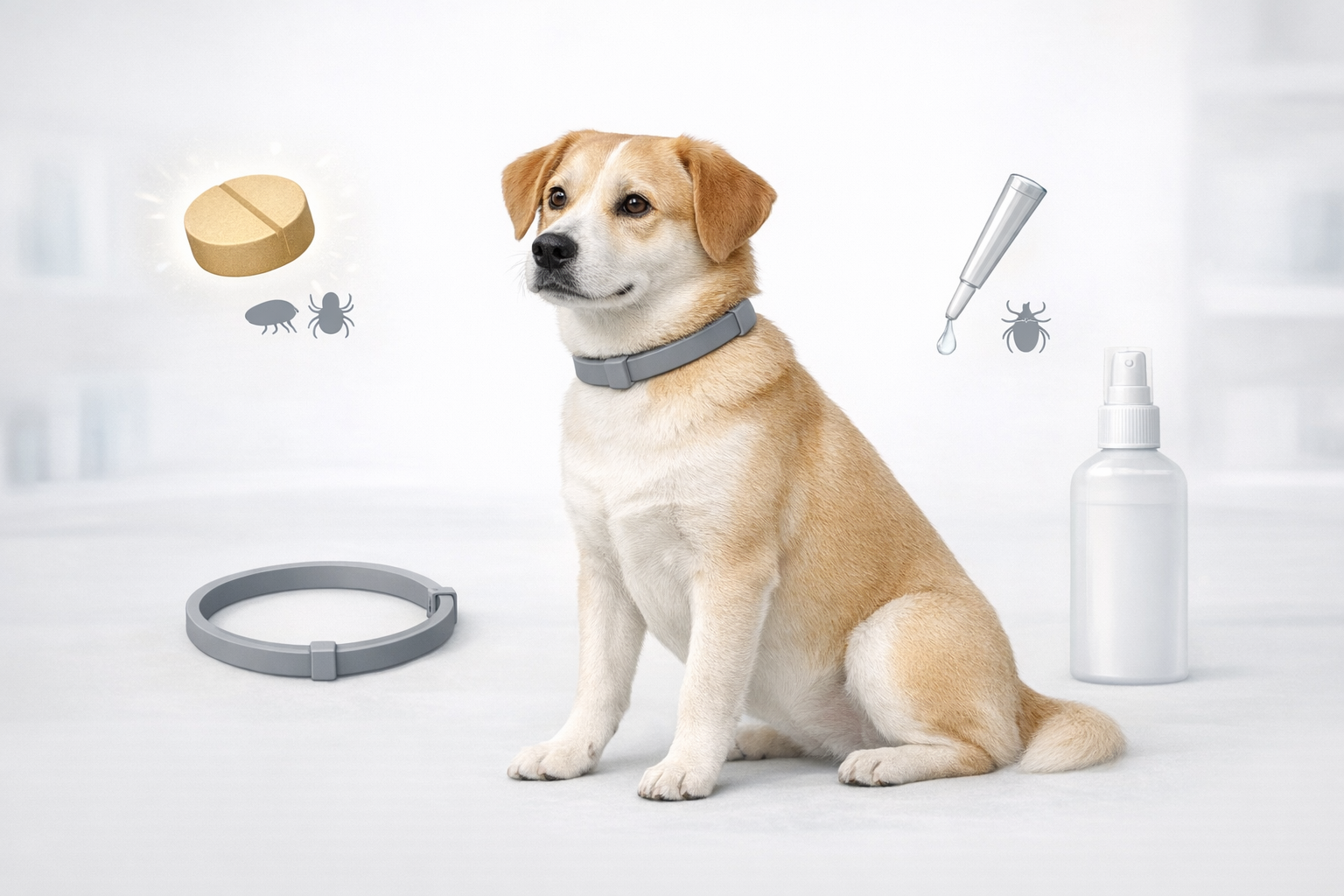
Key Takeaways
- No Universal “Best”: The right choice depends entirely on your dog’s lifestyle (swimming, hiking), medical history (seizures, skin sensitivity), and household (presence of cats).
- Treat the Home: Only 5% of the flea population lives on your dog. If you don’t treat the environment (vacuuming, washing), the infestation will return.
- Consistency is Key: Gaps in protection are the #1 cause of “product failure.” Year-round protection is the veterinary gold standard.
- Weight Matters: Never guess your dog’s weight. Under-dosing leads to resistance; over-dosing risks toxicity.
- Consult Your Vet: Always discuss new treatments with a veterinarian, especially for puppies, seniors, or pregnant dogs.
Determining the “best” flea control is not about finding the brand with the flashiest marketing; it is about matching a mechanism of action to your dog’s specific biology and environment. A product that is perfect for an indoor Pug may be completely ineffective for a Golden Retriever that swims daily in a tick-heavy forest.
The market is saturated with options, ranging from oral chewables and topical spot-ons to collars and sprays. Each category has distinct advantages regarding speed of kill, durability against water, and spectrum of protection. This guide investigates these categories as a veterinary-aligned resource to help you make a safe, evidence-based decision.
Fleas in 60 Seconds: What You’re Actually Fighting
To defeat fleas, you must understand that the adult fleas you see crawling on your dog represent only the “tip of the iceberg”-roughly 5% of the total infestation.
The Lifecycle:
- Adults: Live on the dog, bite for blood, and lay eggs.
- Eggs: Fall off the dog into your carpet, bedding, and yard.
- Larvae: Hatch and feed on organic debris (mostly adult flea dirt) deep in fibers.
- Pupae: Spin a cocoon that is highly resistant to chemicals. They can dormant for months until triggered by vibration or heat.
Why Itching Isn’t the Only Problem:
Beyond the intense discomfort of Flea Allergy Dermatitis (FAD), where a single bite causes a massive allergic reaction, fleas are vectors for disease. They transmit tapeworms (Dipylidium caninum) if ingested during grooming and can cause anemia in small puppies. Effective control requires breaking this lifecycle, not just killing the adults currently visible.
Types of Flea Control Options (With Clear Use Cases)
Modern veterinary science offers three primary preventive vehicles, plus emergency options. Understanding the mechanics of each is crucial for efficacy.
Oral Chewables (Systemic)
Oral medications are ingested, digested, and enter the dog’s bloodstream. When a flea or tick bites the dog, they ingest the medication and die.
- When they shine: Ideal for dogs that swim frequently, require frequent therapeutic bathing, or households where children constantly touch the dog (no residue).
- Tradeoffs: The parasite must bite the dog to die, which may still trigger an allergic reaction in highly sensitive dogs.
- Notable Class: The isoxazoline class (including products like Simparica Trio, NexGard, and Bravecto) dominates this space due to high efficacy.
Spot-on / Topical Options
These liquids are applied to the skin (usually between the shoulder blades). Most modern topicals translocate through the oil layer (sebum) of the skin to cover the entire body.
- How they spread: They do not enter the bloodstream significantly; they sit in the hair follicles and lipid layer.
- Common failure modes: Applying too soon after a bath (stripping the oils needed for spreading) or bathing with harsh detergents that strip the product off.
- Topical flea formulations often contain permethrin or fipronil.
Collars (Long-Acting)
Modern pharmaceutical collars are matrix-driven, slowly releasing active ingredients over months.
- What they do well: They offer “repellency” (preventing the bite) which orals cannot do. This is a significant advantage in preventing tick-borne disease transmission.
- Where they fail: Efficacy drops if the collar is loose (must touch skin) or if the dog swims constantly, which depletes the matrix faster than intended. A generic tick collar from a grocery store is vastly different from a veterinary-grade matrix collar.
Shampoos, Sprays, “Fast Knockdown”
These are contact-kill agents.
- Emergency Role Only: They kill what is on the dog right now but have zero residual activity. Once the dog dries, a flea from the carpet can jump back on and survive. Do not rely on these for prevention.
Comparison Table: Flea Control Categories
| Type | Typical Duration | Water/Bath Resistant | Kills vs. Repels | Best For | Common Drawbacks | Vet Visit Needed? |
|---|---|---|---|---|---|---|
| Oral Chew | 1–3 Months | Excellent (Systemic) | Kills (Must bite) | Swimmers, Families, heavy infestations | Bite required; Caution with seizure history | Yes (Prescription) |
| Topical (Rx) | 1 Month | Moderate (Wait 48hrs) | Varies (Some repel) | Dogs who won’t eat pills; Seizure history | Greasy residue; Can be washed off | Yes (Usually) |
| Topical (OTC) | 1 Month | Low to Moderate | Varies | Budget conscious; Standard prevention | Resistance reported in some older ingredients | No |
| Collar | 8 Months | Moderate | Kills & Repels | Hiking/Tick areas; Forgetful owners | Toxicity to cats (if permethrin); Lost collars | No (some brands) |
What Works Best and Why (Mechanisms + Real-World Scenarios)
Different lifestyles demand different chemical mechanisms. Here is how to choose based on your specific situation.
1. Swimming / Frequent Baths
Recommendation: Oral Chewables (Isoxazolines).
Why: Topicals rely on skin oils. Frequent exposure to water, and especially the surfactants in shampoo, strips the lipid layer, rendering the flea treatment ineffective well before the month is up. Oral medications are inside the blood supply, meaning efficacy is 100% independent of how wet the dog gets.
2. Heavy Tick Area / Hiking
Recommendation: Repellent Topicals or Veterinary Tick Collar.
Why: While oral medications kill ticks effectively, the tick usually must attach and feed to die. In areas with high Lyme or Anaplasmosis risk, preventing the bite is superior. A veterinary-grade tick collar (specifically those using flumethrin) creates a “hot foot” effect where ticks are repelled before they can attach.
Note: Some vets recommend “Double Defense”-using an oral for fleas/ticks and a collar for repellency-but this must be cleared by your vet to avoid overdose.
3. Puppies / Young Dogs
Recommendation: Specific Oral or Topical (Age/Weight Dependent).
Why: Young animals have different metabolic rates and blood-brain barrier permeability. Never use a product on a puppy unless the label explicitly clears it for their specific age (e.g., “8 weeks or older”) and weight.
- Safety Emphasis: Weigh the puppy before every single dose. A growing puppy can jump weight brackets in two weeks, leading to under-dosing.
4. Multi-Pet House with Cats
Recommendation: Oral Chews or Cat-Safe Topicals.
Why: Many canine topicals contain Permethrin or high-concentration pyrethroids. These are incredibly toxic to cats-simply grooming a dog who was recently treated can be fatal to a cat. Orals eliminate this surface risk entirely.
5. Dogs with Sensitive Skin
Recommendation: Oral Chewables.
Why: Topicals use carriers (alcohol or solvents) to penetrate the skin, which can cause severe contact dermatitis, hair loss, or chemical burns in sensitive breeds. Systemic orals bypass the skin barrier entirely.
6. Dogs with Seizure History
Recommendation: Non-Systemic Topicals or Collars.
Why: The FDA has issued alerts regarding the isoxazoline class of drugs (found in Simparica Trio, Bravecto, etc.) and their potential link to neurologic adverse events in dogs with a history of epilepsy. While rare, dogs with known seizure disorders should typically utilize older, non-systemic chemistries under veterinary guidance.
Prescription vs. OTC: The Real Difference
The divide between Over-The-Counter (OTC) and Prescription (Rx) is not just about strength; it is about regulation and innovation.
Prescription (Rx):
These products (mostly orals) are regulated by the FDA. They generally utilize newer molecules (like isoxazolines) that pests have not yet developed resistance to. Because they enter the bloodstream, a veterinary-client-patient relationship is legally required to ensure the dog’s liver and kidney function can handle the drug.
Over-The-Counter (OTC):
These are regulated by the EPA (as pesticides). They often use older ingredients like fipronil or imidacloprid.
- The Risk: While valid OTC options exist, this market is plagued by counterfeits (especially on third-party marketplaces) and “look-alike” packaging. Furthermore, generics often lack the sophisticated carrier agents that help the name-brand product spread effectively across the skin.
How to Choose: A 2-Minute Decision Framework
If you are overwhelmed, use this logic flow to narrow your field of view.
Quick Decision Tree:
- IF dog swims > 1x/week OR has sensitive skin THEN → Oral Chew.
- IF dog has history of seizures THEN → Topical (Non-Isoxazoline) or Collar.
- IF you live in deep woods (high tick pressure) THEN → Collar (for repellency) OR Oral + Tick Check.
- IF you have cats who groom the dog THEN → Oral Chew (Safest) or Non-Permethrin Topical.
The “Buy-It” Checklist:
Before purchasing, verify:
- Weight: Is my dog currently within this exact bracket? (Do not guess).
- Age: Is my dog old enough for this specific brand?
- Source: Am I buying from a vet or an authorized pharmacy? (Avoid random third-party sellers).
Market Examples (Not Endorsements):
In the oral category, Simparica Trio is frequently prescribed because it combines flea, tick, and heartworm prevention in one chew, increasing compliance. For purely topical needs, Frontline Shield is a common example of modern spot-ons. For long-term wear, Seresto is the primary example of a matrix-driven tick collar.
Safety Rules
Safety is not just about the chemical; it is about the application.
- Strict Weight Compliance:
Never “split” a large dog dose between two small dogs. The active ingredient is not always distributed evenly in the liquid or chew. Always buy the exact box for your dog’s current weight. - The Cat Warning:
Read the label. If it says “Toxic to Cats,” apply it in a separate room and keep the dog away from the cat until the product is fully dry (usually 24 hours). - Adverse Reactions:
Watch your dog for 24 hours after a new medication. Signs of reaction include vomiting, lethargy, excessive drooling, or stumbling. If these occur, call your vet immediately. If it was a topical, wash the dog with mild dish soap to remove the remaining product. - Application Hygiene:
Wash your hands after applying topicals. Do not let children hug the dog or touch the application site for at least 2-4 hours (or per label instructions). - No Double Dosing:
If you apply a topical and still see fleas 3 days later, DO NOT apply a second dose or give a pill immediately. This can lead to toxicity. Call your vet for a different strategy (like Capstar) that won’t interact.
How to Make Any Plan Work (Common Failures)
When an owner says, “This product doesn’t work,” it is almost always due to an environmental or protocol failure, not chemical resistance.
The “Fix It” Protocol:
- The Vacuum Routine: You must vacuum floors, carpets, and upholstery every 2-3 days to suck up eggs and stimulate pupae to hatch (so they can be killed). Dispose of the vacuum bag or canister contents immediately in an outside trash bin.
- Wash Bedding: Wash all pet bedding (and your bedding, if they sleep with you) in hot water weekly.
- Treat All Pets: If the dog is on prevention but the indoor/outdoor cat isn’t, the cat is acting as a “flea shuttle,” restocking your home with eggs daily. Every mammal in the home must be treated simultaneously.
- Wait it Out: It takes at least 3 months to break a heavy infestation. You will see fleas for weeks after starting treatment-these are newly hatched adults jumping on the treated dog to die.
Note: In severe home infestations, environmental sprays or professional exterminators may be required in addition to treating the pet. Consult your vet if the infestation persists beyond 90 days.
FAQ
What kills fleas immediately on dogs?
If a dog is swarming with fleas, veterinarians often use a product called Nitenpyram (e.g., Capstar). This is an oral tablet that begins to kill fleas within 30 minutes, causing them to fall off the dog. However, it stays in the system for only 24 hours. It is a “clean slate” tool, not a preventative. It must be followed up with a long-acting monthly preventative.
Is NexGard or Frontline better?
This is a comparison of categories. NexGard is an oral isoxazoline; Frontline is a topical fipronil product. NexGard is generally preferred for swimming dogs and offers a faster kill speed for ticks. Frontline is available OTC and has a long safety track record, but some owners report lower efficacy in certain regions due to potential local resistance profiles or application errors.
Do flea collars work?
Veterinary-grade matrix collars (like Seresto) work exceptionally well. They release active ingredients slowly and consistently. However, cheap “gas station” collars that simply smell like essential oils or traditional pesticides usually have very poor efficacy and essentially zero tick prevention capability.
Do dogs need year-round protection?
Yes. Even in cold climates, micro-climates exist. Fleas thrive in your heated living room regardless of the snow outside. Ticks can become active any day the temperature rises above freezing (32°F/0°C). Stopping prevention in winter is the most common cause of spring infestations.
Can fleas become resistant?
While possible, true chemical resistance is rare compared to the number of claims. The vast majority of “resistance” cases are actually “compliance failures”-missing a dose by a week, under-dosing based on weight, or failing to treat the environment.
When should I see a vet?
You should see a vet if your dog has open sores from scratching (potential infection), is losing weight, has pale gums (anemia from flea blood loss), or if you are using flea treatments consistently for 3 months and still seeing a heavy load of parasites.
Conclusion
The “best” flea treatment is the one you can administer consistently and correctly. For a swimming Labrador in a Lyme-endemic area, that might be an oral chew like Simparica Trio. For an elderly pug with a history of seizures, a topical application is the safer, superior choice.
By understanding the mechanism of action-whether systemic or topical-and adhering strictly to weight-based safety guidelines, you can protect your dog effectively. Remember: prevention is always cheaper, safer, and easier than treating an active infestation. Talk to your veterinarian to finalize a plan tailored to your dog’s specific medical history.