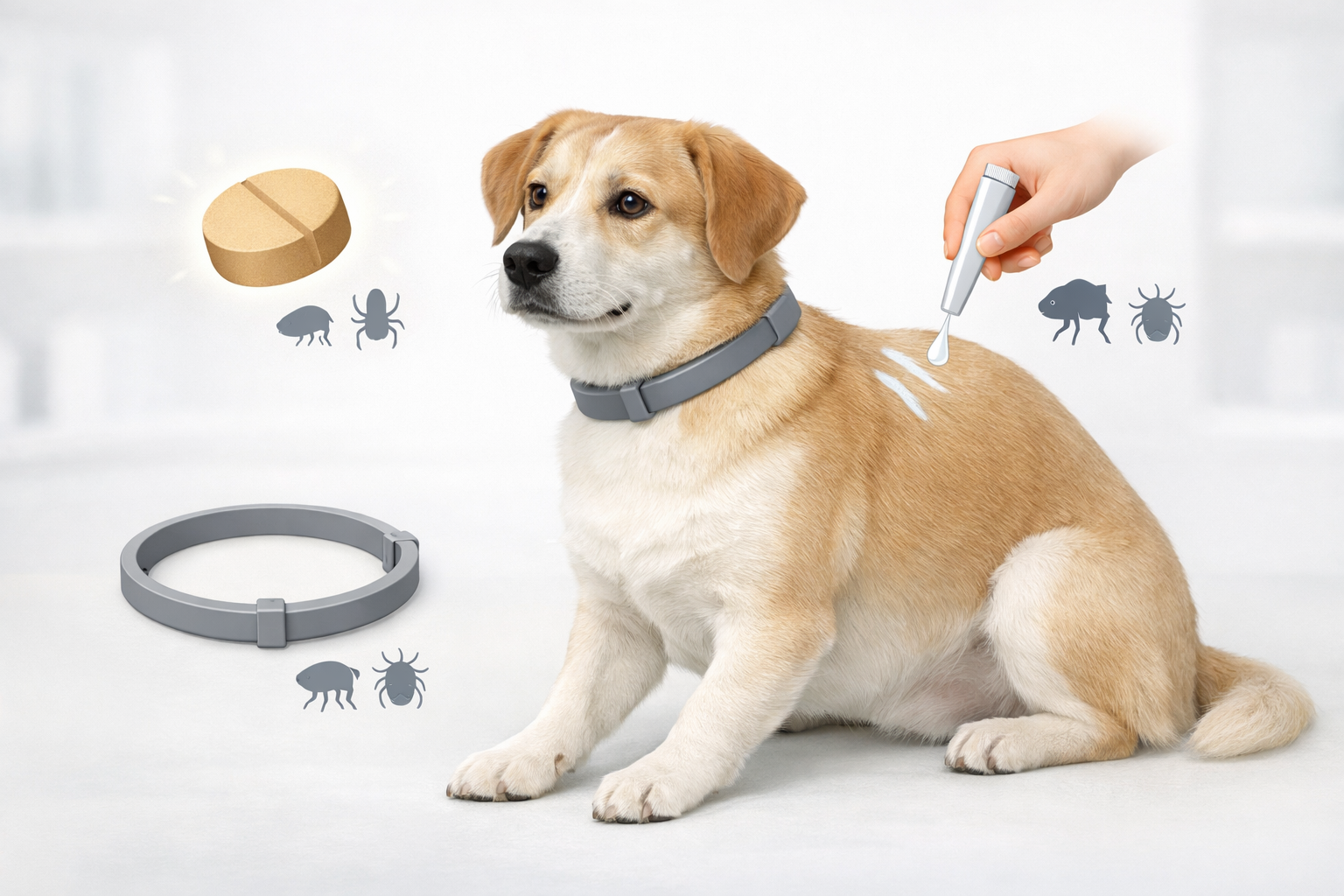
Flea and tick control is often marketed as a routine grooming task, but it is fundamentally a medical prevention strategy. Parasites are not merely nuisances; they are vectors for systemic diseases ranging from anemia and allergic dermatitis to life-altering pathogens like Borrelia burgdorferi (Lyme) and Ehrlichia.
Veterinarians emphasize that there is no single “best” product for every patient. The right choice depends on a complex interplay of your dog’s physiology, local parasite prevalence, and household lifestyle. While modern isoxazoline class drugs have revolutionized efficacy, they also carry specific FDA advisories that owners must understand to make informed decisions.
This guide provides an evidence-based framework for selecting tick prevention and flea control, differentiating between clinical data and marketing claims to protect your dog’s health.
Section 1 – Why Flea & Tick Prevention Matters
Effective parasite control requires understanding the biological threats involved. Treating visible parasites is reactive; the goal of veterinary medicine is preventative interruption of the life cycle.
The Biological Threat
Fleas (Ctenocephalides felis) are more than skin irritants. A single flea bite can trigger Flea Allergy Dermatitis (FAD), the most common skin disease in dogs, causing intense pruritus (itching) and secondary bacterial infections. Furthermore, fleas are the intermediate host for the tapeworm Dipylidium caninum, which infects dogs when they ingest fleas during grooming.
Ticks present a more severe systemic risk. Unlike fleas, which cause immediate irritation, ticks are silent hunters that transmit pathogens such as Lyme disease, Anaplasmosis, and Rocky Mountain Spotted Fever. These diseases can cause kidney failure, lameness, and neurological deficits long after the tick has detached.
The “Indoor Dog” Myth
A common misconception is that indoor-only dogs do not require tick prevention. However, veterinary consensus confirms that “indoor” dogs are frequently exposed to parasites via:
- Human clothing or shoes tracking in larvae.
- Brief bathroom breaks in shared yards.
- Other household pets (cats) that roam outdoors.
- Open windows or screened porches where pests can enter.
Seasonality vs. Year-Round Protection
Parasitologists recommend year-round prevention regardless of climate. Fleas thrive in indoor microclimates (carpets, bedding) during winter. Ticks, specifically Ixodes species (Deer Ticks), seek hosts whenever temperatures are above freezing (40°F/4°C). Stopping treatment in winter creates a “compliance gap” that allows infestations to establish before spring.
Section 2 – Types of Flea & Tick Treatments (Core Comparison)
Modern treatments fall into three primary categories: systemic oral medications, topical spot-ons, and collars. Understanding the mechanism of action is key to efficacy.
Oral Medications (Chewables)
Active Ingredients: Afoxolaner, Fluralaner, Sarolaner, Lotilaner (Isoxazolines).
How they work:
Oral medications are systemic. The drug is absorbed into the dog’s bloodstream. When a flea or tick bites, it ingests the medicated blood and dies via nervous system overstimulation (inhibiting GABA-gated chloride channels).
- Pros: High efficacy (near 100%); waterproof (excellent for swimmers); no residue on fur; rapid kill speeds often prevent egg production.
- Cons: The parasite must bite the dog to die, which means transmission of pathogens is theoretically possible, though the kill speed is usually faster than the transmission window for most diseases.
- Neurological Warning: The FDA has issued an alert regarding the isoxazoline class, noting potential for muscle tremors, ataxia, or seizures. While considered safe for the vast majority of dogs, they should be used with caution in dogs with a known history of seizures.
Topical Spot-On Treatments
Active Ingredients: Fipronil, Imidacloprid, Permethrin, Selamectin.
How they work:
These are applied to the skin between the shoulder blades and translocate across the body via the lipid (oil) layer of the skin. They concentrate in sebaceous glands, acting as a reservoir that continuously releases the drug onto hair follicles.
- Pros: Some ingredients (Permethrin) have a “repellent” effect, preventing ticks from attaching at all-a “hot foot” effect.
- Cons: Efficacy can diminish if the dog is bathed frequently with harsh shampoos (stripping skin oils). They leave a residue that can be messy.
- Safety Warning: Products containing high concentrations of permethrin are lethally toxic to cats.
Collars
Active Ingredients: Flumethrin, Deltamethrin, Imidacloprid.
How they work:
Modern collars (like Seresto) use a polymer matrix to slowly release active ingredients over months. These spread over the skin layer similar to topicals.
- Pros: Long-acting (up to 8 months); cost-effective over time; often combine repellency with killing activity.
- Cons: Efficacy relies on continuous contact with skin; loose collars fail. Potential for loss if the dog plays rough.
- Old vs. New: Avoid older, gas-generating collars (often smelling of chemicals), which provide erratic protection. Stick to veterinary-grade polymer matrix collars.
Shampoos & Sprays
These are therapeutic, not preventative. They provide a “knockdown” effect to kill parasites currently on the dog but offer zero residual protection. A bathed dog can pick up a new flea immediately after drying.
Comparison of Treatment Modalities
| Feature | Oral Chewables (Isoxazolines) | Topical Spot-Ons | Polymer Collars |
|---|---|---|---|
| Primary Action | Systemic Kill (Requires Bite) | Contact Kill & Repel (Product Dependent) | Contact Kill & Repel |
| Duration | 1 to 3 Months | 1 Month | 6 to 8 Months |
| Water Resistance | Excellent (Internal) | Moderate (48hr wait period) | High |
| Tick Repellency | No | Yes (if Permethrin/Pyrethroid based) | Yes |
| Best Use Case | Swimmers, Households with children | Dogs needing repulsion (Hiking) | Budget-conscious, low maintenance |
| Safety Note | FDA Seizure Alert | Toxic to Cats (Permethrin) | Strangulation risk (rare) |
Section 3 – Safety Guidelines
Safety is dose-dependent and patient-specific. Veterinary guidance aims to minimize risk while maximizing protection.
The Permethrin Warning (Cats)
Permethrin is safe for dogs but fatal to cats because felines lack the liver enzyme (glucuronide transferase) needed to metabolize it.
- Risk: Applying a “small dog” spot-on to a cat, or a cat grooming a recently treated dog.
- Signs: Tremors, drooling, seizures. This is a medical emergency requiring immediate vet intervention.
Puppies and Weight Limits
Never split a large dog dose between two smaller dogs. The concentration and carrier volumes are precise.
- Age: Most oral products are safe from 8 weeks of age and 4.4 lbs (2 kg), but always verify the specific package insert.
- Growth: Puppies grow rapidly; a dose adequate at 8 weeks may be insufficient by 12 weeks, leaving a window of vulnerability.
MDR1 Gene Mutation (Collies/Shepherds)
Herding breeds with the MDR1 gene mutation have a compromised blood-brain barrier, making them sensitive to drugs like ivermectin.
- Good News: Studies confirm that modern isoxazoline chews (Bravecto, NexGard, Simparica) are safe for MDR1-deficient dogs even at elevated doses.
When to Stop and Call a Vet
Adverse reactions are rare but possible. Stop use and consult a professional if you observe:
- Vomiting within 1 hour of administration (dose may need redosing).
- Lethargy or lack of appetite lasting >24 hours.
- Neurological signs: Stumbling (ataxia), tremors, or seizures.
Section 4 – How to Choose the Right Product
Avoid looking for the “best brand.” Instead, use this decision framework to match the product to the patient.
1. Evaluate Lifestyle & Activity
- The Swimmer: If your dog swims weekly or is bathed frequently for skin conditions, oral medications are superior. Topicals can wash off or lose potency with lipid stripping.
- The Hiker: If you walk in deep woods or high-tick density areas, you need repellency. A Permethrin-based topical or flumethrin collar adds a layer of protection preventing the tick from attaching. Note: Some owners double up (Oral + Repellent Collar) but this must ONLY be done under vet supervision.
2. Evaluate Household Safety
- Cats Present? If a cat sleeps with or grooms the dog, strictly avoid high-concentration permethrin topicals. Opt for oral chews or cat-safe topicals (selamectin).
- Small Children? If children frequently hug the dog, oral medications eliminate the risk of residue transfer on hands/clothing.
3. Geography & Parasite Pressure
- Lyme Endemic Areas (Northeast/Midwest US): Tick kill speed is critical. Isoxazolines kill ticks quickly (often <12-24 hours), reducing transmission risk.
- Flea Allergy Dermatitis (FAD): Speed of kill is paramount to stop the allergic reaction. Oral meds or fast-acting sprays (spinosad) are often preferred to break the itch cycle.
Section 5 – Proper Use & Common Mistakes
Even the most efficacious tick products fail due to human error.
- Splitting Doses: Dividing a “Large Dog” pipet for two small dogs often results in under-dosing or toxicity. The active ingredient is not always evenly distributed in the carrier liquid.
- Application Errors (Topical): Applying to the hair rather than the skin prevents lipid absorption. The product must be parted directly onto the dermis.
- The “Winter Skip”: Skipping doses in colder months is the leading cause of spring infestations. Flea pupae can lie dormant in home environments for months, emerging when the heater turns on.
- Treating Only the Pet: In established infestations, the dog carries only 5% of the flea population (adults). The other 95% (eggs, larvae, pupae) are in the carpet and bedding. You must treat the environment simultaneously.
Section 6 – FAQs
What do vets recommend for flea and tick control?
Veterinarians predominantly recommend FDA-approved isoxazolines (oral chews) or verified polymer collars due to their proven clinical efficacy and safety profiles compared to older organophosphates.
What flea treatments should be avoided?
Avoid “generic” grocery store brands containing older pyrethroids if the concentration is unclear, and strictly avoid essential oil “spot-ons” (peppermint, clove) which lack peer-reviewed efficacy data and can cause skin irritation. Ultrasonic collars have been proven completely ineffective in clinical trials.
Oral vs. topical – which is safer?
Both are safe for healthy dogs. Topicals avoid systemic absorption (good for dogs with liver/kidney issues) but risk environmental contamination. Orals are systemic but cleaner. For dogs with a history of seizures, topicals are generally preferred over isoxazolines.
Are flea collars actually effective?
Veterinary-grade collars (like Seresto) are highly effective. Cheap, powdery gas-release collars found in supermarkets are generally ineffective and widely discouraged by professionals.
Can dogs build resistance to flea treatments?
True chemical resistance is rare. Perceived “resistance” is almost always “compliance failure”-missing a dose, applying incorrectly, or failing to treat the home environment.
Is natural flea control effective?
Generally, no. Studies show natural compounds like citronella or diatomaceous earth have significantly lower efficacy than synthetic options. Diatomaceous earth is potentially hazardous if inhaled by the dog. “Natural” does not mean safe or effective in parasitology.
Section 7 – Final Takeaway
There is no universal “perfect” product, but there is a safe and effective choice for your specific dog. The goal of parasite control is not just comfort; it is the preservation of long-term health by preventing vector-borne disease.
Veterinary guidance supports a consistent, year-round approach using FDA-approved preventatives. Whether you choose an oral chew for its convenience or a repellent topical for deep-woods hiking, the most important factor is consistency. Protecting your dog requires evidence-based medicine, not guesswork.