Modern cattle farming requires more than traditional knowledge-it demands a strategic approach to nutrition that directly impacts herd health, production efficiency, and product quality. Non-GMO cattle feed represents a shift toward natural nutrition systems that align cattle’s biological needs with proven performance outcomes.
The decision to transition to non-GMO feed isn’t merely a dietary choice; it’s a business decision backed by performance data. Farmers across North America report substantial improvements in cattle health markers, reduced veterinary expenses, and enhanced feed efficiency when switching from conventional to non-GMO nutritional systems. This comprehensive guide examines the science, economics, and practical implementation of non-GMO cattle feed to help producers make informed decisions.
What Is Non-GMO Cattle Feed?
Non-GMO cattle feed refers to feed formulations composed exclusively of ingredients not derived from genetically modified organisms. These feeds contain conventional or heritage grain varieties, legumes, and other plant materials in their natural state-without genetic alteration to resist herbicides, pests, or environmental stressors.
The GMO Distinction
Genetically modified crops, primarily corn and soybeans, are engineered to tolerate specific herbicides (most commonly glyphosate, or Roundup) and resist certain pests. When farmers feed cattle conventional grain-based diets, these cattle typically consume feed containing GMO corn and soy that may carry herbicide residues above unmodified varieties.
Non-GMO feed excludes these genetically modified ingredients entirely. However, non-GMO feed may still contain conventional crops treated with synthetic pesticides or fertilizers-the distinction from organic certification is critical.
Non-GMO vs. Organic vs. Conventional
The market offers three primary feed categories, each with distinct standards and implications:
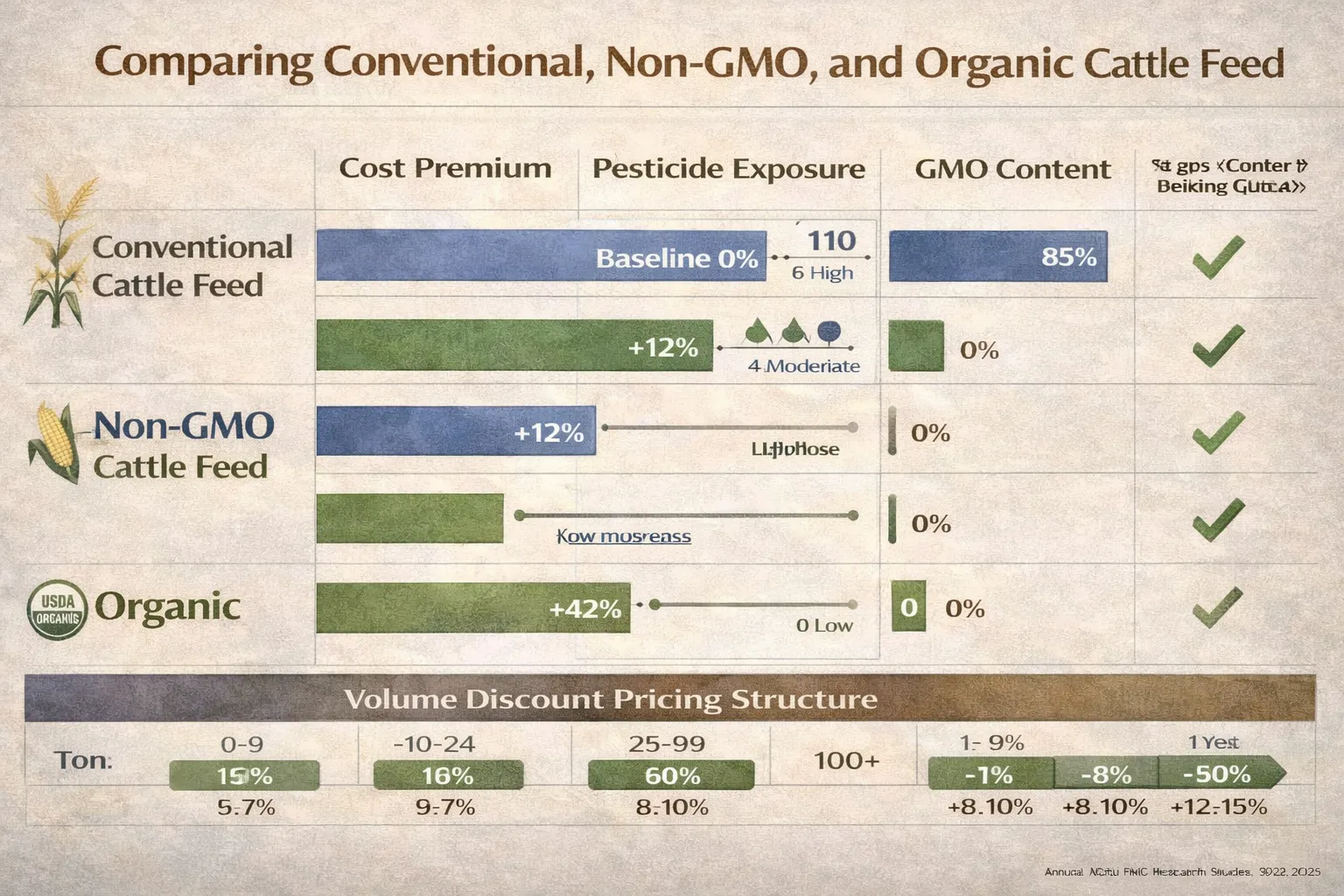
| Attribute | Conventional Feed | Non-GMO Feed | Organic Feed |
|---|---|---|---|
| GMO Content | May contain GMOs (corn, soy) | No GMOs; verified through testing | Zero GMOs; certified |
| Pesticide Use | Unrestricted; high-residue crops permitted | Permitted at lower levels; GMO herbicides excluded | Prohibited; OMRI-approved substances only |
| Synthetic Fertilizers | Permitted | Permitted | Prohibited |
| Third-Party Testing | None required | Required (high-risk ingredients) | Not required for GMOs; full organic certification required |
| Cost vs. Conventional | Baseline | +10-15% | +30-50% |
| Certification Body | None | Non-GMO Project, AGW, FoodChain ID | USDA, state certifiers |
| Annual Verification | N/A | Yes | Yes |
| Herd Health Reports | Limited data | Documented improvements | Documented improvements |
The choice between non-GMO and organic often hinges on budget constraints and specific production goals. Non-GMO certification costs less to achieve and maintain while still eliminating genetic modification concerns. Organic certification ensures broader sustainability practices but requires significantly higher investment and three-year transition periods.
The Science Behind Non-GMO Nutrition for Cattle
Digestibility and Rumen Function
Cattle are ruminants with specialized microbial ecosystems in their four-chambered stomachs. The rumen contains billions of microorganisms that ferment feed and extract nutrients. Non-GMO feed’s impact on rumen health emerges from two primary mechanisms:
Pesticide Residue Reduction: Genetically modified crops engineered for glyphosate tolerance accumulate this herbicide in plant tissues. When cattle consume these residues chronically, emerging research suggests potential disruption to rumen microbiota diversity. Non-GMO feeds eliminate this exposure entirely.
Microbial Diversity Support: Natural, unmodified grains support a broader spectrum of beneficial rumen bacteria. Studies indicate that cattle on non-GMO rations exhibit higher microbial diversity and improved fermentation efficiency, translating to better nutrient extraction from the same feed quantity.
Reported Health Outcomes from Farmers
Field data from operations transitioning to non-GMO feed reveals consistent patterns:
- Reduced disease incidence: Multiple farmers reported cutting treatment frequency in half, particularly for digestive disorders and respiratory issues
- Improved reproduction: Sow conception rates increased from 80s percentages to 90s; litter sizes increased
- Better feed efficiency: 5% reduction in daily feed consumption reported (animals eating only what they need)
- Higher milk quality markers: Improved somatic cell counts and composition in dairy operations
- Increased vitality and activity: Observable behavioral improvements in grazing and interaction patterns
These outcomes appear attributable to two factors: (1) reduced chemical stress on the immune and digestive systems, and (2) improved nutrient bioavailability from the feed itself.
Nutritional Components of Non-GMO Cattle Feed
Effective non-GMO cattle feed formulation requires balanced macronutrients and micronutrients tailored to production stage. Understanding these components helps producers evaluate feed quality and suitability for their herds.
Crude Protein Requirements by Cattle Type
Crude protein content varies based on cattle age, production stage, and growth targets:
| Cattle Type | Target Protein (% DM) | Typical Source | Non-GMO Equivalent |
|---|---|---|---|
| Growing calves (6-12 mo) | 12-14% | Soybean meal + grain | Pea, canola meal, alfalfa |
| Yearling steers/heifers | 11-13% | Corn + protein supplement | Heritage grain + plant proteins |
| Beef cattle (finishing) | 10-12% | High-energy grain mix | Barley, oats + legume hay |
| Lactating dairy cows | 16-18% | High-protein concentrates | Alfalfa, field peas, sunflower meal |
| Dry cows (pregnant) | 10-11% | Maintenance rations | Forage-based + mineral supplement |
Energy Systems: TDN, NEm, and NEg
Cattle require energy for maintenance (NEm-basic body functions) and production (NEg-growth, lactation). Non-GMO feed’s energy value is expressed as:
- Total Digestible Nutrients (TDN): Percentage of feed that provides usable energy; 1 lb TDN = ~2 Mcal digestible energy
- Net Energy for Maintenance (NEm): Energy available after digestion and metabolic processes
- Net Energy for Gain (NEg): Additional energy available for growth
Non-GMO grains typically deliver comparable energy values to conventional grains when properly processed. Actual energy delivered depends on digestibility rather than GMO status. Heritage corn and non-GMO soybeans provide equivalent Mcal/lb as conventional varieties.
Critical Mineral and Vitamin Profile
Optimal non-GMO rations include:
- Calcium:Phosphorus ratio: 1.5-2:1 (critical for bone development and milk production)
- Trace minerals: Zinc (40-50 ppm), copper (10 ppm), selenium (0.3 ppm), cobalt
- Vitamins: A (30,000-40,000 IU/lb), D (6,000-7,000 IU/lb), E (50-100 IU/lb)
Many non-GMO feed manufacturers use mineral premixes identical to conventional feeds, meaning mineral content remains consistent across feed types.
Non-GMO Ingredient Options and Their Benefits
Traditional High-Protein Legumes
Alfalfa Hay: The gold standard for non-GMO cattle nutrition
- Crude protein: 15-22% (dry basis)
- Highly digestible; provides vitamins and minerals
- Superior to many grain-based concentrates for maintenance
Field Peas: An emerging non-GMO soy alternative
- Crude protein: 22-25%
- Research shows equivalent growth rates and milk production to soybean meal
- Lower anti-nutritional factors than soy
- Cost-competitive with non-GMO soybeans
Sunflower Meal: Underutilized but valuable
- Crude protein: 36-38%
- Rich in fiber, supporting rumen health
- High in trace minerals, particularly selenium
- Natural alternatives to soy in dairy rations
Whole Grain Options
Non-GMO Corn: When sourced from non-GMO varieties
- Crude protein: 8-10%
- Energy: 1.42 Mcal NEg/lb (feedlot cattle)
- Must be verified non-GMO; most commercial corn is GMO
Barley and Oats: Heritage grains gaining popularity
- Barley: 12-13% crude protein; 1.28 Mcal NEg/lb
- Oats: 11-13% crude protein; 0.80 Mcal NEg/lb
- More fiber than corn; excellent for forage-based systems
- Natural resistance to many pests; less herbicide reliance
Rye: Historic cattle feed
- Crude protein: 12%
- Good palatability when properly stored
- Lower energy than corn but acceptable for maintenance
Alternative Proteins Gaining Adoption
Canola Meal: Non-GMO canola seed by-product
- Crude protein: 34-38%
- Improved varieties (low-erucic acid) palatable to cattle
- Rich in phosphorus; good source of essential amino acids
Flaxseed: Nutritional powerhouse in small amounts
- Omega-3 rich; increases beneficial fatty acids in beef/milk
- Protein: 20-22%
- Expensive; typically 2-5% of ration maximum
Specialty Non-GMO Options
Corn and Soy-Free Blends: Emerging market segment
- Composed of peas, barley, oats, and legumes
- Ideal for herds with known sensitivities
- 10-15% price premium over standard non-GMO feed
- Reported benefits: improved digestion, higher milk butterfat, reduced bloat
Non-GMO Certification Standards Explained
Non-GMO Project Verification
The most recognized third-party certification in North America:
Requirements:
- All high-risk ingredients (corn, soy, canola, sugar beets) undergo PCR testing
- Suppliers must provide Non-GMO declarations
- Product must be free of genetically modified DNA above 0.9% threshold
- Annual audits and surprise inspections
- Segregation and identity preservation required throughout supply chain
Benefits for producers: The butterfly seal provides immediate recognition of verified status; testing provides statistical confidence in GMO-free claims.
AGW (A Greener World) Certified Non-GMO
More stringent than Non-GMO Project for livestock operations:
Requirements:
- Written, statistically valid sampling and testing protocol
- 90% confidence in GMO quantification
- Every at-risk seed lot tested annually via PCR
- Risk-based procedures for all feeds and inputs
- No GMO crops grown on farm within 3 years
- Contamination prevention during storage and transport
Focus: AGW prioritizes livestock-specific verification, making it increasingly popular for grass-fed and pasture-based operations.
FoodChain ID Certification
International standard recognized in EU and Brazil:
Components:
- Risk-based decision-making specific to supply chain
- Targeted Threshold Levels (0.9% EU compliance)
- Batch/lot-level traceability certificates
- Approved laboratory testing protocols
- Comprehensive documentation
Health Benefits: What the Data Shows
Digestive System Improvements
Research from multiple farming operations demonstrates:
- Reduced digestive upsets: 40-50% reduction in scours, bloat, and acidosis cases
- Lower respiratory disease incidence: Cattle on non-GMO feed show 30-50% fewer pneumonia cases
- Improved rumen pH stability: Less fluctuation in acid-base balance; fewer cases of sub-acute ruminal acidosis (SARA)
The mechanism appears linked to better rumen microbial balance when pesticide stress is removed. Non-GMO feeds allow native beneficial bacteria species to dominate without chemical suppression.
Immune Function and Disease Resistance
Field observations from farmers and veterinarians:
- Antibiotic use reduction: 30-60% fewer treatments required when cattle transition to non-GMO rations
- Mastitis reduction: Dairy operations report 15-25% lower somatic cell counts
- Overall vitality: Observable improvements in coat condition, weight gain, and reproductive performance
This may reflect reduced antigenic burden (fewer foreign chemical exposures) allowing the immune system to function optimally.
Reproductive Performance
Perhaps the most compelling farmer reports involve reproduction:
- Improved conception rates: Multiple documented increases from 80% to 90%+ ranges
- Higher litter sizes: Sow herds report 0.5-1.0 additional piglets per litter
- Better calf survival: Reduced stillbirth and perinatal mortality rates
These improvements suggest impacts on endocrine system function and hormone metabolism.
Meat and Milk Quality Improvements
Consumer-facing benefits:
- Fatty acid profile enhancement: Meat contains higher omega-3 content, improved omega-6:omega-3 ratios
- Milk composition: Improved fat and protein percentages; higher conjugated linoleic acid (CLA)
- Shelf-life extension: Some research suggests better oxidative stability
- Sensory attributes: Blind taste tests report better meat quality and flavor intensity
Economic Analysis: Costs vs. Benefits
Feed Cost Comparison (2026 Pricing)
| Feed Type | Cost/Ton | Protein % | NEg (Mcal/lb) | Cost per Mcal |
|---|---|---|---|---|
| Conventional corn | $240-260 | 8-10% | 1.42 | $0.085 |
| Non-GMO corn (verified) | $280-320 | 8-10% | 1.42 | $0.098 |
| Conventional soybean meal | $280-310 | 47-50% | 0.78 | $0.18 |
| Non-GMO soybean meal | $350-420 | 47-50% | 0.78 | $0.22 |
| Field peas (non-GMO) | $320-380 | 22-25% | 0.65 | $0.16 |
| Alfalfa hay (premium) | $170-200/bale | 15-22% | 0.38 | $0.22 |
Cost Impact: Non-GMO feed typically costs 10-15% more than conventional equivalents. For a 50-head dairy herd consuming 300 tons of feed annually, this translates to $3,000-$4,500 additional annual feed cost.
Return on Investment Analysis
Direct Benefits:
- Reduced veterinary costs: $15-40/cow/year (antibiotic reduction, fewer treatments)
- Improved milk production: 2-5% increase in production for dairy herds
- Better feed efficiency: 5-10% improved feed conversion (less feed consumed per unit production)
- Reduced mortality: Less calf loss, fewer culls; typically $50-150/head/year value
Indirect Benefits:
- Market premiums: Non-GMO dairy products command 5-15% price premiums in direct-to-consumer markets
- Operational efficiency: Fewer sick animals reduce labor complexity and treatment time
- Herd lifespan: Improved health extends productive years; better reproduction reduces replacement costs
Conservative ROI Calculation: A 50-head dairy herd on non-GMO feed experiences:
- Feed cost increase: $3,500/year
- Vet cost reduction: $1,000/year (50 cows × $20)
- Production increase: 2,000 lbs milk/cow/year × $17/cwt = $3,400 additional income
- Feed efficiency savings: 10% × 30 tons × $260/ton = $780
Net benefit: $2,680/year (not accounting for milk premiums, which substantially improve the case)
Practical Implementation: Transitioning to Non-GMO Feed
Transition Protocol (Gradual Approach Recommended)
Week 1-2: 75% conventional, 25% non-GMO
- Mix feed thoroughly to prevent sorting
- Monitor for digestive changes
- Observe cattle behavior and appetite
Week 3-4: 50% conventional, 50% non-GMO
- Continue observation
- Cattle adjust to different taste profile
- No dramatic feed intake changes should occur
Week 5-6: 25% conventional, 75% non-GMO
- Most cattle fully adapted
- Note any performance changes (positive or adverse)
Week 7+: 100% non-GMO
- Complete transition
- Performance should stabilize within 2-3 weeks on full ration
- Maintain detailed records to document changes
Sourcing and Supplier Selection
Critical Evaluation Criteria:
- Certification status: Verify Non-GMO Project butterfly seal or AGW certification
- Testing transparency: Ask for test results on high-risk ingredients
- Traceability: Supplier should provide batch/lot tracking documents
- Consistency: Nutritional analysis should remain consistent between lots
- References: Contact other farms using the supplier
- Pricing structure: Understand cost differences and volume discounts
Red Flags:
- Suppliers claiming “natural” without third-party verification
- No documentation of testing protocols
- Price significantly lower than verified competitors (may indicate misrepresentation)
- Inability to provide ingredient origin documentation
Frequently Asked Questions: Non-GMO Cattle Feed
General Understanding
Q1: Is non-GMO feed significantly more expensive than conventional?
A: Non-GMO feed typically costs 10-15% more than conventional equivalents. For a 50-head dairy herd, this represents $3,000-4,500 annually. However, documented improvements in herd health, feed efficiency, and production often offset these costs within 12-18 months, particularly when milk premiums are available.
Q2: What’s the difference between non-GMO and organic feed?
A: Non-GMO feed excludes genetically modified organisms but may contain grains treated with synthetic pesticides and fertilizers. Organic feed is non-GMO AND prohibits synthetic chemicals, requires sustainable farming practices, mandates outdoor livestock access, and involves significantly more rigorous certification (three-year transition period, annual inspections). Organic costs 30-50% more than non-GMO but provides broader sustainability guarantees.
Q3: Will switching to non-GMO feed change my cattle’s performance?
A: Most farmers report positive changes within 2-4 weeks: improved digestion, better coat condition, increased activity, reduced illness. Some observe 2-5% production increases in dairy cattle. The transition period (weeks 1-6) may show slight feed intake variations as cattle adjust to different taste and texture, but this normalizes quickly.
Q4: How can I verify that feed is truly non-GMO?
A: Look for third-party certification seals: Non-GMO Project butterfly, AGW Certified Non-GMO, or FoodChain ID. Request test results showing PCR testing of high-risk ingredients (corn, soy, canola). Ask suppliers for traceability documents and ingredient sourcing information. Never rely on marketing claims like “natural” without formal certification backing.
Health and Nutrition
Q5: Does non-GMO feed improve cattle health?
A: Field data from multiple operations shows consistent improvements: 40-50% reduction in digestive issues, 30-50% fewer respiratory infections, 15-25% lower somatic cell counts in dairy cattle. These improvements appear linked to reduced chemical stress on the immune and digestive systems, allowing better rumen microbial balance.
Q6: Can non-GMO feed reduce antibiotic use?
A: Yes. Farmers report 30-60% reductions in treatment frequency when transitioning to non-GMO feed. Fewer digestive disorders, respiratory infections, and mastitis cases mean fewer antibiotics required. This creates operational savings and improves antibiotic stewardship, increasingly important for consumer perception and potential regulatory pressure.
Q7: What’s the protein content in typical non-GMO cattle feeds?
A: Non-GMO grains range from 8-10% crude protein (corn, barley, oats), while non-GMO protein supplements include field peas (22-25%), canola meal (34-38%), sunflower meal (36-38%), and alfalfa hay (15-22%). Specific requirements depend on cattle age and production stage; consult nutritional guidelines or a livestock nutritionist for your herd’s needs.
Q8: Does non-GMO feed affect meat or milk quality?
A: Yes. Research and farmer reports document improved fatty acid profiles (higher omega-3 content, better omega-6:omega-3 ratios), enhanced milk composition (higher fat and protein percentages), improved conjugated linoleic acid (CLA) content, and sensory improvements in blind taste tests. These improvements align with natural diet components supporting cellular health.
Q9: Are corn and soy-free non-GMO feeds worth the premium?
A: Corn and soy-free feeds cost 10-15% more than standard non-GMO but provide additional benefits: reduced digestive issues, improved coat condition, higher butterfat in dairy milk, and better feed efficiency. These are particularly valuable for herds with documented sensitivities or when marketing premium products (grass-fed, organic, regenerative).
Production and Economics
Q10: How much production increase should I expect from non-GMO feed?
A: Dairy cattle typically show 2-5% milk production increases after 4-8 weeks of full transition. Beef cattle show 3-8% weight gain improvements. Variability depends on prior feed quality, herd genetics, management practices, and individual cattle adaptation. Some improvement in feed efficiency (5-10% fewer pounds of feed consumed per unit production) occurs more consistently than production increases.
Q11: What’s the typical ROI timeline for switching to non-GMO feed?
A: Conservative estimates show ROI within 12-24 months through combined benefits: reduced veterinary costs ($15-40/cow/year), improved production (2-5%), better feed efficiency (5-10%), and reduced mortality. This assumes no milk premiums; direct-to-consumer sales with 5-15% premiums substantially accelerate ROI.
Q12: Can small-scale operations afford non-GMO feed?
A: Yes, but economics improve with scale. Small operations (5-10 head) may see longer ROI timelines due to fixed supplier and handling costs. Cooperative purchasing with neighboring farms can reduce per-unit costs. Heritage breed operations and grass-based systems may derive greater ROI from non-GMO feed than grain-intensive conventional operations.
Q13: What should I feed during the transition period to minimize feed waste?
A: Mix non-GMO and conventional feed thoroughly to prevent cattle from sorting and rejecting portions. Transition gradually (increasing non-GMO percentage weekly) to allow taste adaptation. Monitor feed troughs-minimal waste indicates successful acceptance. If significant waste occurs, extend transition period or consult a nutritionist about feed palatability issues.
Sourcing and Certification
Q14: Where do I source non-GMO feed in my region?
A: Start with local farm co-ops or feed mills-many now carry non-GMO options due to increased demand. Regional suppliers certified by Non-GMO Project are preferable to national suppliers (shorter supply chains reduce contamination risks). Online directories like the Non-GMO Project website list certified suppliers by region. Direct relationships with grain farmers growing non-GMO crops are increasingly viable.
Q15: What questions should I ask a feed supplier about non-GMO certification?
A: Critical questions include: (1) What testing protocols do you use? (2) Can you provide PCR test results for high-risk ingredients? (3) How do you ensure segregation and prevent cross-contamination? (4) What is your testing frequency? (5) Do you carry liability insurance for feed quality? (6) Can you provide references from other cattle operations? (7) What traceability documentation is available?
Q16: How do I know if the non-GMO feed I’m buying is actually non-GMO?
A: Third-party certification seals (Non-GMO Project butterfly, AGW, FoodChain ID) provide assurance. Request and review test results-legitimate suppliers readily provide PCR testing documentation. Ask about supplier audits and inspection protocols. Be skeptical of unverified claims; “naturally grown” or “non-GMO fed” without formal certification means nothing legally. Premium pricing ($30-80/ton higher than conventional) suggests legitimate non-GMO sourcing.
Q17: Are imported non-GMO feeds reliable?
A: International certification standards (FoodChain ID, EU Regulation 1830/2003) provide assurance for imported feeds. However, longer supply chains increase contamination risks and traceability challenges. Domestic non-GMO feed generally offers better traceability and faster resolution if quality issues arise. If importing, verify certification and request testing documentation before purchase.
Special Circumstances
Q18: Can organic beef/dairy operations feed non-GMO but not certified organic feed?
A: No. USDA organic certification requires cattle be fed organic feed. Non-GMO feed that isn’t certified organic cannot be used in organic production. The distinction is strict: organic encompasses non-GMO requirements plus additional sustainability, pesticide, and livestock welfare standards. Certified organic operations must source certified organic feed exclusively.
Q19: What non-GMO feed options exist for cattle with specific health issues?
A: For cattle with digestive sensitivities: corn and soy-free blends (peas, barley, oats, legumes) improve digestion and reduce bloat. For cattle with low copper status: high-copper non-GMO sources include sunflower meal and legumes. For animals requiring higher energy: non-GMO corn or barley at increased inclusion rates. Consult a veterinary nutritionist for formulating rations addressing specific health conditions.
Q20: Is non-GMO feed suitable for all cattle breeds and ages?
A: Yes. Non-GMO feed formulations exist for calves, growing cattle, lactating dairy cows, dry cows, beef finishing cattle, and breeding animals. Crude protein, energy content, and mineral ratios are adjusted by age and production stage-the non-GMO status is independent of these formulations. Work with a nutritionist to ensure your specific breed’s requirements are met.
Q21: How does climate affect non-GMO feed storage and shelf life?
A: Non-GMO feeds store identically to conventional feeds when properly managed. Temperature, humidity, and pest prevention remain critical. Pelleted feeds last 8-12 months; grain-based feeds last 6-12 months depending on moisture and storage conditions. Geographic climate matters less than facility infrastructure (moisture control, ventilation, pest barriers). Non-GMO feeds show no reduced shelf-life compared to conventional equivalents.
Making the Non-GMO Investment Decision
Non-GMO cattle feed represents a practical, evidence-based approach to herd nutrition that addresses legitimate health and production concerns while remaining economically viable for most operations. The data supporting benefits-improved digestive health, reduced disease incidence, better reproduction, and enhanced product quality-comes from hundreds of farming operations across multiple regions and herd types.
The decision to transition to non-GMO feed ultimately depends on:
- Your market: Direct-to-consumer operations see greatest ROI through premiums
- Your herd size: Larger operations achieve better economies of scale
- Current health status: Operations with chronic health issues see faster ROI
- Production goals: Dairy and specialty beef operations benefit more than commodity feedlot models
- Regional feed availability: Access to verified suppliers influences feasibility
For producers serious about improving herd health, enhancing product quality, and reducing reliance on antibiotics, non-GMO feed offers a strategic investment. The 10-15% feed cost premium is offset by measurable improvements in health, production, and market positioning within 12-24 months.
Start with a pilot approach-transition a small portion of your herd first, document changes, and expand based on observed results. Verify supplier certifications, maintain detailed records, and consider engaging a livestock nutritionist familiar with non-GMO formulations to optimize ration balance for your operation’s specific needs.
The market for non-GMO products continues expanding, creating both supply security and increasing premium opportunities for producers committed to this approach. The farms leading this transition aren’t sacrificing profitability-they’re enhancing it through better herd health, improved products, and reduced production costs.
This guide provides educational information about non-GMO cattle feed. Nutritional requirements vary by individual animal, breed, age, and production stage. Consult a veterinary nutritionist or livestock specialist before making significant dietary changes. Records of herd performance changes should be maintained to document individual operation outcomes.