Milk production in dairy cattle depends on a complex interplay of genetics, management, environment, and nutrition-but feed quality and formulation remain the single most controllable lever that separates high-performing herds from average ones. A strategically designed dairy cow feeding program can increase milk production by 15–25%, improve milk components (butterfat and protein), enhance reproductive performance, and extend productive herd lifespan.
The modern dairy cow presents a unique metabolic challenge: immediately after calving, a lactating cow’s energy requirement spikes dramatically while her feed intake capacity lags behind. This creates a negative energy balance (NEB) that can last up to three months. Overcoming this metabolic bottleneck through precision feeding is the foundation of increased milk production.
This guide synthesizes current research, practical farm strategies, and professional feeding recommendations to help dairy producers optimize feed programs for maximum milk yield and profitability.
1. Understanding the Nutritional Foundation for Milk Production
Milk production is fundamentally an energy and nutrient conversion process. Every kilogram of milk produced requires a precise combination of metabolizable energy (ME), crude protein (CP), digestible fiber, carbohydrates, and essential minerals. Unlike meat production, lactation is unforgiving: nutritional shortfalls directly suppress milk yield within days.
1.1 Energy: The Primary Driver of Milk Yield
Metabolizable energy (ME) is the first limiting nutrient in high milk production. Modern dairy cows experience peak energy demands around 6–8 weeks into lactation, and energy intake directly correlates with milk solids production.
Early lactation energy requirements:
- Target energy density: 11.5–12.0 MJ ME/kg dry matter (DM)
- Total daily intake: 190–240 MJ/day for a 550 kg Holstein producing 25–34 liters per day
- Higher-producing cows require proportionally more energy, pushing the diet toward higher energy density
The most practical way to increase energy intake is not simply to feed more total volume (which is physically limited by rumen capacity), but to increase the energy density of the feed through strategic forage selection, appropriate concentrate levels, and potentially supplemental fat sources.
1.2 Protein and Amino Acid Balance
Protein production in milk requires both adequate total protein (crude protein, CP) and precise amino acid balance. Recent genomic advances mean that modern dairy genetics increasingly favor milk component yield over total milk volume, making amino acid nutrition more critical than ever.
Protein recommendations for lactation:
- Crude protein: 16–19% of dry matter intake during early lactation
- Metabolizable protein: 1,600–2,100 grams per day for high-producing cows
- Small intestinal digestible protein (sidP) preferred over older crude protein calculations
The three most limiting essential amino acids in North American dairy diets are:
- Lysine – primary limiting amino acid in most forage-based diets
- Methionine – often the second limiter
- Histidine – increasingly recognized as important for component yield
Feeding a properly balanced amino acid profile (based on small intestinal digestible amino acids) can increase milk protein yield by 0.2–0.5 kg per day above protein-adequate diets, directly improving milk check revenue.
2. Forage Quality: The Foundation of Dairy Cow Feeding
Forage (hay, silage, pasture) typically comprises 40–65% of a dairy cow diet on a dry matter basis, making forage quality one of the most impactful (and often underoptimized) components of the feeding program.
2.1 Neutral Detergent Fiber (NDF) Digestibility
NDF digestibility (NDFD) is the proportion of fiber that can be broken down and absorbed. This single metric has an outsized impact on both intake and milk production.
Impact of NDFD on milk production:
- A 1-unit increase in forage in vitro NDFD correlates with:
- +0.37 kg/day dry matter intake (DMI)
- +0.55 kg/day increase in 4% fat-corrected milk (FCM)
- For corn silage specifically: +0.185 lb milk/day per percentage unit increase in fiber digestibility
This effect is even more pronounced in high-producing cows and when high forage diets are fed (>38% dietary NDF).
Optimal forage NDF digestibility targets:
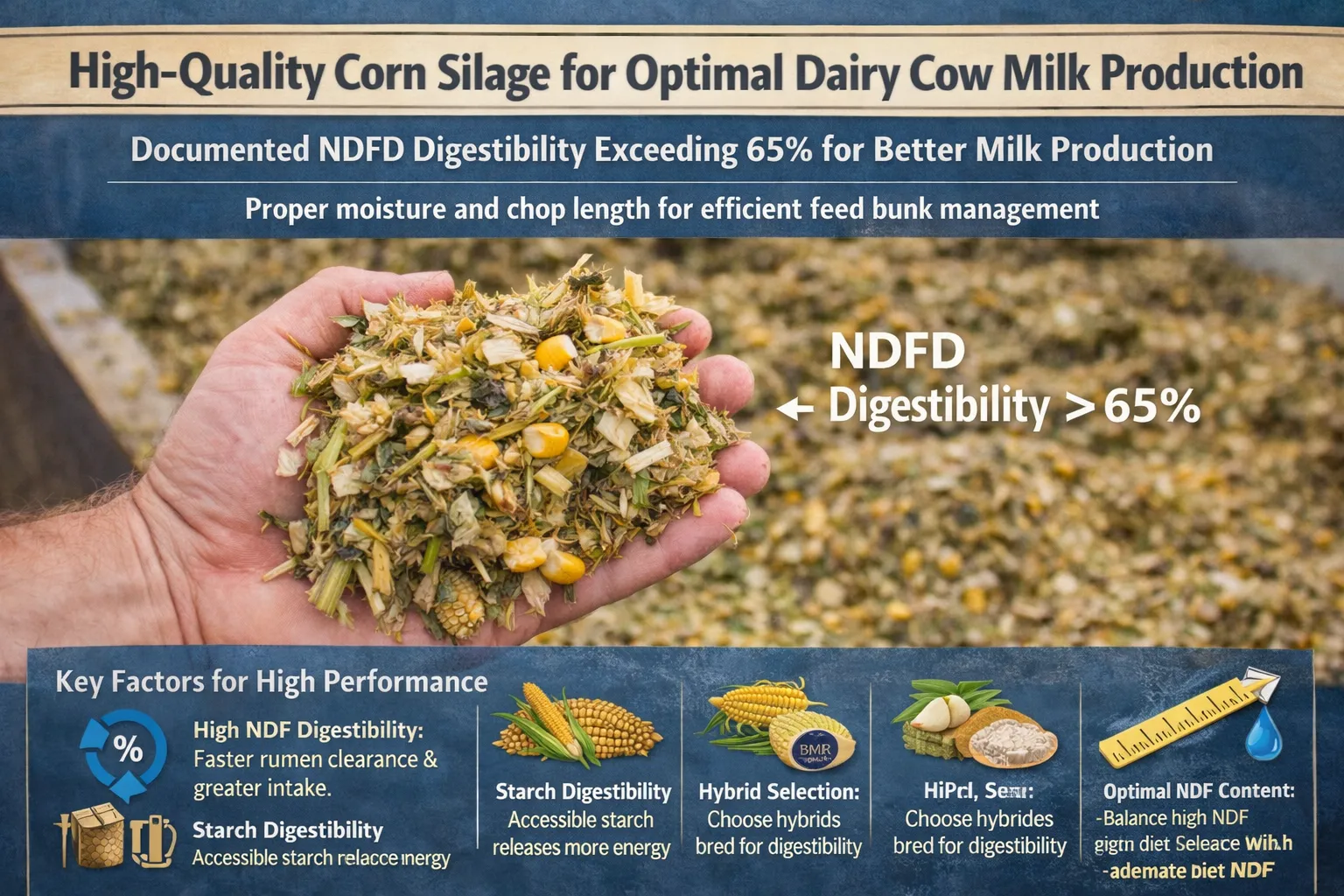
- Corn silage: Minimum 65% NDFD at 30-hour incubation (standard laboratory method)
- Alfalfa haylage: 55–65% NDFD (breed-dependent harvest timing)
- Grass silage: 60–70% NDFD depending on species and maturity
Practical action: Test forages for NDFD before feeding. High-digestibility silages can support 3–5 additional kg/day of milk production compared to low-digestibility forage of identical CP and NDF content.
2.2 Fiber Content (NDF Concentration) and Particle Size
While fiber digestibility is paramount, fiber quantity also matters-but the relationship is non-linear.
Optimal dietary NDF range during peak lactation:
- 26–32% NDF (on a dry matter basis)
- 28% NDF associated with best intake and production in research
- Below 26% NDF: risk of milk fat depression (MFD) and rumen acidosis
- Above 32% NDF: limits energy intake, suppresses milk yield
Particle size (physical effectiveness of fiber) ensures adequate rumen pH buffering and stimulates saliva production. Approximately 75% of dietary NDF should come from long or coarsely chopped forage. Excessively fine-chopped forages depress milk fat percentage, even when NDF levels are adequate.
2.3 Forage Selection for Milk Components
Recent research shows that forage selection influences not just milk volume but milk composition. For herds targeting premium milk component pricing:
- High-digestibility forages increase milk fat percentage (0.2–0.4 percentage points)
- Alfalfa-based systems tend to support higher milk protein than grass-only systems
- Brown-midrib (BMR) corn silage offers superior digestibility, supporting additional milk production, particularly in high-producing herds
3. Managing Starch, Non-Fiber Carbohydrates, and Digestibility
Starch and other rapidly fermentable carbohydrates provide readily available energy for milk production, but excessive levels trigger metabolic and digestive disorders.
3.1 Optimal Starch and Non-Fiber Carbohydrate (NFC) Levels
Starch recommendations:
- 40–45% non-fiber carbohydrate (NFC) maximum for peak lactation
- Starch source influences performance: wheat-based diets support higher milk production than barley-, corn-, or potato-based sources due to superior digestibility
- Wheat-based diets produce 1.4–3.5 kg/day more milk than alternative grain sources
Why starch quality matters:
- Coarse grinding of grains limits starch digestibility and fermentation efficiency
- Finely ground starch can suppress fiber digestibility if exceeding 40% NFC
- Corn as a starch source supports higher milk fat concentration than wheat
3.2 Preventing Milk Fat Depression (MFD) Through Carbohydrate Balance
Feeding high-starch or high-fat diets without matching forage fiber triggers milk fat depression (MFD), characterized by:
- Milk fat concentration drops to 2.5–3.0%
- Reduced energy-corrected milk (ECM) production
- Altered rumen pH and volatile fatty acid (VFA) ratios
Prevention strategy: Maintain minimum dietary fiber (NDF >26%) while carefully monitoring total NFC levels. Excessive concentrate feeding without forage adjustment is a primary cause of MFD in commercial herds.
4. Mineral Nutrition for Milk Production and Cow Health
Minerals are often underestimated in their role in milk production, yet deficiencies can suppress yield by 10–15% or trigger metabolic diseases that reduce production for months.
4.1 Macrominerals: Calcium, Phosphorus, Sodium, and Magnesium
Calcium (Ca) – Essential for bone formation, muscle contraction, and milk production
- Dietary requirement: 0.65–0.75% of dry matter during early lactation
- Deficiency risk: Milk fever (hypocalcemia), impaired immune function, extended calving intervals
- New factorial models suggest lower requirements than previously recommended (2024)
Phosphorus (P) – Critical for energy metabolism and milk component yield
- Dietary requirement: 0.38–0.42% of dry matter
- Modern precision feeding systems now account for methionine and lysine bioavailability, reducing P supplementation needs
- Excess P increases urinary excretion, reducing environmental sustainability
Sodium (Na) – Often deficient in high-forage diets
- Requirement: 0.18–0.20% of dry matter
- Function: Maintains osmotic balance, aids saliva production, critical for rumen pH regulation
- Deficiency suppresses feed intake, particularly during early lactation
Magnesium (Mg) – Prevent grass staggers (hypomagnesemia)
- Requirement: 0.18–0.22% of dry matter
- Enhanced uptake needed when potassium in forage is high (spring pasture grazing)
- Deficiency causes muscle tremors, convulsions, and potentially fatal metabolic collapse
4.2 Trace Minerals and Milk Production
Zinc, copper, and cobalt support immune function, which directly influences mastitis resistance and lactation persistency. Inadequate trace mineral status suppresses milk production through increased disease incidence.
5. Managing the Lactation Cycle Through Nutrition
Milk production is not constant across lactation; feed formulation must align with the cow’s changing nutrient demand and physiology.
5.1 Early Lactation (Weeks 1–8)
This is the period of highest milk yield potential and greatest metabolic stress.
Management objectives:
- Maximize energy density to support peak milk yield despite limited feed intake
- Provide high-quality forage to stimulate intake
- Include bypass protein to support milk protein yield
- Target 11.5–12.0 MJ ME/kg DM
Feeding strategy:
- Higher proportion of concentrate (up to 40–50% of diet DM)
- Priority on high-digestibility forages
- Consistent feeding times and TMR mixing to maximize intake
- Precision mineral balance to prevent metabolic disorders
Expected milk yield response: Properly formulated early lactation diets support 10–20% higher peak milk yield and earlier lactation peak (week 6 vs. week 8) compared to suboptimal diets.
5.2 Mid-Lactation (Weeks 9–20)
During mid-lactation, the goal shifts to maintaining milk production while rebuilding body condition.
Management objectives:
- Maintain milk production while allowing modest body weight gain
- Balance energy to prevent excessive fat mobilization
- Support milk component yield for premium pricing
Feeding strategy:
- Reduce concentrate gradually (30–40% of diet DM)
- Increase forage intake as herbage quality improves (pasture-based systems)
- Shift to forage-based energy sources
- Monitor body condition score (BCS); target 3.0–3.25
5.3 Late Lactation and Dry Period Preparation (Weeks 21–50)
This phase prepares the cow for the next lactation while minimizing metabolic disorders at calving.
Management objectives:
- Restore body condition to 3.0–3.5 BCS
- Maintain reproductive function
- Prepare rumen microbial community for transition to lactation
Feeding strategy:
- Higher forage proportion (>50% diet DM)
- Reduced concentrate
- Moderate energy restriction (not excessive) to prevent fat cow syndrome
- Consistency in feeding to ensure stable rumen function
6. Total Mixed Ration (TMR) Systems vs. Pasture-Based Systems
The choice between intensive TMR feeding and pasture-based systems fundamentally shapes both milk production potential and cost structure.
6.1 Total Mixed Ration (TMR) Feeding
Advantages:
- Precise nutrient delivery and minimal sorting losses
- Can achieve 35–40 kg/day milk per cow
- Consistent diet composition day-to-day
- Easier to implement precision feeding strategies
Requirements:
- All components mixed uniformly before delivery
- Minimum 2–3 feeding groups (lactating and dry cows)
- Regular equipment maintenance (mixer, wagon)
- Feed bunk management (depth, space, cleanliness)
Milk production targets: 8,000–12,000 liters/lactation (achievable)
6.2 Pasture-Based (Grazing) Systems
Advantages:
- Lowest feed cost per liter
- Can sustain 6,000–7,500 liters/lactation with good pasture management
- Improved animal welfare and forage utilization
- Reduced metabolic disease incidence
Requirements:
- Intensive pasture management (rotational grazing, species selection)
- Strategic supplement feeding (milking parlor or supplementary feed stations)
- Pasture-adapted genetics and cow types
Milk production targets: 6,000–8,000 liters/lactation with high-quality pasture management
7. Practical Feed Formulation for Milk Production Increase
7.1 Step-by-Step Ration Formulation Process
Step 1: Define milk production target
- Identify peak milk yield goal for the herd
- Separate cows into groups (high, medium, low producers)
- “Lead factor” approach: formulate for 20% above group average
Step 2: Select forage base
- Test forage for dry matter, CP, NDF, NDFD, and digestibility
- Prioritize high-NDFD forages (≥65% for corn silage)
- Ensure adequate particle size
Step 3: Determine concentrate package
- Balance energy (starch + fat) with forage contribution
- Include protein sources (soybean meal, canola meal, distillers’ grains)
- Ensure amino acid profile (consider commercial amino acid balancing tools)
Step 4: Mineral and vitamin package
- Trace mineral premix (zinc, copper, cobalt, manganese)
- Macrominerals (calcium, phosphorus) adjusted for forage composition
- Vitamin A supplementation (particularly if stored forages are used)
Step 5: Ration check and adjustment
- Verify dry matter intake predictions (average 3.5–4.0% of body weight)
- Test energy and protein balance
- Monitor mineral ratios (calcium:phosphorus, sodium:potassium)
- Adjust for forage analysis updates
7.2 Budget-Conscious Formulation for Small and Medium Herds
Not all herds have access to custom ration formulation services. Key principles for independent formulation:
- Use readily available feeds: Corn silage + alfalfa hay/haylage + barley or corn grain + protein supplement
- Test forages regularly: Single forage quality test (≈$40–60) can inform 3–4 months of feeding
- Implement simple TMR: Hand-mixing or tractor-mixing is feasible for herds under 100 cows
- Use Microsoft Excel or online calculators for basic nutrient balancing
- Monitor production and adjust: Track milk production, body condition, and milk components to validate formulation
8. Maximizing Milk Components (Butterfat and Protein)
Modern dairy economics increasingly reward milk components over volume. Premium pricing for butterfat and protein can exceed volume-based milk payments by 20–30%.
8.1 Strategies to Increase Milk Protein Yield
- Amino acid balancing: Focus on lysine and methionine-increasing sidP supply can increase milk protein by 0.2–0.5 kg/day
- High-quality forage: NDF digestibility directly influences protein yield (a 5-unit increase in NDFD = +0.05–0.1% milk protein)
- Avoid excessive starch: Reducing NFC from 45% to 40% can increase milk protein percentage by 0.05–0.1%
- Protein feed source matters: Rumen-undegradable protein (bypass protein) from canola meal or soybean meal supports milk protein more efficiently than rumen-degradable sources
8.2 Strategies to Increase Milk Butterfat Yield
- Adequate dietary fiber: Maintain ≥26% NDF with high fiber digestibility
- Optimize fiber particle size: Longer-chopped forage increases rumen acetate (C2), the primary precursor for milk fat synthesis
- Avoid excessive starch: High-starch diets suppress milk fat via altered rumen fermentation
- Strategic fat supplementation: Calcium salts of fatty acids (0.5–1.5% of diet) can increase milk fat 0.2–0.4% without depressing ruminal fiber digestion
- Feed timing: Some herds report improved butterfat on morning-fed vs. evening-fed diets due to rumen pH dynamics
Expected component response: Optimized diets for component yield can increase butterfat and protein yield by 8–15% compared to volume-focused diets, translating to $2–5 additional revenue per cow per day.
9. Feed Intake Management and Environmental Factors
Dry matter intake (DMI) is often overlooked but is the single most controllable lever for milk production. A 1 kg increase in DMI can support 2–3 additional kg of milk production.
9.1 Factors Affecting Feed Intake in Dairy Cows
Positive factors:
- High forage NDFD (increases intake capacity)
- Adequate water access (milk is 87% water; intake requires parallel water intake)
- Consistent feeding times and bunks
- Adequate bunk space (≥60 cm per cow)
- Comfortable resting areas and appropriate ambient temperature
- Stable social grouping (frequent regrouping reduces intake 10–15%)
Negative factors:
- Gut-fill limitation from low-digestibility fiber
- High-moisture feeds (wet silage reduces total DM intake)
- Acidosis (rumen pH <6.0 suppresses intake within hours)
- Heat stress (>25°C; THI >72 markedly reduces intake)
- Poor feed quality or sorting (cows select against fine particles)
- Overcrowding at feed bunks (competitive exclusion)
9.2 Heat Stress and Milk Production
Heat stress is an increasingly significant constraint in dairy production, with climate change exacerbating seasonal impacts.
Heat stress effects:
- Every 1°C above thermoneutral temperature (16–22°C) suppresses feed intake by 1–3%
- Corresponding milk yield decline: 0.5–2% per °C above threshold
- Milk component depression: butterfat most severely affected
- Prolonged anoestrous and reduced reproductive performance
Mitigation strategies:
- Provide shade and improved ventilation
- Increase water access (quality and quantity)
- Feed during cooler hours (early morning and evening)
- Reduce concentrate levels if temperature exceeds 25°C
- Ensure adequate mineral balance (sodium, magnesium, potassium)
10. Advanced Feeding Strategies for Maximum Production
10.1 Precision Feeding and Ration Adjustments
Modern herds increasingly employ precision feeding-adjusting individual cow or group diets based on real-time production data, body condition, and forage analysis updates.
Implementation:
- Update forage testing results immediately upon receipt (2–3 times/year minimum)
- Adjust rations when forage NDFD shifts by >5 units
- Monitor milk protein percentage weekly (indicates amino acid balance)
- Track body condition score biweekly (every 2–3 weeks)
- Adjust concentrate allocation based on actual milk production vs. target
Expected benefit: Precision-fed herds maintain 2–4% higher milk production and better body condition consistency compared to static ration approaches.
10.2 Supplement and Additive Options
While balanced nutrition is paramount, certain supplements can provide marginal benefits:
- Direct-fed microbials (probiotics): Can improve rumen fermentation and milk yield by 1–3%, particularly in stressed animals
- Yeast supplements: Stabilize rumen pH, support fiber digestion; average 2–5% milk yield response
- Amino acid supplements: Targeted lysine or methionine supplementation (4–10 g/day) can increase milk protein yield
- Fat supplements: Rumen-protected fats increase energy density without rumen fermentation disruption
- Vitamin E and selenium: Antioxidant support; particularly important in high-stress periods
11. Monitoring Feed Efficiency and Production Metrics
11.1 Key Performance Indicators for Feed Evaluation
To determine if a feeding program is optimized for milk production increase:
| Metric | Target | Interpretation |
|---|---|---|
| Milk yield vs. DMI | 1.3–1.5 | Efficiency indicator; >1.5 suggests excellent feed conversion |
| Milk protein % | 3.1–3.3% | Amino acid balance; <3.0% suggests protein limitation |
| Milk butterfat % | 3.5–4.2% | Forage quality; <3.5% suggests fiber insufficiency or excess starch |
| Body condition score | 3.0–3.5 | Ideal range during lactation; >3.5 indicates overfeeding |
| Dry matter intake | 3.5–4.0% BW | Should increase to peak around week 6; cows <3.5% may be NEB-stressed |
| Milk urea nitrogen | 12–16 mg/dL | Protein balance indicator; >18 suggests excess protein |
11.2 Financial Return on Feed Investment
A practical way to justify feed program improvements:
Formula: Milk revenue increase – additional feed cost = net return
Example calculation (per cow, per day):
- Improved forage NDFD (65% to 70%): Expected milk increase = 2.5 kg/day
- Milk price = $0.40/kg → Revenue increase = $1.00/day
- Additional forage cost = $0.15/day
- Net benefit = $0.85/day per cow = $310/year per cow on a 100-cow herd
12. Common Challenges and Solutions in Dairy Feed Management
12.1 Achieving Consistent Feed Quality
Challenge: Forage variation (seasonal, batch-to-batch) disrupts ration balance
Solutions:
- Implement forage testing protocol (CP, NDF, NDFD every 2–3 months minimum)
- Blend multiple forage sources when possible to average quality
- Adjust concentrate levels when forage NDFD shifts significantly
- Maintain detailed forage inventory and analysis records
12.2 Preventing Metabolic Disorders Through Nutrition
Challenge: Milk fever, ketosis, and other metabolic diseases reduce production
Solutions:
- Milk fever prevention: Maintain calcium:phosphorus near 2:1 ratio during transition period; consider DCAD (dietary cation-anion difference) strategies
- Ketosis prevention: Maximize energy intake in early lactation; monitor blood β-hydroxybutyrate; consider propylene glycol supplementation (1 L/day for 14 days postpartum)
- Acidosis prevention: Ensure minimum 26% NDF with high digestibility; monitor feed bunk pH; avoid rapid diet changes
12.3 Managing Feed Costs While Maximizing Production
Challenge: Feed costs are 40–50% of total production cost; balancing quality with affordability
Solutions:
- Prioritize forage quality above all (NDFD impacts are highest return on investment)
- Use less expensive protein sources (distillers’ grains, canola meal) when available
- Consider alternative feed ingredients with proven milk production data
- Implement feed inventory management to reduce spoilage
- Work with nutritionists on “least-cost” formulations that still meet production targets
Frequently Asked Questions (FAQ)
Q1: What is the single most important factor for increasing milk production?
A: Forage quality, specifically neutral detergent fiber (NDF) digestibility, is arguably the most impactful factor within your control. A one-unit increase in forage NDFD correlates with +0.55 kg/day of 4% fat-corrected milk. Since forage comprises 40–65% of the diet and is often underinvested in quality, improving forage NDFD delivers the highest return on investment.
Energy density is a close second-higher energy density during early lactation directly supports peak milk yield and minimizes body condition loss.
Q2: How much more milk can I produce by improving my feed program?
A: The answer depends on starting conditions, but realistic improvements are:
- Poor to adequate: 15–25% increase (2–4 kg/day for a 20 kg/day cow)
- Adequate to good: 8–12% increase (1–2 kg/day)
- Good to excellent: 3–5% increase (0.5–1 kg/day)
These gains typically materialize over 4–8 weeks as the herd adapts and lactation cycle progresses into early peak.
Q3: What is the best feed for dairy cows to increase milk production?
A: There is no single “best” feed-optimization requires balancing local availability, cost, and nutritional profile:
- Forage base: High-digestibility corn silage (NDFD ≥65%) or alfalfa haylage (55–65% NDFD)
- Grain/starch source: Wheat or corn, finely ground to optimize rumen fermentation
- Protein supplement: Soybean meal or canola meal, balanced for amino acids
- Energy supplement: If needed, fat (calcium salts) or additional grain
- Mineral/vitamin: Premix package formulated for local forage composition
The best feed is the one that balances your forage quality, budget, and production target.
Q4: How often should I test my forages for quality?
A: Minimum testing frequency:
- Once per year for long-stored hay
- Every harvest lot for silage (if different load times/weather)
- Every 2–3 months during grazing season (for pasture-based systems)
Testing should include: dry matter, crude protein, NDF, NDF digestibility (NDFD), and trace minerals (copper, zinc) if not supplementing separately.
Cost is typically $40–80 per sample; ROI from adjusted feeding decisions usually exceeds test cost within 2–3 weeks.
Q5: Can I achieve high milk production on a pasture-based system?
A: Yes, but with caveats:
- Maximum realistic yield: 6,000–8,000 liters/lactation with excellent pasture management
- Requirements: Rotational grazing, high-quality pasture species, genetic selection for grazing ability, strategic supplementation (1–3 kg concentrate daily)
- Milk production timeline: Peak occurs 2–3 weeks later than in intensive TMR systems
Pasture-based systems excel at cost-effectiveness and sustainability, but lower total production than intensive systems. Choose this approach if pasture quality and management infrastructure support it; otherwise, accept lower yields or transition to TMR.
Q6: What is negative energy balance (NEB) and how do I minimize it?
A: Negative energy balance occurs when a cow’s energy expenditure (primarily lactation) exceeds her energy intake. This is normal and unavoidable immediately after calving, but severity and duration can be managed.
Minimization strategies:
- Maximize energy density during early lactation (11.5–12.0 MJ ME/kg DM)
- Feed high-digestibility forage to increase intake (NDFD ≥65%)
- Avoid excessive body condition at drying off (BCS 3.0–3.25 at calving, not >3.5)
- Provide consistent, high-quality feed to encourage maximum intake
- Transition feed 2–3 weeks before calving to minimize diet shock
Expected result: Proper management can reduce NEB duration from 4–5 months to 2–3 months, supporting higher peak milk yield and earlier return to positive energy balance.
Q7: How do I increase milk protein percentage?
A: Milk protein is influenced by amino acid balance, forage quality, and energy:
- Amino acid balancing: Increase lysine and methionine (the first and second limiting amino acids); this is the highest-impact intervention
- Forage quality: Higher NDFD correlates with higher milk protein concentration
- Avoid excessive starch: Reduce NFC from 45% to 40% for +0.05–0.1% milk protein
- Monitor rumen fermentation: Stable rumen pH (6.0–6.5) supports microbial protein synthesis, increasing milk protein yield
Expected response: 0.05–0.15% increase in milk protein percentage through amino acid optimization alone.
Q8: What role does body condition score (BCS) play in milk production?
A: BCS is both an outcome of nutritional management and a predictor of future milk production:
- During lactation: BCS 3.0–3.25 ideal; <2.75 indicates severe NEB and impaired immune function
- Predicted milk yield: Each BCS unit at calving predicts 2–4 kg/day difference in peak milk yield
- Reproductive performance: Cows with BCS >3.5 at calving have extended postpartum anoestrous and lower conception rates
- Dry period management: Restrict energy during dry period if BCS >3.5 to prevent fat cow syndrome
Action: Monitor BCS biweekly (every 2–3 weeks) and adjust feed if trajectory is off-target.
Q9: How much water do dairy cows need, and does it affect milk production?
A: Water is often overlooked but is critical:
- Daily requirement: 25–45 liters/day depending on milk yield (milk is 87% water)
- Rule of thumb: 4 liters water per 1 liter milk produced, plus 10–15 liters for maintenance
- Impact on production: Restricted water access suppresses feed intake within hours and milk yield within days
Management: Provide constant access to clean, fresh water (≤15°C). Water troughs should be checked daily for cleanliness. In heat-stressed periods, water intake often exceeds feed intake in importance.
Q10: What is the best feeding strategy for naturally boosting milk butterfat and protein without breaking the bank?
A: Cost-effective strategies with proven ROI:
- Forage quality – Single highest-impact intervention; invest in high-NDFD silage ($5–10/ton premium pays back in weeks)
- Fiber management – Ensure particle size and dietary NDF adequate; no additional cost, just management discipline
- Amino acid balancing – Use local feed supply (soybean meal vs. distillers’ grains) strategically; minor cost increase for significant protein response
- Consistent feeding – TMR mixing or hand-mixing costs ~$0.50/day but reduces sorting and improves intake by 10–15%
- Feed timing – Some evidence suggests morning feeding improves butterfat; no cost, only scheduling discipline
Expected return: $2–5/day per cow from component yield improvement with minimal cost increase.
Q11: How can I feed dairy cows only hydroponic fodder or alternative forages, and will it increase milk production?
A: Hydroponic fodder (barley, oats grown hydroponically) is gaining interest for its high digestibility, but limitations exist:
Advantages:
- Very high fresh matter intake (cows eat 2–3x more than dry silage due to water content)
- Quick production (14–21 days from seed to harvest)
- No mold risk (unlike stored forages)
Limitations:
- Very high water content (85–90%) reduces dry matter intake, limiting milk production
- Labor-intensive harvesting
- Cost per kg dry matter often exceeds traditional silage
- Cannot match the fiber particle size and rumen fill benefits of traditional long-chopped forage
Recommendation: Hydroponic fodder is best used as a supplement (30–40% of forage DM) in combination with traditional silage, not as a sole forage source. Expect milk production similar to or slightly lower than traditional systems.
Q12: Does rbST/rbGH injection increase milk production, and should I use it?
A: Recombinant bovine somatotropin (rbST, commercially Posilac) is FDA-approved and increases milk production by 8–15% when nutrition is optimized.
Considerations:
- Milk production boost: Requires an already excellent feeding program to realize the full response
- Metabolic demands: Increases negative energy balance if feed program not adjusted
- Health implications: Increased mastitis incidence (2–5% reported); requires excellent management
- Milk price: rbST milk cannot be marketed as “rbST-free” in premium markets; this may reduce revenue
- Cost: ~$5–7/day per cow; ROI depends on milk price and health status
Recommendation: Only implement rbST if your baseline feeding program is already optimized and your herd health and management are excellent. Without exceptional nutrition and management, risks often outweigh benefits.
Q13: How do I formulate a least-cost ration that still supports high milk production?
A: Cost optimization without sacrificing milk production requires strategic prioritization:
- Prioritize forage quality above ingredient cost – Spend 20% more for high-NDFD silage; this returns 10x the investment
- Use local, seasonally available grains – Prices fluctuate; buy low-cost energy sources in bulk when available
- Alternate protein sources – Use distillers’ grains or canola meal instead of soybean meal when prices are favorable (verify amino acid profile matches needs)
- Minimize premix complexity – Use a standard trace mineral/vitamin premix rather than custom formulations
- Negotiate ingredient pricing – Work with feed supplier on volume discounts; compare total delivered cost, not just ingredient cost
Tool: Use Microsoft Excel or free online least-cost ration calculators to model ingredient substitutions.
Expected result: 8–15% reduction in total feed cost while maintaining milk production through strategic ingredient selection.
Q14: What are the top signs that my dairy cows are malnourished, and how do I fix it?
A: Key indicators of nutritional insufficiency:
- Milk production declining despite health (>5% drop week-to-week)
- Body condition score <2.75 during lactation
- Milk protein <3.0% (suggests inadequate amino acids or energy)
- Milk butterfat <3.2% with adequate fiber (suggests energy insufficiency)
- Dull coat and lethargy (vitamin A or overall energy deficiency)
- Poor reproduction (extended postpartum anoestrous; >90 days to conception)
Immediate fixes:
- Forage test – Verify forage quality; if NDFD <60%, source replacement or adjust concentrate
- Increase concentrate – Add 1–2 kg concentrate daily for 1–2 weeks; monitor response
- Mineral check – Ensure trace mineral premix included and calcium:phosphorus near 2:1
- Water availability – Ensure ad libitum clean water; restricted water is a common overlooked cause
Timeline: Production response appears within 7–10 days if nutritional limitation was the problem.
Q15: Can I transition my herd to a higher-production diet quickly, or does it need to be gradual?
A: Gradual transition is always safer, but the rate depends on the scale of change:
- Minor adjustments (different forage lot, slight concentrate increase): 3–5 days
- Moderate change (new forage type, diet reformulation): 7–10 days
- Major diet change (TMR switch, significant forage replacement): 14–21 days
Procedure:
- Day 1–5: Introduce new diet at 50% of total, maintain old diet at 50%
- Day 6–10: Shift to 75% new diet, 25% old diet
- Day 11+: Full transition to new diet
Monitoring during transition:
- Feed intake may drop 5–10% temporarily (normal)
- Milk production may dip slightly (recovers within 2–3 weeks)
- Watch for rumen upset (loose manure, reduced chewing)
- Monitor milk fat (if <3.0%, slow transition further)
Key point: Rushing diet changes increases risk of acidosis, rumen upset, and production loss greater than the gain from the new diet.
Conclusion
Maximizing milk production in dairy cattle through optimized feeding is both an art and a science. While genetics set the ceiling for milk production potential, nutrition determines how closely the herd approaches that ceiling. The most profitable dairy herds recognize that feed-quality, consistency, and balance-is not just a cost but an investment that directly drives revenue.
The principles outlined in this guide are evidence-based and proven in commercial herds worldwide. Implementation requires discipline, monitoring, and willingness to adjust based on production data. However, the return is substantial: herds that apply precision feeding strategies consistently achieve 15–25% higher milk production, improved milk components, better herd health, and superior reproductive performance compared to conventionally managed peers.
Start with a forage quality test and a honest assessment of your current feed program. Small, targeted improvements compound: better forage + optimized protein balance + consistent feeding = measurably higher milk production within 8 weeks. Over a year, the cumulative benefit transforms herd profitability.
Dairy cow feeding is not a set-and-forget endeavor. Market conditions, forage quality, and herd genetics shift constantly. Success comes from regular monitoring, data-driven decision making, and a commitment to continuous improvement in feed management.