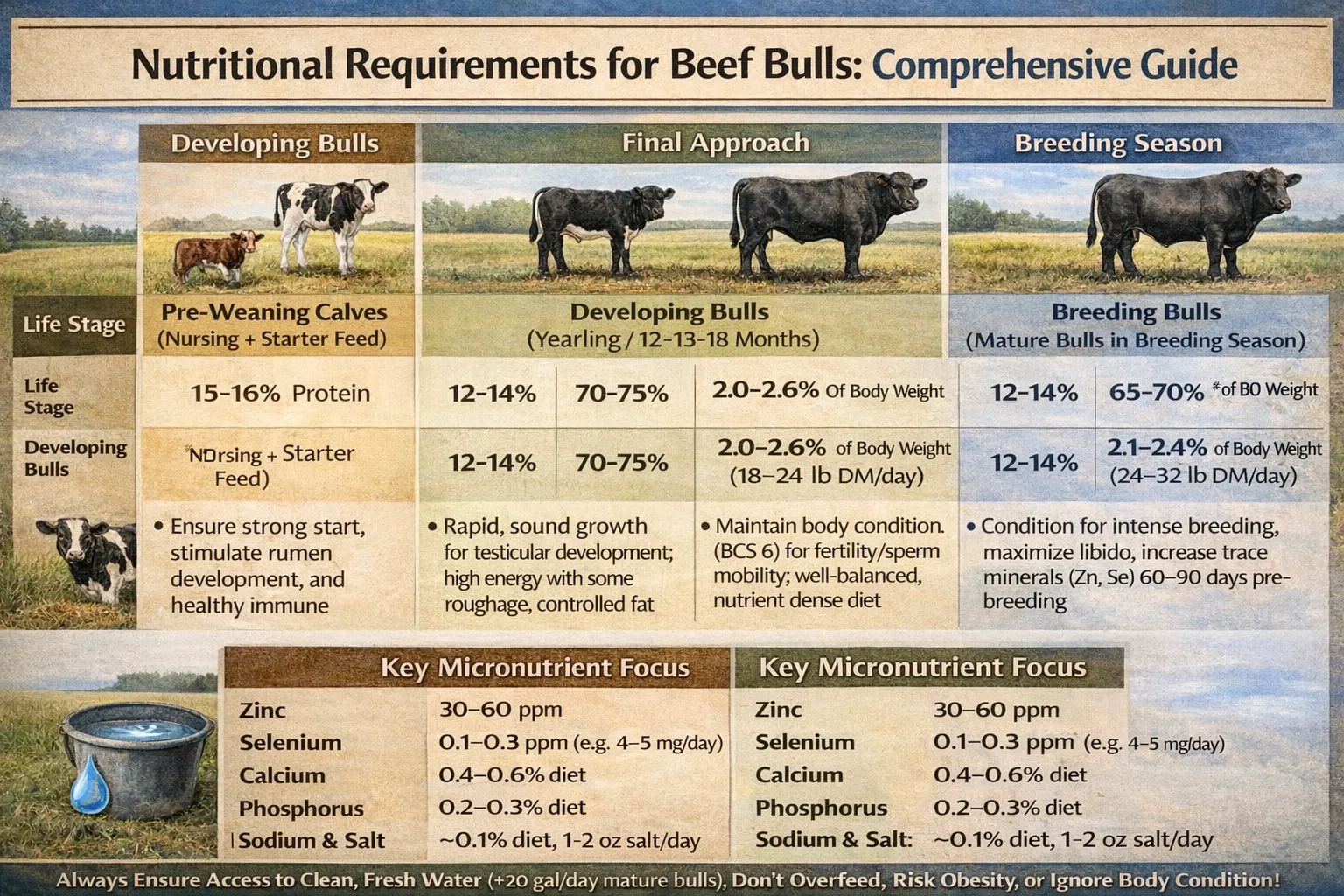
The genetic potential of a beef herd is ultimately determined by one critical decision: the selection and nutrition of breeding bulls. While genetics establishes the ceiling for performance, nutrition builds the foundation that determines whether bulls can actually express that genetic potential. A properly nourished bull with optimized mineral balance, energy density, and protein levels will produce superior semen quality, maintain higher libido, breed more cows successfully, and pass superior feed efficiency genetics to his progeny. Conversely, bulls fed inadequate or imbalanced diets suffer measurable fertility declines-research demonstrates that bulls with deviated body condition scores experience sperm morphology defects that can reduce conception rates by 15-25%. This comprehensive guide addresses every aspect of bull nutrition for breeding performance, from pre-weaning through mature bulls, ensuring you achieve the reproductive efficiency and genetic gains that drive herd profitability.
Part 1: Understanding Bull Fertility Through the Lens of Nutrition
The Critical 60-Day Spermatogenesis Window
The foundation of bull fertility is spermatogenesis-the biological process by which bulls continuously produce sperm. This process takes approximately 60 days from initiation to ejaculation-ready sperm. This timeline has profound practical implications: any nutritional deficiency, stress, or health challenge experienced by a bull will not affect currently circulating sperm, but will directly impact sperm quality 60 days later. This is why breeding soundness exams (BSE) should be scheduled 4-6 weeks before the breeding season, and why bulls require particular attention to nutrition in the 60-90 days preceding their breeding service.
The implications are significant: a bull that loses condition or experiences mineral deficiency during the off-season will show reduced semen quality during early breeding season evaluations. This is preventable with proper year-round nutrition management.
Early Nutrition Programming: Effects From Conception Through Weaning
Research demonstrates that the greatest impacts of nutrition on bull fertility occur not during adulthood, but during early development. Specifically, calves receiving a high plane of nutrition from 5-25 weeks of age develop greater testicular volume, higher circulating gonadotropin concentrations, and substantially greater sperm production capacity at maturity. This early nutritional programming establishes the bull’s reproductive potential for his entire productive life.
Furthermore, emerging epigenetic research reveals that the trace mineral status of the dam during gestation influences the gene expression patterns in the bull calf’s developing reproductive tissues. Studies comparing selenium sources (inorganic vs. organic) fed to pregnant cows documented that the dam’s mineral status affected expression of 853 annotated genes in neonatal calf testes, including genes directly involved in steroidogenesis and spermatogenesis. In practical terms: a cow herd’s genetics for producing superior breeding bulls begins with the nutritional management of females during pregnancy.
Part 2: The Nutritional Foundation-Macronutrients and Energy
Protein Requirements Across Bull Life Stages
Protein is the fundamental building block for muscle growth, enzyme synthesis, hormone production, and immune function. However, optimal protein levels vary significantly across the bull’s lifespan, and providing excessive protein is economically wasteful while underfeeding protein compromises performance.
Pre-weaning and early growth (birth–12 months): Bull calves receiving creep feed or high-quality forage should consume 16-18% crude protein. Once weaned, this should decrease to 14-15% crude protein. This higher protein supports the rapid muscle and skeletal development occurring during these critical growth phases.
Yearling bulls (12–18 months): As bulls mature and growth velocity decreases, protein requirements decline to 13.5-14% crude protein. This is the stage where many operations focus on moderate rate-of-gain feeding (1.5-2.5 lbs per day) to develop bone density and frame while avoiding excessive fat deposition that would compromise fertility.
Mature bulls (2+ years): Mature bulls in maintenance or light-gain scenarios require only 10-12% crude protein. However, during pre-breeding preparation (60-90 days before the breeding season), protein should be elevated slightly to 11-12% to support elevated metabolic demands and optimal semen production.
The practical takeaway: most mature bulls do not require high-protein diets, yet many operations over-supplement protein at considerable expense. A forage analysis combined with targeted supplementation (typically 3-6 lbs of concentrate containing 12-14% crude protein when combined with forage) provides cost-effective nutrition.
Energy Density: Balancing TDN and Avoid Acidosis
Total Digestible Nutrients (TDN) represent the usable energy in feed. The TDN requirements increase with growth rate and performance demands:
- Growing bulls (gaining 2-3 lbs/day): 64-73% TDN depending on rate of gain
- Mature bulls (maintenance): 55-62% TDN
- Pre-breeding bulls: 62-65% TDN to support elevated reproductive metabolism
The common mistake is overfeeding high-concentrate grains to achieve rapid growth or body conditioning. Grain-based diets exceeding 70% of dry matter intake create ruminal acidosis risk, which impairs mineral absorption and compromises overall health. Research on feedlot bulls demonstrates that balanced concentrate programs incorporating fiber sources (such as sugar beet pulp, soybean hulls, or hay) maintain digestive health while delivering necessary energy.
chart:93
Part 3: The Mineral Foundation for Superior Semen Quality
The Critical Trace Minerals: Zinc, Copper, Manganese, and Selenium
While macro-minerals (calcium, phosphorus) are important for skeletal development, the real reproductive impact comes from trace mineral nutrition. The scientific literature is unequivocal: trace minerals directly control semen quality through multiple mechanisms.
Zinc (Recommended: 60 ppm of total diet)
Zinc is foundational for male fertility. It serves as a key constituent of testosterone, the hormone driving sperm production and libido. Research demonstrates that bulls receiving zinc supplementation (particularly in chelated/organic forms rather than inorganic sources) show increases in ejaculate volume, sperm concentration, and sperm motility. Zinc deficiency manifests as reduced testicular development, poor semen quality, and diminished libido.
Additionally, zinc is essential for hoof integrity through its role in the keratinization process and production of the superoxide dismutase antioxidant enzyme. This indirect effect on fertility is often overlooked: a lame bull with compromised hoof health will fail to actively seek and mount cows, effectively nullifying any potential genetic contribution to the herd.
The challenge: zinc from inorganic mineral supplements (zinc oxide, zinc sulfate) has poor bioavailability, whereas organic/chelated zinc sources (zinc methionine, zinc proteinate) demonstrate superior absorption and tissue retention.
Copper (Recommended: 10-15 ppm)
Copper is essential for enzyme function throughout the body, particularly cytochrome c oxidase and lysyl oxidase, which are critical for collagen crosslinking and connective tissue integrity. In reproductive tissues, copper protects sperm cells against oxidative damage from free radicals. Copper deficiency leads to reduced semen quality and decreased libido; in young bulls, copper deficiency can delay the onset of puberty.
Similar to zinc, copper bioavailability varies dramatically based on source, with organic/chelated copper sources providing superior absorption.
Manganese (Recommended: 40-60 ppm)
Manganese is essential for cholesterol synthesis, which serves as the precursor for testosterone and other reproductive hormones. Additionally, manganese activates numerous enzymes involved in energy metabolism. While manganese deficiencies are less common than zinc or copper deficiencies in forage-based diets, inadequate manganese compromises hormone production and can result in abnormal sperm morphology.
Selenium (Recommended: 0.3 ppm)
Selenium is perhaps the most powerful micronutrient for protecting sperm from oxidative stress. It functions as a critical component of selenoprotein enzymes including glutathione peroxidase, which prevents lipid peroxidation in sperm membranes. Research documents that selenium supplementation increases ejaculate volume, sperm motility, and sperm concentration while reducing the percentage of dead or morphologically defective sperm.
Furthermore, selenium uniquely improves reproductive endpoints: supplemented bulls demonstrate increased scrotal circumference and elevated testosterone secretion. Importantly, the form of selenium matters significantly-organic selenium yeast demonstrates superior bioavailability and efficacy compared to inorganic selenium sources.
Mineral Balance: The Critical Interaction Between Zinc and Copper
A frequently overlooked aspect of mineral nutrition is that excessive dietary zinc actively inhibits copper absorption and utilization. Zinc and copper compete for the same absorption sites in the ruminant digestive tract. A common mistake is to supplement very high levels of zinc without attention to copper status, which paradoxically creates a functional copper deficiency despite adequate copper supplementation.
Best practice: maintain a zinc-to-copper ratio of approximately 3:1 to 4:1 (e.g., 60 ppm zinc to 15 ppm copper) to optimize both minerals’ bioavailability and function.
Vitamin E and Antioxidant Protection
Vitamin E functions as a lipophilic antioxidant, protecting sperm cell membranes from oxidative damage. Sperm cells are particularly vulnerable to oxidative stress due to their high energy metabolism and reliance on intact cell membrane function for motility. Research demonstrates that vitamin E supplementation protects sperm DNA integrity, improving morphology and reducing the percentage of damaged sperm.
Vitamin E is particularly important in bulls experiencing oxidative stress (illness, vaccination, transportation, or heat stress). Many premium mineral supplements include vitamin E at elevated levels (1000+ IU per head per day) specifically to support semen quality.
Part 4: The Practical Nutrition Program-Feed Ingredients and Formulation
Feed Ingredients: Energy Sources (60-70% of concentrate)
The foundational energy ingredients in bull concentrates are cereal grains and energy co-products. Each has specific advantages and limitations:
Corn: The gold standard energy feed, corn is highly palatable, digestible, and economical. However, corn is deficient in lysine (the first-limiting amino acid for ruminants) and tryptophan. Corn-based concentrates should be balanced with protein supplements that are lysine-rich (such as soybean meal or canola meal).
Sorghum (Milo): A valid substitute for corn in regions where corn prices are elevated. Sorghum provides energy comparable to corn with slightly lower digestibility. The inclusion rate and formulation approaches are similar to corn-based feeds.
Sugar Beet Pulp: An underutilized energy source that offers distinct advantages for bull feeding. Sugar beet pulp provides slow-release energy from pectin and hemicellulose, reducing ruminal pH swings and acidosis risk. This makes it particularly valuable in high-concentrate bull rations where acidosis is a concern.
Barley and Oats: Cool-season grains that are excellent in bull rations, particularly for yearling bulls where the slightly lower energy density supports moderate growth rates without excessive grain delivery.
Feed Ingredients: Protein Sources (20-25% of concentrate)
Soybean Meal (44-50% crude protein): The industry standard protein source, soybean meal provides 44-50% crude protein with balanced essential amino acids (including lysine, which corn lacks). Soybean meal is highly digestible and widely available. The limitation is the presence of trypsin inhibitors, though proper heat processing of high-quality meal eliminates this concern. U.S.-sourced soybean meal typically offers superior amino acid digestibility compared to imported sources.
Dried Distillers Grains (DDG, 26-28% crude protein): A corn ethanol co-product that provides moderate protein, moderate energy, and excellent digestibility. DDG are economical when corn ethanol markets create favorable pricing. The primary limitation is lower amino acid quality relative to soybean meal.
Cottonseed Meal (40-45% crude protein): A quality protein source that complements soybean meal well. Cottonseed meal provides gossypol, which some research suggests may have estrogenic effects, though well-processed meal at normal inclusion rates (under 20% of concentrate) poses no practical concern.
Canola/Rapeseed Meal (35-42% crude protein): An excellent protein source rich in essential amino acids. Canola meal is particularly valuable for balancing amino acid profiles and provides vitamins and minerals beyond macro-protein.
Faba Beans and Pumpkin Seed Cake: Emerging alternative protein sources that have demonstrated equivalence to soybean meal in controlled feeding trials. These are gaining acceptance as farmers seek to diversify protein sources and reduce soy dependence.
Building a Practical Concentrate Mix
A practical concentrate formulation for growing bulls gaining 2-2.5 lbs/day might include:
- Cracked Corn: 25-30%
- Soybean Meal (44% CP): 15-20%
- Dried Distillers Grains: 20-25%
- Soybean Hulls or Sugar Beet Pulp: 15-20% (provides digestible fiber)
- Alfalfa Meal: 5-10%
- Complete Mineral Premix*: free-choice (4 oz/head/day consumption expected)
*The mineral premix should be formulated with proteinated/chelated forms of zinc (60 ppm), copper (15 ppm), manganese (50 ppm), and selenium (0.3 ppm), plus vitamin A (20,000 IU/lb) and vitamin E (500 IU/lb). This concentrate would provide approximately 12-13% crude protein and 68-70% TDN, suitable for moderate-growth bull development when fed with good-quality forage.
Forage Quality and the Role of Hay/Silage
Forage represents the foundation of ruminant nutrition, yet forage quality is frequently overlooked in bull feeding programs. High-quality forage (8-10% crude protein, harvested at early growth stage) can substitute substantially for concentrate supplementation.
Practical forage feeding strategy: Feeding roughage at 2% of body weight combined with moderate concentrate supplementation (3-6 lbs per day) provides cost-effective nutrition for mature bulls. For example, a 1,500-pound bull consuming 30 lbs of forage dry matter with 4 lbs of concentrate provides approximately 11% crude protein and 60% TDN-ideal for pre-breeding preparation.
Poor-quality hay (stemmy, late-harvested, or moldy) is a false economy that compromises bull condition and breeding performance. Investing in forage testing and selecting quality conserved forage is essential.
Part 5: Body Condition Scoring and the Management of Bull Condition
The Body Condition Score Scale and Reproductive Implications
The 9-point body condition scoring system (used in North America) assesses the visual and tactile fat deposition over the bull’s ribs, brisket, and tail head. The scale ranges from 1 (extremely thin) to 9 (grossly obese). Research unequivocally demonstrates that reproductive performance peaks at specific body condition scores, with marked declines both above and below the optimum.
Optimal BCS for breeding bulls: 5.5 to 6.5 on the 9-point scale. Bulls at this condition have adequate energy reserves to support breeding activity, optimal semen quality, and superior libido.
Bulls scoring below 4 or above 7 show measurably reduced semen quality. The mechanisms differ:
- Underconditioned bulls (BCS <4): Insufficient energy reserves to support metabolic demands. Reduced testosterone secretion, diminished sperm production, and poor libido result from chronic energy deficit.
- Overconditioned bulls (BCS >7): Excessive fat deposition creates two problems. First, fat accumulates in the scrotum, creating a thermal environment that damages developing sperm in the testes. The scrotum’s capacity to thermoregulate is compromised, reducing sperm viability. Second, overweight bulls move less efficiently, reducing their ability to travel and locate receptive females during the breeding season.
Managing Condition: The Annual Feeding Calendar
A sophisticated bull operation recognizes that bulls lose 10-20% of body weight during the 60-90 day breeding season due to increased physical activity, reduced feeding time, and physiological stress. This weight loss is normal and largely unavoidable. The key is to prepare bulls adequately in advance to withstand this stress without compromising semen quality.
Pre-breeding period (90 days before): Increase nutrient density and potentially increase daily intake slightly. Energy (TDN) should be elevated to 62-65%, protein to 11-12%, and trace minerals maintained at full supplementation levels. The goal is to improve body condition by 0.5-1 full BCS point, positioning the bull to enter breeding season at target BCS 5.5-6.5.
During breeding season: Maintain balanced nutrition despite reduced feed intake. Many bulls will spend limited time eating, particularly in the first 21 days. The concentrate should be formulated to deliver maximum nutrients in minimum volume-incorporating energy-dense ingredients and optimal mineral levels becomes critical.
Off-season recovery (post-breeding): Once bulls are removed from breeding females, immediately increase feed intake to 100-110% of maintenance requirements. Energy (TDN) can be reduced modestly (to 55-62%) while maintaining protein at 10-11% and trace mineral supplementation at full levels. The goal is to rebuild body condition to BCS 5.5-6.5 by the next pre-breeding period.
Part 6: Critical Nutrients for Hoof Health and Mobility
The Relationship Between Hoof Health and Reproductive Performance
A frequently overlooked connection in bull nutrition is that hoof health directly impacts reproductive performance. Lame bulls fail to actively seek out and breed cows, creating a functional infertility independent of actual semen quality. Additionally, the pain and inflammation of lameness elevate stress hormones, which directly suppress reproductive hormone secretion and semen production.
The nutrients driving hoof health are identical to those supporting semen quality: protein, zinc, copper, selenium, and vitamin E. However, hoof horn formation is slower than spermatogenesis-it takes 6-12 months for completely new hoof horn to be produced. This means that hoof health improvements from nutritional changes lag behind semen quality improvements by several months.
Zinc and copper balance are particularly critical for hoof health. Zinc is required for keratinization (hardening of hoof horn), while copper is essential for collagen crosslinking that provides structural strength to hoof laminae (the interface between horn and bone). Maintaining optimal zinc-to-copper ratios (3:1 to 4:1) is essential for preventing hoof problems that compromise bull soundness.
Preventive Hoof Health Strategy
Consistent trace mineral supplementation at recommended levels (zinc 60 ppm, copper 15 ppm, selenium 0.3 ppm) provides the foundation for hoof health. Additionally, preventing acidosis through balanced concentrate feeding and adequate forage intake maintains digestive pH and rumen health, which indirectly supports hoof health through optimal nutrient absorption.
Part 7: Genetic Selection and Feed Efficiency Traits
The Economic Impact of Selecting for Feed-Efficient Bulls
While nutrition optimizes the expression of a bull’s genetic potential, the genetics themselves determine whether the bull will be an efficient or inefficient converter of feed. Residual Feed Intake (RFI)-also called net feed efficiency-measures the difference between a bull’s actual feed consumption and his expected feed requirements based on his body weight and growth rate.
A bull with negative RFI (efficient) consumes less feed than predicted for his size and performance-this is a heritable trait that can be selected for through genetics. Research demonstrates that selecting for low RFI in beef cattle operations produces multiple economic benefits:
- 10-12% reduction in feed intake across the entire cow herd (not just breeding stock)
- No reduction in growth rate or final size (efficient bulls don’t grow slower; they just eat less)
- 25-30% reduction in methane emissions from selected stock
- 9-15% improvement in feed conversion ratio
- Estimated $50 per head savings in feed costs over a 112-day test period
- 15% improvement in calf-weight-per-cow relative to feed intake-the ultimate metric of herd productivity per unit of feed consumed
Progeny of efficient bulls inherit superior feed efficiency, meaning genetic gains accumulate across generations. This is the most sustainable path to improving herd profitability: selecting sires not only for growth and reproduction, but explicitly for feed efficiency genetics.
Many breed associations now provide RFI EPD (Expected Progeny Differences) estimates, allowing producers to directly compare bulls’ genetic potential for feed efficiency.
Scrotal Circumference and Reproductive Traits
Scrotal circumference (SC) is a heritable trait (h² ≈ 0.40) that serves as an indirect indicator of semen production capacity. Bulls with larger scrotal circumference produce more sperm and typically reach puberty earlier. Additionally, bulls with superior SC genetics will sire daughters that reach puberty at younger ages and sons with superior reproductive capacity.
SC is also positively correlated with maternal traits: bulls with superior SC values tend to sire superior replacement females, making this a critical selection criterion for operations retaining replacement heifers.
Part 8: The Complete Pre-Breeding Preparation Protocol
90-Day Pre-Breeding Nutrition Strategy
Comprehensive research identifies 90 days as the optimal preparation window before the breeding season. This timeline aligns with the spermatogenesis cycle and allows sufficient time to correct body condition deficiencies and establish peak mineral status.
Days 90-60 Before Breeding:
Objective: Improve body condition and establish baseline mineral status.
- Increase feed dry matter intake by 10-15% if bulls are underconditioned (BCS <5)
- Feed concentrate at 3-6 lbs per day (depending on forage quality and bull size)
- Ensure mineral premix is formulated with chelated trace minerals and is being consumed at recommended levels (4 oz/head/day)
- Implement a breeding soundness exam to document baseline sperm quality
Days 60-30 Before Breeding:
Objective: Optimize semen quality and confirm BSE improvements.
- Maintain elevated energy intake; modify if bulls have reached BCS target
- Ensure protein intake is adequate (11-12% of total diet dry matter)
- Confirm mineral premix consumption and verify trace mineral levels
- Conduct second BSE if abnormalities were noted in initial evaluation
Days 30-0 (Final Pre-Breeding Period):
Objective: Confirm semen quality and finalize condition.
- Maintain stable feeding program; avoid sudden diet changes
- Confirm trace mineral supplementation is consistent
- Conduct final BSE to confirm bulls are satisfactory potential breeders
- Monitor for physical soundness (foot rot, infectious disease, musculoskeletal issues)
- Begin pre-breeding observation of bull behavior and libido
Part 9: Frequently Asked Questions (FAQ)
What is the best feed for breeding bulls?
The best feed is species-appropriate, forage-based with quality supplementation. For beef bulls, a combination of high-quality hay (8-10% crude protein) or pasture, supplemented with a balanced concentrate (12-14% crude protein, 65-70% TDN) formulated with chelated trace minerals optimizes both performance and cost-effectiveness. The concentrate should be specifically designed for bull reproduction, including zinc (60 ppm), copper (15 ppm), manganese (50 ppm), selenium (0.3 ppm), and vitamin E (500 IU/lb). A practical bull supplement might include 25-30% corn, 15-20% soybean meal, 20-25% dried distillers grains, 15-20% soybean hulls or sugar beet pulp, and a comprehensive mineral premix.
How much protein should breeding bulls eat?
Protein requirements vary by age and reproductive status. Growing bulls (6-18 months) require 13.5-15% crude protein. Mature bulls in maintenance require 10-11% crude protein, while those in pre-breeding preparation (90 days before breeding) benefit from 11-12% crude protein. Excessive protein is economically wasteful; most mature bulls receive adequate protein from forage combined with modest concentrate supplementation. The key is balancing protein with energy and ensuring amino acid balance (particularly lysine) by using protein supplements that complement forage.
What minerals improve bull fertility the most?
Zinc, copper, selenium, and vitamin E have the strongest research support for improving semen quality. Zinc (at 60 ppm of the total diet) increases ejaculate volume and sperm concentration. Copper (15 ppm) protects sperm from oxidative damage. Selenium (0.3 ppm) reduces sperm defects and improves motility. Vitamin E (500+ IU/day) works synergistically with selenium as an antioxidant. These minerals must be provided in bioavailable forms-chelated/proteinated sources demonstrate superior absorption compared to inorganic mineral salts.
How much body condition score is ideal for breeding bulls?
Bulls should maintain a body condition score of 5.5-6.5 on the 9-point scale during the breeding season. This moderate condition provides energy reserves to withstand breeding stress while avoiding the negative reproductive effects of excessive fat (which impairs thermoregulation of the scrotum). Both underconditioned bulls (BCS <4) and overconditioned bulls (BCS >7) show measurably reduced semen quality. Body condition score should be evaluated monthly and adjustments made to feeding to maintain consistency.
Can overfeeding compromise bull fertility?
Yes, both overfeeding (energy) and overfeeding grain specifically can compromise fertility. Excessive energy intake leading to overconditioned bulls (BCS >7) creates heat stress in the scrotum and reduces the bull’s mobility to locate and breed cows. Overfeeding grain relative to forage creates ruminal acidosis, which impairs mineral absorption and reduces digestive efficiency. The optimal approach is balanced nutrition that maintains moderate body condition (BCS 5.5-6.5) with proper forage-to-concentrate ratios (typically 60% forage, 40% concentrate on a dry matter basis for growing bulls).
What is the optimal daily gain for developing bulls?
The optimal daily gain depends on the bull’s age and the breeding goals. Pre-weaning and early growth (calves receiving creep feed) can support 2.5-3 lbs/day of gain without negative effects. Yearling bulls and young bulls (12-24 months) should gain 1.5-2.5 lbs/day-this rate supports frame development and scrotal growth while avoiding excessive fat deposition that would compromise puberty and fertility. Mature bulls require only maintenance nutrition except during pre-breeding preparation, when modest weight gains (0.5-1 lb/day) improve condition but should not exceed 1.5 lbs/day.
How long does improved nutrition take to affect sperm quality?
Changes in nutrition take approximately 60 days to fully affect ejaculated sperm, due to the spermatogenesis cycle. However, secondary effects (such as body condition improvements) occur faster. For this reason, pre-breeding nutrition protocols should begin 90 days before the breeding season to allow time for spermatogenesis cycle completion plus an additional month to correct any identified abnormalities through a second breeding soundness exam.
Does nutrition during calf hood really affect adult breeding bull fertility?
Yes, definitively. Calves receiving a high plane of nutrition from 5-25 weeks of age develop greater testicular volume and substantially higher sperm production capacity at maturity compared to calves raised on restricted nutrition. Furthermore, emerging epigenetic research demonstrates that the dam’s trace mineral status during gestation influences gene expression in the bull calf’s developing reproductive tissues-effects that persist throughout the bull’s productive life. Bull development begins in utero and continues through the first year of life; this period represents the highest-impact window for nutrition intervention.
What are common mistakes when feeding breeding bulls?
Common mistakes include: (1) skipping mineral supplementation, assuming forage provides adequate minerals (it typically does not provide adequate copper, zinc, and selenium); (2) overfeeding grain, creating acidosis risk; (3) ignoring body condition scoring and allowing bulls to become either underconditioned or overconditioned; (4) making sudden diet changes, causing digestive upset; (5) using inorganic mineral sources with poor bioavailability rather than chelated minerals; (6) failing to provide clean, fresh water; (7) inconsistent feeding schedules, causing stress; (8) ignoring forage quality; and (9) neglecting the 60-90 day pre-breeding nutrition protocol.
What causes poor semen quality in bulls despite apparent good health?
Poor semen quality commonly results from inadequate trace mineral status (particularly zinc, copper, or selenium deficiency), imbalanced body condition (either underconditioned or overconditioned), inadequate vitamin E intake, or recent stress (transportation, feed change, illness, heat stress). Additionally, overfeeding grain can cause subclinical acidosis, which impairs mineral absorption. Interestingly, bulls may appear visually healthy while maintaining subclinical nutrient deficiencies that compromise semen quality-this is why mineral supplementation at recommended levels is insurance even in animals appearing healthy.
Should bulls be fed the same diet year-round, or should feeding change seasonally?
Feeding should absolutely change seasonally and according to breeding status. Off-season bulls require maintenance nutrition with balanced minerals (10-11% crude protein, 55-62% TDN). Pre-breeding bulls require elevated nutrition (11-12% crude protein, 62-65% TDN) to improve or maintain body condition. During the breeding season, bulls typically lose 10-20% of body weight and require concentrated, nutrient-dense feed despite reduced intake. Post-breeding recovery requires elevated intake to rebuild condition. Additionally, pasture quality changes seasonally, requiring adjusted supplementation-summer grazing on lush pasture requires less concentrate than winter hay feeding.
How should bulls be transitioned to a new diet?
Dietary changes should be implemented gradually over 7-10 days. Abrupt feed changes cause digestive upset, reduce intake, and stress the animal. The gradual transition allows rumen microbes to adapt to new feedstuffs. For bulls being introduced to high-concentrate diets (particularly self-fed concentrate programs), transition even more gradually, beginning with higher fiber-based concentrates (soybean hulls, sugar beet pulp) before introducing starchy grains. Many practitioners use the 25-50-75-100% approach: feed 25% new diet with 75% old diet for 2-3 days, 50% new with 50% old for 2-3 days, then transition fully to the new diet.
How much does proper bull nutrition cost relative to typical operations?
Proper bull nutrition-including forage analysis, balanced concentrate formulation, and mineral supplementation-typically costs $50-80 per bull per month during pre-breeding preparation and $30-50 per month during off-season. This investment is recovered many times over through improved conception rates, reduced semen quality issues, and the transfer of superior genetics to progeny. Economically, a properly nourished bull producing a 2% improvement in conception rates generates returns far exceeding the nutritional investment.
Can trace mineral injections replace dietary mineral supplementation?
Injectable trace minerals can provide acute supplementation but should not replace dietary mineral supplementation. While injectable minerals (copper, selenium, zinc, manganese) provide immediate systemic delivery, they do not maintain consistent mineral status over time. Research on injectable trace elements for fertility shows inconsistent results and sometimes paradoxical reductions in conception. Best practice is consistent dietary mineral supplementation at recommended levels, with injectable minerals reserved for acute deficiency situations. Year-round dietary mineral supplementation is the evidence-supported approach.
What’s the relationship between feed efficiency genetics and semen quality?
Feed efficiency (as measured by Residual Feed Intake) and reproductive performance are largely independent traits. A bull can be highly feed-efficient while having poor semen quality-these are separate genetic traits requiring independent selection. However, feed-efficient bulls that are also carefully selected for reproductive traits (scrotal circumference, genomic estimates for male fertility) create synergistic value: they pass superior genetics for both production efficiency and reproduction to their progeny, maximizing long-term herd profitability.
How can a producer verify that mineral supplementation is actually being consumed?
Measure daily intake of mineral supplementation by weighing mineral products delivered versus remaining. Expected consumption is approximately 4 ounces per head per day when fed free-choice (with salt content adjusted to control intake). Additionally, periodic blood serum testing for trace mineral status (copper, zinc, selenium) can document whether supplementation is adequate. Some producers use colored dyes or marked mineral blocks to visually confirm consumption. Inconsistent consumption often indicates a palatability issue-mineral premix should be formulated with adequate salt content and palatability enhancers.
Part 10: Implementation Roadmap-From Assessment to Breeding Season
Phase 1: Baseline Assessment (4 Months Pre-Breeding)
- Forage Analysis: Submit samples of hay, silage, or pasture for complete nutrient analysis including protein, energy (TDN), digestibility, and mineral content. This determines the baseline nutrition provided and identifies mineral-deficient forages.
- Bull Evaluation: Assess body condition score, conduct visual soundness evaluation, and document baseline breeding soundness exam (semen quality, scrotal circumference, physical soundness).
- Mineral Status Assessment: If resources permit, conduct serum mineral testing (copper, zinc, selenium) to document baseline status.
- Feed Inventory Audit: Evaluate current mineral supplements, grain sources, and protein supplements to identify quality issues or suboptimal ingredients.
Phase 2: Program Design (3 Months Pre-Breeding)
- Nutritionist Consultation: Work with an animal nutritionist to design a balanced supplement formulation optimized for your forage and resource constraints. Many university extension services provide this consultation at reasonable cost.
- Mineral Premix Sourcing: Source or formulate a mineral premix containing chelated trace minerals (zinc 60 ppm, copper 15 ppm, manganese 50 ppm, selenium 0.3 ppm) and vitamin E (500 IU/lb).
- Concentrate Formulation: Design a concentrate mix optimized for your region’s available ingredients, with the goal of achieving 12-14% crude protein, 65-70% TDN, and proper mineral balance when combined with forage. Consider sourcing from a local feed mill to reduce transportation costs.
- Feeding Protocol: Design a specific feeding protocol including daily concentrate amount, feeding schedule (timing), water availability, and mineral supplementation method (free-choice, mixed, or top-dressed).
Phase 3: Implementation (90 Days Pre-Breeding)
- Feed Transition: Implement gradual dietary transitions per the 7-10 day protocol.
- Daily Monitoring: Establish a daily feeding routine with consistent timing. Monitor feed intake (should be near 100% consumption of supplement), water availability, and behavioral observations.
- Body Condition Scoring: Conduct body condition scoring every 30 days with the goal of achieving BCS 5.5-6.5 by breeding season.
- Physical Soundness Monitoring: Observe for foot problems, infectious disease signs, and musculoskeletal issues. Address problems immediately.
- Breeding Soundness Exam (60 days pre-breeding): Conduct BSE with focus on sperm morphology, motility, and progressive motility. If abnormalities are documented, implement a second BSE 30 days later.
Phase 4: Breeding Season Support
- Maintain Stable Nutrition: Continue the established feeding protocol despite reduced feed intake during breeding.
- Weekly Observations: Monitor bull activity, libido, and physical condition weekly.
- Problem Troubleshooting: If semen quality issues emerge, troubleshoot the feeding program, check for clinical disease, and consider injectable mineral support if a specific deficiency is suspected.
Phase 5: Post-Breeding Recovery and Off-Season Maintenance
- Increase Feed Intake: Once bulls are removed from breeding females, increase dry matter intake to 110-120% of maintenance.
- Recover Body Condition: Over 2-3 months, achieve target BCS 5.5-6.5 for next breeding season.
- Maintain Minerals: Continue mineral supplementation at recommended levels throughout off-season.
- Forage Testing Cycle: Re-analyze forage quality annually to adjust supplementation as needed.
The Competitive Advantage of Precision Bull Nutrition
In the intensifying competition of modern beef production, genetics establish the potential but nutrition determines the reality. A bull with superior genetics but inadequate nutrition is economically indistinguishable from an inferior bull. Conversely, even a moderately-genotyped bull with optimal nutrition will consistently outperform competitors in conception rates, progeny performance, and herd profitability.
The evidence is unequivocal across decades of research: bulls receiving balanced, mineral-optimized nutrition maintain superior semen quality, breed more cows successfully, experience fewer fertility problems, and pass superior genetics for feed efficiency to their progeny. The investment in proper bull nutrition-forage analysis, balanced supplements, and trace mineral supplementation-represents one of the highest-return management decisions in livestock production.
The strategy outlined in this guide is not cutting-edge; it is time-tested, research-supported, and economically validated. Implementation requires attention to detail, consistency, and willingness to invest modestly in supplementation. The returns-measured in conception rates, calf vigor, and generational genetic improvement-justify the investment many times over.
Harrison, T.D., et al. (2022). “The effects of differing nutritional levels and body condition.” PMC
Short, R.E., & Adams, D.C. (1988). Nutritional and hormonal interrelationships in beef cattle. Journal of Animal Science, 66(5), 1249-1257.
Alabama Cooperative Extension. (2024). “Nutritional Strategies for Bull Development and Maintenance.”
Pal, R.P., et al. (2017). “Importance of Trace Minerals in the Ration of Breeding Bull.” International Journal of Current Microbiology and Applied Sciences.
VitaFerm Concept- Aid. (2017). “Breeding Season Prep: Focus on Bull Health and Nutrition.”
Reeves, P.G. (1990). “Zinc as a Functional Unit in Proteins and Enzymes.” Advances in Food and Nutrition Research.
Hedaoo et al. (2008). “Trace mineral metabolism in cattle.” Veterinary World.
McDowell, L.R. (1992). Minerals in Animal and Human Nutrition. Academic Press.
Herd, D.B., et al. (2003). “Residual Feed Intake and its Phenotypic and Genetic Correlations with Production Traits.” Journal of Animal Science.
Koch, R.M., et al. (1963). “Efficiency of Feed Use in Beef Cattle.” Journal of Animal Science.