Bulk cattle feed purchasing represents a strategic opportunity for livestock producers to reduce operational costs while ensuring consistent, high-quality nutrition for their herds. The global animal feed market is projected to grow from $605.3 billion in 2025 to $1.2 trillion by 2035, with cattle feed commanding a significant and expanding share as producers increasingly invest in nutritionally optimized formulations. For commercial farm operations, dairy enterprises, and beef cattle operations, understanding the landscape of bulk wholesale feed supply-from pricing structures to quality standards to supplier selection-is essential for maximizing profitability and herd performance.
This comprehensive guide addresses the critical decision-making factors that distinguish successful bulk feed purchasing from costly procurement errors. Whether you’re a seasoned cattle producer optimizing your feed supply chain or a newer operation scaling your herd management practices, this resource provides the frameworks, data, and supplier evaluation criteria necessary to make informed bulk purchasing decisions.
The Economics of Bulk Cattle Feed Purchasing
Cost Savings Through Volume Economies
Purchasing cattle feed in bulk fundamentally restructures the unit economics of livestock feeding. Industry data shows that bulk purchasing reduces per-unit costs by 15–35% compared to smaller bag purchases, with savings determined by order volume, market commodity prices, and supplier capacity. A typical bulk order of 3–10 tons represents the minimum threshold for wholesale pricing across most North American suppliers, while larger commitments of 20–25 metric tons (full container loads) unlock the deepest discounts through economies of scale.
The Mathematics of Bulk Purchasing
Consider a 50-head beef cattle operation consuming approximately 2.5 tons of feed monthly. A smaller farm purchasing 50-pound bags at standard retail pricing might pay $420–480 per ton. That same operation buying monthly bulk quantities of 10 tons negotiates a wholesale price of $230–280 per ton-representing a savings of $1,900–2,500 per month, or $22,800–30,000 annually. Over a multi-year sourcing relationship, these cumulative savings fund infrastructure improvements, herd expansion, or net profit improvement.
Beyond Direct Feed Costs
Bulk purchasing also reduces per-unit expenses across the supply chain:
- Transportation savings: Consolidating shipments from 12–15 monthly deliveries into 2–3 bulk deliveries reduces freight and fuel costs, lowering total cost of ownership by 8–12%.
- Reduced packaging waste: Bulk feed eliminates expensive per-bag packaging, lowering environmental footprint and disposal costs.
- Minimized supply chain disruptions: Maintaining adequate bulk inventory buffers operations against market volatility, seasonal shortages, and unexpected price spikes.
- Improved cash flow predictability: Long-term supply contracts with fixed or formula-based pricing enable more accurate budgeting and reduce exposure to commodity market fluctuations.
Industry analysis shows that farms utilizing bulk feed contracts achieve 18–22% total feed cost reductions compared to non-contracted operations, making strategic bulk purchasing one of the highest-ROI decision levers available to livestock producers.
Types of Bulk Cattle Feed
Cattle feed formulations vary significantly based on production stage, breed, and performance goals. Understanding the nutritional composition and intended use of each feed type ensures optimal animal performance and cost efficiency.
Primary Feed Categories
Concentrated/Compound Feeds
Concentrated feeds deliver high energy and protein in compact form, designed to supplement forage-based diets or serve as primary rations in intensive production systems. These formulations contain grain, protein meals (soybean meal, canola meal), and vitamin-mineral premixes balanced to meet specific nutritional requirements.
- Typical protein range: 12–25% crude protein
- Energy content: 1.2–1.5 Mcal/kg metabolizable energy
- Common applications: Dairy production, feedlot finishing, growing calves
- Bulk pricing (January 2026): $230–320/ton depending on formulation
High-Protein Pasture Supplements
Designed for grazing cattle on mature or low-quality forage, pasture supplements bridge nutritional gaps and improve overall diet digestibility without requiring infrastructure changes.
- Protein content: 20–35% crude protein
- Key ingredients: Soybean meal, distillers grains, bypass protein sources
- Mineral fortification: Elevated calcium, phosphorus, and trace minerals
- Cost efficiency: Enables producers to extend grazing seasons and reduce hay requirements
Specialty Formulations
Niche formulations address specific herd requirements: lactating dairy cows, growing replacement heifers, breeding bulls, or cattle with specific metabolic needs (mineral supplementation, ionophore-free, organic compliance).
Commodity Ingredients in Bulk Supply
The wholesale feed market increasingly centers on bulk commodity ingredients that allow producers to customize formulations or source components for on-farm mixing:
| Ingredient | Bulk Pricing (Jan 2026) | Typical Minimum Order | Primary Use |
|---|---|---|---|
| Soy Hulls (Loose) | $115–160/ton | 1–3 tons | Energy source, filler |
| Ground Corn | $189–210/ton | 2–5 tons | Energy, carbohydrates |
| Distillers Grains (Wet) | Variable | Bulk loads | Protein, fat supplement |
| Oat Feed (Pelleted) | $125/ton | 1–3 tons | Fiber, digestibility |
| Dicalcium Phosphate | Call for quote | 5+ tons | Mineral supplementation |
| Molasses | $275–325/ton | Bulk containers | Palatability, energy |
Sourcing individual ingredients provides flexibility for producers with on-farm mixing capability and allows formula optimization for local forage quality, allowing custom nutrition strategies unavailable through standard formulations.
Cattle Feed Nutritional Requirements: Feeding for Performance
Proper cattle nutrition directly determines herd health, productivity, and profitability. Understanding specific nutrient requirements prevents both deficiency-related performance losses and wasteful over-supplementation.
Essential Nutrient Categories
Energy and Protein
Cattle require energy for basal metabolism, maintenance, growth, and production. Protein provides amino acids for muscle development, milk production, and immune function. The balance between ruminally degradable protein (RDP) and ruminally undegradable protein (RUP) critically affects rumen fermentation and nutrient utilization.
Macrominerals (Required >100 ppm)
Seven macrominerals essential for cattle: calcium, magnesium, phosphorus, potassium, sodium, chlorine, and sulfur. Calcium and phosphorus warrant particular attention due to their centrality in skeletal structure, milk production (dairy cattle), and metabolic regulation.
Trace Minerals (Required <100 ppm)
Cobalt, copper, iron, manganese, selenium, iodine, and zinc function as components of metalloenzymes, directly influencing immune competence, reproduction, and disease resistance. Copper status, for example, directly affects iron metabolism; inadequate copper leads to hypochromic-microcytic anemia and reduced productivity.
Vitamins
Vitamin E supports muscle development and antioxidant function. Vitamin K is required for blood clotting, though rumen bacteria typically synthesize adequate quantities. Vitamin A is critical for reproduction and immune function, particularly in cattle on mature forages with low vitamin A activity.
Feeding Strategies by Production Stage
| Stage | Primary Nutritional Focus | Key Metrics | Typical Crude Protein |
|---|---|---|---|
| Growing Calves (6–18 mo) | Rapid growth, skeletal development | ADG 1.5–2.0 lb/day | 14–16% |
| Replacement Heifers | Controlled growth, breeding readiness | Target BW gain 1.5–1.8 lb/day | 12–14% |
| Pregnant Cows (Mid–Late Gestation) | Fetal development, body condition maintenance | TDN 55–65%, CP 7–9% | 8–11% |
| Lactating Dairy Cows | Milk production and composition | Support 40–80 lb milk/day | 14–18% |
| Finishing Feedlot Cattle | Rapid weight gain, marbling deposition | ADG 3.0–3.5 lb/day | 12–14% |
These feeding benchmarks provide a foundation for evaluating whether proposed bulk feed formulations align with your herd’s production targets and economic objectives.
Selecting and Evaluating Bulk Cattle Feed Suppliers
Supplier selection represents a critical operational decision with multi-year implications for feed quality, herd health, and farm profitability. Rigorous evaluation criteria separate reliable, quality-oriented suppliers from those prioritizing short-term pricing over consistency and transparency.
Critical Supplier Evaluation Criteria
Quality Assurance Certifications and Compliance
Legitimate wholesale feed suppliers operate under internationally recognized certification frameworks that guarantee feed safety and quality control:
- GMP+ Feed Safety Assurance: Comprehensive quality management system covering feed production, storage, transport, and trading. Requires HACCP-based hazard analysis, documented traceability, and prerequisite programs.
- FAMI-QS: Global standard for specialty feed ingredients and premixes. Ensures documented sourcing, ingredient verification, and contamination prevention.
- FSSC 22000: Food Safety System Certification incorporating ISO 22000 and sector-specific prerequisite programs (ISO/TS 22002-6). Requires third-party audits and continuous improvement protocols.
Suppliers lacking these certifications may operate without documented quality controls, presenting unquantified risks to herd health and regulatory compliance.
Ingredient Transparency and Sourcing Practices
Reputable suppliers provide detailed documentation of ingredient sourcing, including:
- Certificate of Analysis (COA) for each shipment specifying crude protein, crude fiber, moisture, fat, and mineral content
- Origin documentation confirming ingredient provenance and absence of banned substances
- Testing protocols for mycotoxin contamination (aflatoxin, DON) and pathogenic bacteria (Salmonella, E. coli)
- Clarity regarding GMO status, ionophore inclusion, and animal by-product usage
Suppliers resistant to providing this documentation should be rejected; feed quality cannot be verified without these baseline records.
Production Capacity and Supply Reliability
A supplier’s ability to fulfill consistent orders without delays is essential for continuous herd feeding. Evaluate:
- Historical on-time delivery rates (target: >98%)
- Inventory turnover and product freshness assurance
- Capacity to handle your annual volume requirements
- Protocols for supply chain disruptions (weather, transportation, ingredient shortages)
- Contractual commitments and penalty clauses for missed deliveries
Technical Expertise and Nutritionist Support
Value-added suppliers provide formulation guidance, feed efficiency analysis, and troubleshooting support. Assess whether the supplier:
- Employs qualified animal nutritionists with advanced degrees or professional certifications
- Conducts feed trials or provides comparative performance data
- Offers customized formulations based on on-farm forage quality analysis
- Provides regular market updates on ingredient pricing and feed value trends
Pricing Transparency and Long-Term Cost Predictability
While lowest price is tempting, sustainable supplier relationships balance cost with quality and reliability. Evaluate:
- Fixed-price vs. formula-price contracts (formula contracts protect against unexpected price spikes)
- Historical price volatility relative to commodity markets
- Volume discounts and contract incentives for committed purchases
- Payment terms and early-payment discounts
Suppliers offering transparent pricing with documented formulas inspire confidence; those quoting arbitrary prices or refusing to explain pricing methodology warrant skepticism.
The Supplier Evaluation Checklist
Before committing to a long-term relationship, systematically evaluate:
| Question | Why It Matters | Red Flags |
|---|---|---|
| “Describe your quality assurance system and certifications.” | Safety and consistency | Hesitation or vague answers; lack of third-party audits |
| “Provide a complete Certificate of Analysis for a recent shipment.” | Verification of claims | Refusal or generic COAs without specific test dates |
| “What is your on-time delivery rate, and what are your protocols for missed deliveries?” | Operational reliability | Acknowledgment of chronic delays; no documented protocols |
| “Can you provide references from farms of similar size and type?” | Real-world performance verification | Refusal or references that are obviously paid testimonials |
| “Describe your mycotoxin testing and contamination prevention methods.” | Feed safety | Minimal or no testing; unclear prevention protocols |
| “What is your minimum order quantity, and can you accommodate seasonal fluctuations?” | Operational compatibility | Inflexible minimums or unwillingness to adjust orders seasonally |
| “How are your prices determined, and what is the lag between commodity price changes and your quote adjustments?” | Cost predictability | Opaque pricing; unexplained price changes; slow response to market conditions |
Bulk Feed Storage and Management
Proper storage and handling preserve feed nutritional value, prevent contamination, and minimize pest-related losses. Poor storage practices can negate the cost savings realized through bulk purchasing.
Storage Infrastructure Requirements
Environmental Conditions
Feed storage environments must maintain:
- Temperature: Cool storage (50–70°F ideal) slows oxidation, nutrient degradation, and pest reproduction
- Humidity: Relative humidity below 70% prevents mold growth and maintains nutritional integrity
- Light exposure: Stored feeds should be protected from direct sunlight, which accelerates vitamin degradation and heat buildup
- Ventilation: Adequate air circulation prevents moisture accumulation and ammonia buildup
Physical Storage Solutions
| Storage Method | Capacity Range | Advantages | Disadvantages |
|---|---|---|---|
| Feed Bins (Steel) | 50–500 tons | Durable, pest-proof, organized | High capital cost ($8,000–50,000) |
| Commodity Bays | 100–1,000+ tons | Large capacity, flexible | Requires solid flooring, ventilation infrastructure |
| Barn Storage (on pallets) | Variable | Lower capital cost, familiar setting | Requires proper ventilation; increased pest risk |
| Tote Bags | 1–2 tons each | Flexible, stackable | Labor-intensive; vulnerable to pests if not sealed |
Pest Management and Contamination Prevention
- Store feed on pallets or concrete pads (minimum 6 inches clearance from ground) to prevent rodent burrowing
- Install insect screens and rodent-proof barriers around storage areas
- Implement regular pest control measures: traps, monitoring, bait stations
- Maintain clean storage areas free of spilled feed, which attracts pests and promotes pathogenic growth
- Label all containers with feed type, purchase date, and expiration date
- Never mix old and new feed; older feed should be used first (FIFO rotation)
- Inspect feed regularly for visible mold, off-odors, or pest evidence
Feed Shelf Life and Rotation
Feed maintains optimal nutritional value for defined periods depending on formulation, storage conditions, and ingredient composition:
- Vitamin stability: 3–6 months under ideal storage conditions; vitamins degrade rapidly in warm, humid environments
- Mineral stability: Generally stable for 1+ years if protected from moisture
- Crude protein feeds: 6–12 months before quality degradation
- High-fat feeds: 3–6 months before rancidity development
Implement strict FIFO (first in, first out) rotation to ensure older feed is consumed before quality degradation occurs. Label feed containers with purchase dates and establish receiving protocols that place new shipments behind existing inventory.
Pricing and Cost Benchmarks for Bulk Cattle Feed
Understanding current bulk feed pricing, market dynamics, and cost drivers enables informed purchasing decisions and supplier negotiations.
Current Market Pricing (January 2026)
Complete Feed Formulations
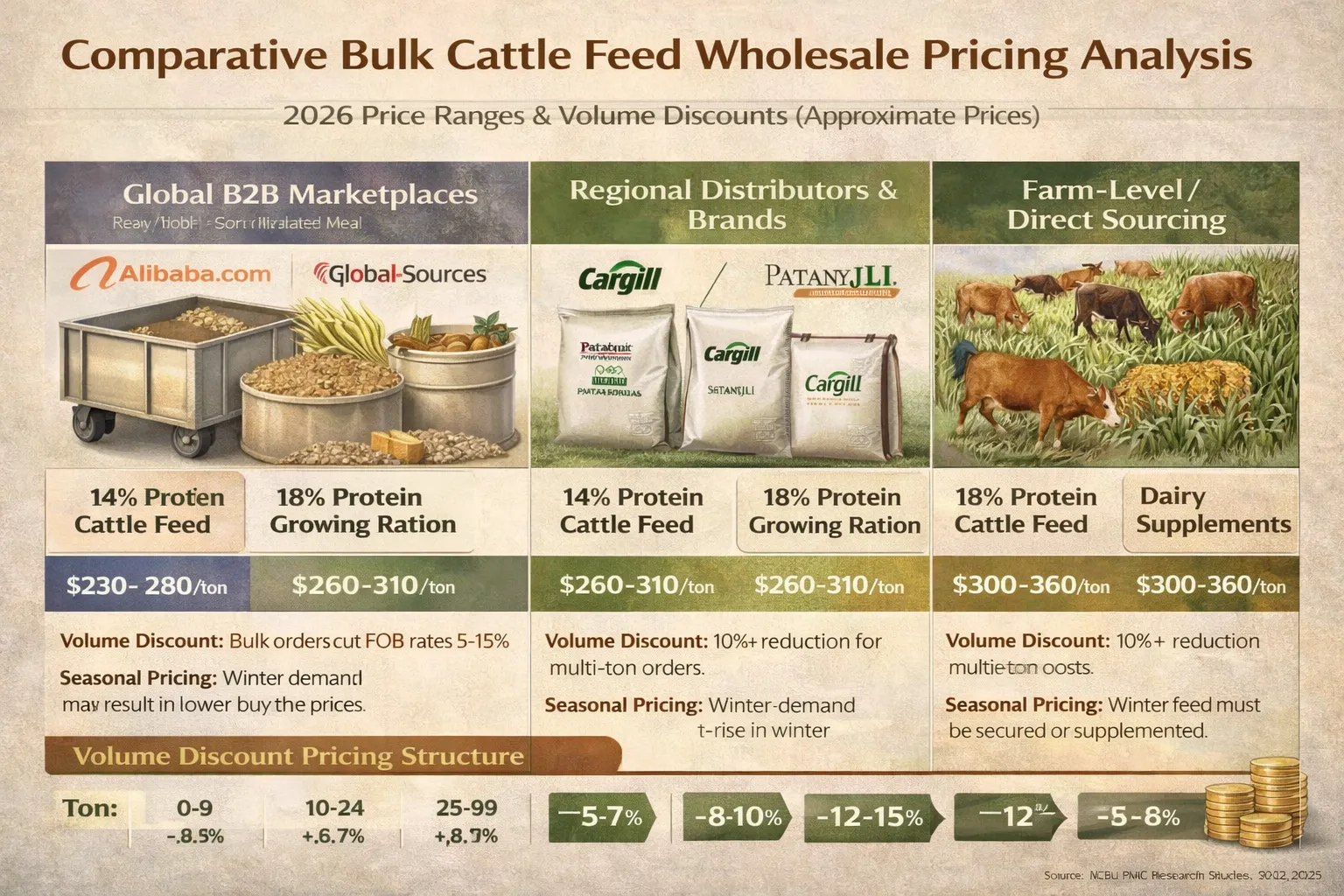
- 14% Protein Cattle Feed: $230–280/ton (FOB regional mills)
- 18% Protein Growing Ration: $260–310/ton
- 25% Protein Dairy Supplement: $300–360/ton
- Pasture Supplement (high protein): $280–340/ton
Commodity Ingredients (Bulk)
| Ingredient | Price ($/ton) | Supplier Variance |
|---|---|---|
| Ground Corn | $189–210 | FOB regional origin |
| Soy Hulls (Loose) | $115–160 | Regional/supplier dependent |
| Soy Hulls (Pelleted) | $150–180 | Processing adds 5–10% |
| Distillers Grains (Wet) | Call/variable | Highly seasonal |
| Oat Feed (Pelleted) | $125 | Relatively stable |
| Molasses | $275–325 | Seasonal availability |
| Soybean Meal 48% | $324–340 | Commodity dependent |
Cost Drivers and Market Trends
Feed pricing in 2026 reflects several market dynamics:
- Commodity grain prices: Corn and wheat prices remain depressed relative to historical averages due to strong global harvests, benefiting bulk feed purchasers
- Freight and logistics: Fuel prices and transportation capacity affect delivered costs; expect 8–12% price variation based on distance and logistics efficiency
- Ingredient availability: Tight soybean meal supplies in some regions increase protein meal costs; rapeseed meal remains constrained, supporting soya meal demand
- Formulation premiums: Specialty additives (probiotics, enzymes, mineral complexes) command 5–15% premiums over commodity formulations
Long-Term Cost Management Strategies
- Forward contracting: Lock in prices for 6–12 months to hedge against commodity market volatility
- Off-season purchasing: Timing bulk purchases for lower-demand periods (late winter/early spring) often yields 5–10% price reductions
- Pooled buying: Cooperating with neighboring producers to reach larger order volumes increases negotiating leverage
- Ingredient optimization: Adjusting formulations based on forage quality analysis (via feed testing) can lower overall ration costs 3–8% while maintaining performance
- Payment incentives: Negotiating early-payment discounts (2–3% for 10-day payment) or volume rebates can reduce effective costs
Industry Standards and Quality Assurance
The animal feed industry operates under rigorous regulatory frameworks and voluntary certification standards designed to ensure feed safety, traceability, and nutritional accuracy. Understanding these standards enables informed supplier evaluation and regulatory compliance.
Key Quality Standards and Certifications
GMP+ Feed Safety Assurance (Global Standard)
Developed by GMP+ International (formerly The Dutch Animal Feed Board), this comprehensive standard covers:
- Quality management systems based on ISO 9001
- Hazard analysis and critical control points (HACCP) protocols
- Ingredient sourcing and supplier approval processes
- Environmental monitoring and contamination prevention
- Traceability from raw material to finished product
- Internal and external audit requirements
Suppliers certified under GMP+ FSA demonstrate commitment to documented quality protocols and regulatory compliance.
FAMI-QS (Feed Additive and Premixture Quality System)
FAMI-QS applies to specialty feed ingredients, additives, and premixes. The standard ensures:
- Supplier qualification and ingredient verification
- Hazard analysis and control measures
- Contamination prevention and traceability
- Regulatory compliance with destination market requirements
- Documentation and record retention
FSSC 22000 (Food Safety System Certification)
Based on ISO 22000 and sector-specific prerequisite programs (ISO/TS 22002-6), FSSC 22000 incorporates:
- Hazard identification and risk assessment
- Control measure development and verification
- Management of documented processes and procedures
- Communication and incident management protocols
- Regulatory compliance and third-party auditing
Regulatory Compliance Requirements
Feed manufacturers must comply with:
- FDA regulations governing animal feed manufacturing, labeling, and safety
- State-specific feed control laws and labeling requirements
- Antimicrobial stewardship regulations (ongoing transition away from routine antibiotic growth promoters)
- Ingredient restrictions and approved additive lists
- Contamination limits for mycotoxins, pesticide residues, and pathogenic bacteria
Suppliers unable to articulate their compliance frameworks should be avoided.
Frequently Asked Questions
Purchasing and Sourcing
Q: What is the minimum order quantity for bulk cattle feed, and how does it affect pricing?
A: Minimum order quantities (MOQs) vary by supplier and product type. Standard bulk MOQs are typically 3–5 tons for complete feeds and 2–3 tons for commodity ingredients. Specialty formulations or smaller regional suppliers may require 5–10 ton minimums. Full container loads (20–25 metric tons) unlock the deepest discounts, typically 8–12% below standard bulk pricing. For a 50-head herd consuming 2.5 tons monthly, a 10-ton quarterly order meets typical minimums while balancing storage constraints. Discuss MOQ flexibility with suppliers; some offer tiered pricing allowing lower minimums during seasonal low-demand periods (e.g., winter) with volume commitments spreading across quarters.
Q: How long does it take to receive a bulk feed order, and what should I expect?
A: Standard lead times are 5–10 business days from order placement to delivery. Most suppliers require 48-hour advance notice to prepare bulk orders. Rush orders (1–2 days) may be available at premium charges (5–10% surcharge). Expect bulk deliveries to arrive via 18-wheeler trailer; ensure your facility has adequate receiving infrastructure (driveway width, weight limits, unloading equipment). Clarify delivery windows in advance; most suppliers offer 4-hour delivery windows but not tighter scheduling. For critical feed shortages, establish emergency contact protocols with 2–3 alternative suppliers to mitigate supply chain disruptions.
Q: What documentation should I request from a bulk feed supplier?
A: Request and retain:
- Certificate of Analysis (COA): Specifying crude protein, crude fiber, crude fat, ash, moisture, and mineral content for each shipment
- Ingredient Declaration: Complete list of all ingredients by inclusion rate (descending order)
- Guaranteed Analysis: Manufacturer’s statement matching actual COA results
- Lot/Batch Documentation: Traceability identifier, manufacturing date, and expiration date
- Testing Documentation: Mycotoxin testing results, Salmonella testing (preferably negative), and pathogen screening
- Certification Evidence: Copies of GMP+, FAMI-QS, or FSSC 22000 certification documents
- Safety Data Sheets (SDS): For any specialty additives or medications included in the formulation
Maintain organized records of all documentation for regulatory compliance, health issue investigation, and supplier performance auditing.
Q: How can I negotiate better pricing for bulk feed contracts?
A: Leverage these negotiation strategies:
- Volume Commitment: Offer year-round purchase commitments (12-month minimum) in exchange for price locks or formula-based pricing
- Consolidated Orders: Consolidate purchases from multiple suppliers with the most reliable/competitive supplier, increasing your volume leverage
- Off-Season Timing: Plan major purchases for lower-demand periods (late winter, early spring) when suppliers have excess capacity and offer discounts
- Payment Terms: Negotiate early-payment discounts (2–3% for 10-day payment) or net-30 terms, then pay early
- Cooperative Buying: Pool purchases with neighboring producers to achieve larger order volumes
- Ingredient Optimization: Request custom formulations based on your forage analysis, potentially lowering ration costs 3–5% through precision nutrition
- Multi-Year Agreements: Propose 2–3 year contracts with modest volume escalation in exchange for discount locks
Establish relationships with 2–3 suppliers; competitive pressure is your best negotiation tool.
Nutrition and Feed Quality
Q: What is the difference between crude protein and metabolizable energy, and why do both matter?
A: Crude Protein (CP) represents total nitrogen content in feed, measured as a percentage of dry matter. Crude protein includes true protein and non-protein nitrogen; not all crude protein is equally available to the animal. Metabolizable Energy (ME) is the energy available to the animal for maintenance, growth, and production after digestive losses and urine excretion.
Both are essential:
- Protein provides amino acids for muscle development, milk production, immune function, and reproduction. Insufficient protein impairs growth (calves gain 0.5–1.0 lb/day less), reduces milk yield 5–10%, and compromises herd immune competence.
- Energy fuels all metabolic processes. Insufficient energy causes weight loss, delayed puberty in heifers, reduced milk fat percentage, and poor reproductive performance.
Balanced formulations provide both adequate CP and ME; prioritizing one while neglecting the other compromises performance. For example, grass hay alone may meet energy requirements but falls short on protein, requiring supplementation. Conversely, high-protein supplements without adequate energy inefficiently utilize the protein as an energy source rather than for tissue building.
Q: What does “metabolizable energy” mean, and how is it calculated for bulk feed?
A: Metabolizable Energy (ME) represents the energy fraction of feed available for animal use after accounting for digestive and urinary losses. Unlike Gross Energy (total combustible energy), ME reflects actual energy bioavailability. Expressed in Mcal/kg or Mcal/lb, ME is calculated using standard equations based on feed composition:
ME = 1.13 × [0.1 × CP + 0.17 × EE + 0.012 × (100 – CP – EE – Ash)]
Where CP = crude protein (%), EE = ether extract/fat (%)
Practical Example:
- Grass hay: 1.2 Mcal ME/kg (low energy from fiber-dominant structure)
- Corn grain: 3.1 Mcal ME/kg (high starch = high energy concentration)
- Complete dairy feed: 2.8 Mcal ME/kg (balanced grain/forage mix)
When evaluating bulk feeds, always request ME values calculated from recent feed analysis. Feed quality substantially affects ME availability; poor-quality hay might deliver only 1.0 Mcal/kg while premium hay reaches 1.4+ Mcal/kg, creating a 40% difference in energy delivery from identical forage sources.
Q: What are “neutral detergent fiber” (NDF) and “acid detergent fiber” (ADF), and why should I monitor them?
A: Neutral Detergent Fiber (NDF) represents the plant cell wall content (cellulose, hemicellulose, lignin) that requires ruminal fermentation for digestion. High NDF feeds (>70%) reduce voluntary intake and digestibility.
Acid Detergent Fiber (ADF) represents the more indigestible fiber fraction (primarily cellulose and lignin). Higher ADF indicates lower digestibility and energy availability.
Why they matter:
- NDF >70%: Cattle consume less feed, reducing energy intake and productivity. Mature hay often exceeds this threshold, requiring supplementation.
- ADF >40%: Indicates poor-quality forage with low energy density. Supplementation becomes economically critical.
- NDF <55% / ADF <35%: Indicates good-quality forage supporting adequate intake and performance without extensive supplementation.
Using NDF/ADF analysis to formulate complementary supplements optimizes ration cost and performance. For example, if your forage has NDF of 72% and ADF of 42%, you require energy-dense supplements to achieve target energy intake. Knowing this upfront prevents undersupplementation (productivity loss) or oversupplementation (wasted cost).
Q: How do I know if my bulk feed meets its guaranteed analysis, and what should I do if it doesn’t?
A: Request Certificates of Analysis (COAs) for each shipment and compare to the Guaranteed Analysis statement:
Action Steps:
- Upon delivery, request the COA for that specific lot/batch before accepting the shipment
- Compare key parameters (CP, ADF, NDF, minerals) to guaranteed minimums/maximums
- Variance tolerance: ±2% for crude protein, ±5% for crude fiber is typical. Larger deviations warrant investigation
- If variance exceeds tolerance:
- Document the discrepancy with photographs and written records
- Contact the supplier within 48 hours with COA comparison
- Request credit, replacement shipment, or pricing adjustment
- If unresolved, submit formal complaint and consider alternative suppliers
Consider periodic independent feed testing (10–15% of shipments) through university extension services or private labs. Testing costs ($50–150 per sample) are justified by the value of verified compliance, particularly for high-value supplements or dairy formulations where precision matters.
Q: What nutritional deficiencies or imbalances should I watch for, and what are the symptoms?
A: Common deficiency-related problems and signs:
| Nutrient | Deficiency Symptoms | Impact on Productivity |
|---|---|---|
| Crude Protein | Poor growth, rough hair coat, reduced milk yield, weak immunity | Calves gain 0.5–1.5 lb/day less; milk drops 5–10 lb/day |
| Energy | Weight loss despite adequate feed, low milk fat (%) low milk yield | 15–25% milk production loss; delayed breeding |
| Calcium | Weak bones, lameness, milk fever (post-calving hypocalcemia) | Fertility loss, production loss, herd health crisis |
| Phosphorus | Poor growth, weak bones, reduced fertility | Growth impairment, delayed puberty (heifers) |
| Magnesium | Grass tetany (nervous symptoms, muscle tremors) | Acute illness, death if untreated (particularly in spring) |
| Copper | Poor hair coat, pale mucous membranes, reproductive failure | Fertility loss, lowered immunity, reduced growth |
| Zinc | Poor hoof integrity, skin problems, reduced immunity | Lameness, recurrent infections, poor growth |
| Selenium | Weak muscles, reproductive failure, white muscle disease | Calf mortality, fertility loss, retained placenta |
Address suspected deficiencies through:
- Feed analysis (forage + supplement)
- Consultation with a veterinarian or animal nutritionist
- Targeted supplementation based on analysis results
- Re-testing 4–8 weeks post-correction to verify resolution
Q: Is it cheaper to buy bulk feed or grow my own forage and supplement?
A: Forage-centric feeding with strategic supplementation often provides the lowest total cost per unit of nutrients, but feasibility depends on land availability, climate, and operational scale.
Cost Comparison Example (50-head beef herd):
Forage-Based System (2.5 tons feed/month):
- Pasture/hay production: ~$400–600/ton (seasonal labor, machinery depreciation, inputs)
- Mineral supplement: $60–80/ton (40 lbs/month)
- Total monthly feed cost: $1,100–1,300
- Annual cost: $13,200–15,600
Bulk Commercial Feed System:
- Bulk feed (complete ration): $260–300/ton × 2.5 tons/month = $650–750/month
- Annual cost: $7,800–9,000
Hybrid System (forage + bulk supplement):
- Hay production: $300–400/ton × 1.5 tons/month = $450–600/month
- Bulk supplement: $280/ton × 1 ton/month = $280/month
- Total monthly: $730–880
- Annual cost: $8,760–10,560
Decision Factors:
- Available land: Forage production requires 1–2 acres/head. Limited land favors commercial feed purchasing
- Labor availability: On-farm forage production and harvesting demand substantial skilled labor
- Climate suitability: Reliable pasture growth and hay production weather necessary. Marginal climates increase forage cost variability
- Storage infrastructure: Forage requires significant storage (hay barns, silage bunkers); commercial feed uses less space
- Commodity price environment: When corn/soy prices are depressed (as in 2026), commercial bulk feeds are relatively attractive
Recommendation: Most commercial operations benefit from hybrid systems-producing core forage locally while purchasing specialized bulk supplements to optimize nutrition and manage seasonal feed availability.
Storage and Logistics
Q: What is the best way to store bulk cattle feed, and how long does it stay fresh?
A: Optimal bulk feed storage follows these principles:
Infrastructure:
- Store in cool (50–70°F), dry (relative humidity <70%) locations protected from direct sunlight
- Use metal bins, commodity bays, or barns with adequate ventilation
- Store feed on pallets or concrete pads (minimum 6 inches clearance) to prevent rodent access
- Install insect screens and pest barriers; implement regular pest control monitoring
- Ensure proper roof ventilation to prevent moisture accumulation
Shelf Life by Feed Type:
- Vitamin-fortified complete feeds: 4–8 months (vitamins degrade in heat/humidity)
- Mineral-only supplements: 12+ months (minerals are stable)
- High-fat feeds: 3–6 months (fats oxidize and become rancid)
- Commodity grains: 6–12 months depending on moisture content
Management Practices:
- Label containers with feed type, purchase date, and expiration
- Implement FIFO rotation-use oldest feed first
- Never mix old and new feed
- Inspect weekly for mold, off-odors, or pest evidence
- Keep storage areas clean; sweep up spilled feed regularly
- Monitor moisture content; mold growth accelerates in humid conditions
Cost Implications:
Proper storage prevents 5–10% feed waste from spoilage, representing $1,000–2,000 annual savings for moderate-sized operations. This ROI justifies infrastructure investment in quality bins or barn improvements.
Q: How much will it cost to build storage infrastructure for bulk feed?
A: Infrastructure costs vary significantly by capacity and location:
| Storage Type | Capacity | Capital Cost | Lifespan | Cost per Ton Capacity |
|---|---|---|---|---|
| Steel Feed Bin | 100–500 tons | $8,000–50,000 | 20–30 years | $16–100/ton |
| Concrete Commodity Bay | 100–1,000+ tons | $20,000–100,000+ | 30–50 years | $20–100/ton |
| Pole Barn w/ Concrete Floor | Variable | $15,000–80,000+ | 25–40 years | Variable |
| Tote Storage (rented space) | Per-tote basis | $10–50/month per tote | Flexible | Highest per-ton cost |
Calculation Example (for a 50-head herd with 300-ton annual feed requirement):
- A 100-ton steel bin ($25,000 initial cost) requires 3 refills annually
- Amortized over 25 years at 5% interest: ~$1,500/year in capital cost, or $5/ton
- Payback period: 5 years (compared to off-farm storage rental or spoilage losses)
For smaller operations, rented commodity space or existing barn structure may be most economical. For larger operations (200+ head), dedicated infrastructure ROI is compelling.
Supplier and Contract Issues
Q: What should be included in a long-term bulk feed supply contract?
A: Essential contract elements protect both parties and establish clear expectations:
Price and Payment Terms:
- Pricing methodology (fixed price, formula-based, or tiered volume discounts)
- Price adjustment clauses (if formula-based, specify commodity indices and lag timing)
- Payment terms (net-30, net-45, early-payment discounts)
- Penalty clauses for late payment or contract termination
Product Specifications:
- Guaranteed minimum/maximum nutrient levels (CP, ADF, minerals)
- Ingredient list and approved substitutes (to allow cost optimization)
- Quality assurance certifications (GMP+, FAMI-QS, etc.)
- COA requirement for each shipment
Delivery and Logistics:
- Minimum/maximum order quantities and timing flexibility
- Delivery timeline and lead-time requirements
- Delivery window specifications and responsibility for weather delays
- Unloading procedures and equipment specifications
- Penalty clauses for missed deliveries
Traceability and Accountability:
- Lot/batch documentation and traceability protocols
- Dispute resolution procedures and response timelines
- Right to conduct independent testing and results resolution
- Force majeure clauses (natural disasters, disease outbreaks, supply chain disruptions)
Term and Termination:
- Contract duration (typically 12–36 months)
- Termination rights and notice periods
- Price adjustment review schedules (annual recommended)
- Renewal conditions and negotiation procedures
Working with a legal professional to review contracts protects your interests and prevents costly disputes.
Q: What should I do if a supplier misses a delivery or delivers substandard feed?
A: Establish and follow a formal dispute resolution process:
Immediate Actions (within 24 hours):
- Document the issue: Take photographs, record time/date, obtain witness statements
- Contact the supplier’s customer service manager (not just a salesperson); document the conversation
- Reject the shipment if quality issues are severe or safety-critical (mold, contamination)
- Request a replacement shipment with expedited delivery timeline
Formal Complaint (if not resolved within 48 hours):
- Send written communication (email/certified letter) specifying:
- Date and nature of the issue
- Impact on your operation (feeding gaps, herd health effects, economic loss)
- Photographic evidence
- Requested resolution (replacement, credit, price adjustment)
- Reference contract terms and delivery/quality guarantees
- Establish a 5-business-day response deadline
Escalation (if complaint unresolved):
- Submit formal complaint to supplier’s management (beyond customer service)
- Involve third-party mediation or arbitration if specified in contract
- Notify other suppliers of the issue (to preserve competitive options)
- Document all interactions for potential legal action
Prevention:
- Establish 2–3 alternative supplier relationships to mitigate single-supplier dependency
- Request COAs before accepting shipments; don’t sign delivery paperwork until verified
- Maintain adequate inventory buffer (2–3 week supply) to absorb short-term disruptions
Q: How can I verify that bulk feed pricing is competitive with market conditions?
A: Implement ongoing price monitoring to ensure supplier competitiveness:
Information Sources:
- USDA Agricultural Prices: Weekly commodity futures data (corn, soybean meal prices)
- Feed Industry Publications: Progressive Dairyman, Beef Producer, and industry association newsletters publish regional feed price surveys
- University Extension: Land-grant universities publish weekly feed price estimates and custom ration cost analyses
- Supplier Polling: Request written quotes from 3–5 suppliers quarterly, maintaining a price comparison spreadsheet
- Regional Cooperative Networks: Farm bureaus and producer associations publish member pricing surveys
Price Benchmarking Formula:
Your Bulk Feed Price = [Recent Market Price] + [Quality/Service Premium] ± [Volume Discount]
Example (Jan 2026):
- Market bulk feed price (18% CP): $280/ton
- Quality premium (GMP+ certified, free COAs): +$15/ton
- Volume discount (10-ton quarterly order): -$10/ton
- Acceptable range: $285/ton
If your supplier quotes >5% above this range, request a detailed explanation or increase competitive pressure through quote requests.
Q: What happens if I need to terminate my supplier relationship?
A: Contract termination procedures vary; always reference your agreement:
Typical Termination Provisions:
- Notice period: Usually 30–90 days required
- Order fulfillment: Clarify whether the supplier must fulfill pending orders during notice period
- Inventory management: Plan to deplete existing inventory before termination to avoid feed waste
- New supplier coordination: Establish new supplier relationship and delivery schedule during notice period
- Documentation transfer: Obtain copies of all COAs, testing results, and purchase records
Transition Best Practices:
- Notify existing supplier in writing; include specific termination date
- Establish new supplier relationship and confirm capacity/delivery timeline
- Coordinate final shipment timing to maintain adequate inventory
- Conduct final inventory count and reconciliation
- Obtain contact information for potential issues with final billing or product claims
Avoid:
- Sudden termination without notice (may incur penalty charges)
- Overlapping contracts with multiple suppliers (unnecessary cost)
- Leaving yourself with inadequate feed inventory (disrupts herd feeding schedule)
Conclusion
Bulk cattle feed procurement represents a sophisticated supply chain decision integrating nutritional science, supplier evaluation, cost management, and operational logistics. Producers who approach bulk feed purchasing strategically-evaluating suppliers rigorously, securing competitive pricing through informed negotiation, implementing proper storage protocols, and monitoring feed quality continuously-achieve 18–25% total feed cost reductions while simultaneously improving herd health and productivity.
The framework provided in this guide-from nutritional requirement benchmarking to supplier evaluation criteria to storage best practices-enables systematic decision-making that replaces ad-hoc purchasing with evidence-based procurement strategy. As cattle feed markets continue their structural shift toward precision nutrition, supply chain transparency, and quality assurance, producers who master bulk feed sourcing gain competitive advantage through both lower costs and superior animal performance.
Implement the supplier evaluation checklist, maintain organized documentation, and establish 2–3 qualified supplier relationships; these practices form the foundation of a resilient, cost-effective bulk feed supply system that supports long-term herd success.