Selecting the right cattle feed is one of the most critical decisions for livestock producers, directly impacting herd health, productivity, and profitability. The global cattle feed market, valued at $94.0 billion in 2025, is projected to grow to $124 billion by 2033, driven by increased demand for quality nutrition and sustainable farming practices. This comprehensive guide examines the industry’s most trusted brands, their competitive advantages, nutritional science, and practical considerations for selecting feed that aligns with your operation’s goals.
The Cattle Feed Market: Growth, Leaders, and Innovation
The cattle feed industry has undergone significant transformation over the past decade, driven by advances in nutritional science, sustainability pressures, and evolving consumer expectations. Understanding the competitive landscape is essential for making informed purchasing decisions.
Market Size and Growth Trajectory
The global cattle feed market has demonstrated steady growth, expanding from approximately $91.7 billion in 2024 to $94.0 billion in 2025. Projections indicate acceleration through 2033, with the market reaching $124 billion at a compound annual growth rate (CAGR) of 3.12%. This growth is fueled by several factors: increasing global protein demand, intensifying pressure to reduce environmental impact, adoption of precision livestock farming, and rising consumer awareness of food safety and sustainability.[web:10][web:38]
Dairy cattle operations dominate market consumption, accounting for 61.8% of all cattle feed purchases. This reflects the specialized nutritional requirements of dairy cattle compared to beef cattle, particularly regarding protein, energy, and mineral supplementation needed to support high milk production.[web:38]
The World’s Most Trusted Cattle Feed Manufacturers
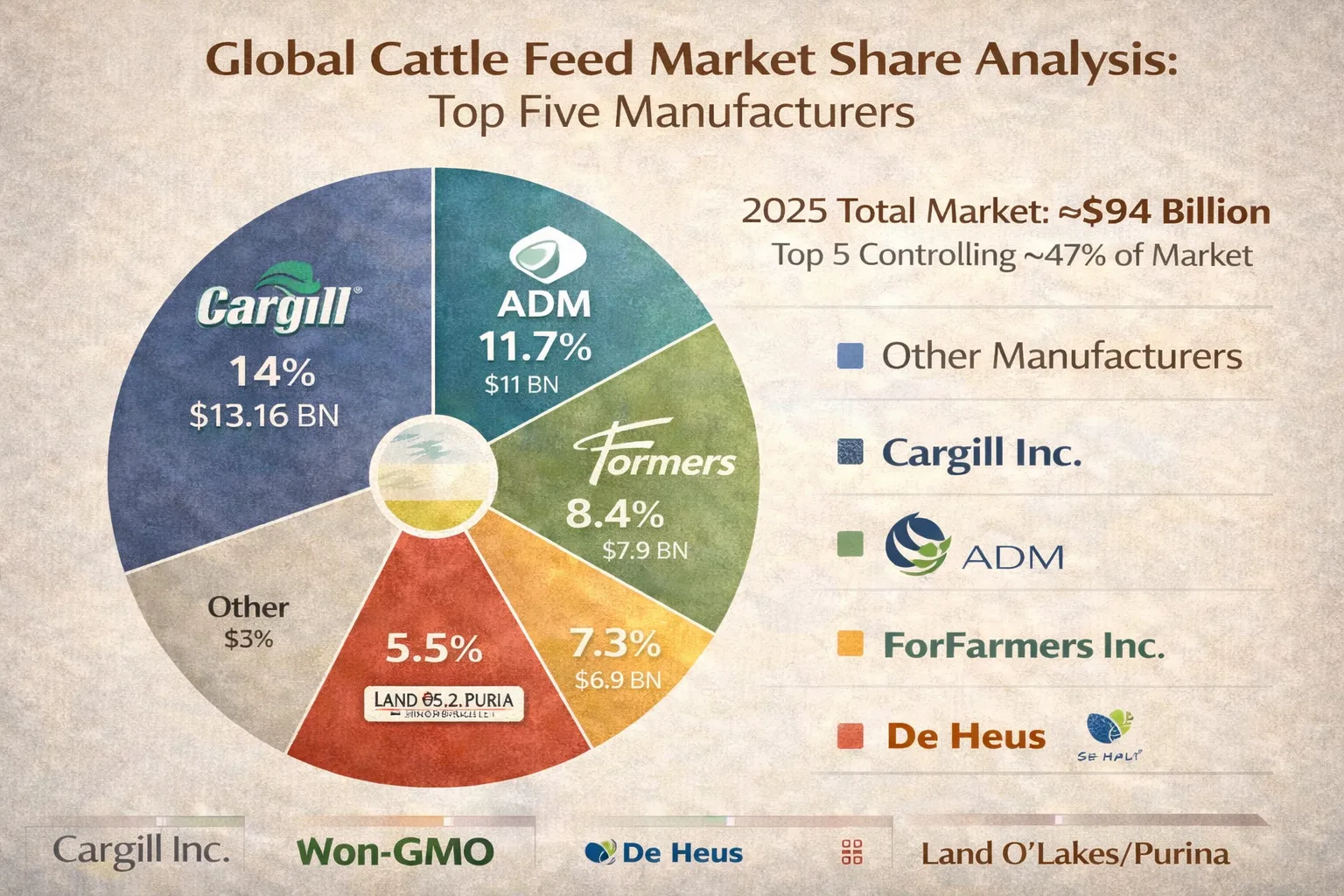
Five major companies control approximately 47% of the global cattle feed market, each with distinct competitive advantages:
| Brand | Market Share | Headquarters | Key Strengths |
|---|---|---|---|
| Cargill Inc. | 14% (13.8%) | United States | Integrated supply chain, global network, diverse product portfolio, advanced research in animal health |
| Archer Daniels Midland (ADM) | 11.7% | United States | Feed ingredient innovation, sustainability focus, customized blends for all cattle life stages |
| ForFarmers Inc. | 8.4% | Netherlands | Regional expertise, comprehensive nutritional solutions, strong European presence |
| De Heus | 7.3% | Netherlands | Global reach (Europe, Asia, Africa, Latin America), localized R&D, tailored solutions |
| Land O’Lakes (Purina) | 5.5% | United States | Farmer-focused cooperative model, North American expertise, specialized supplements and additives |
Each leader has positioned itself through continuous investment in research and development, with a focus on animal welfare, environmental sustainability, and productivity optimization.[web:10][web:11]
Emerging Disruptors and Alternative Brands
While the “Big Five” dominate market share, several emerging companies are challenging established players with innovative approaches:
- Nutreco (Netherlands) – Trouw Nutrition subsidiary emphasizing feed efficiency, animal health, and reduced carbon footprint
- Alltech (USA) – Fermentation-based products and trace mineral management for specialized livestock challenges
- Charoen Pokphand Group (Thailand) – Massive integrated supply chain expansion across Asia with competitive pricing and customization
- Godrej Agrovet (India) – Cost-effective, nutrient-optimized solutions for dairy and beef cattle with strong farmer education initiatives[web:11]
Understanding Cattle Nutrition: Science-Based Requirements
Successful cattle feeding begins with understanding the fundamental nutritional science that governs cattle health, growth, and production. Different cattle types-dairy, beef calves, finishing steers, breeding stock-have distinct nutrient requirements that must be carefully balanced.
The Five Essential Nutrients for Cattle
All cattle require five critical nutrients in their daily rations:
1. Energy
Energy is the nutrient cattle require in the greatest quantity after water, supplied through carbohydrates, fats, and protein. Energy requirements vary dramatically by cattle type and production stage. Growing beef calves gaining 2 pounds per day require approximately 1.6 pounds of protein daily and significantly higher energy density than maintenance cattle. Energy is typically measured in Mcal/kg DM (megacalories per kilogram of dry matter).[web:20][web:24]
2. Protein
Protein provides amino acids essential for muscle development, milk production, reproduction, and immune function. Young, growing cattle and lactating dairy cows require higher protein concentrations. Protein requirements are expressed as a percentage of the diet’s dry matter and vary from 10-16% depending on cattle age and production stage.[web:12][web:20]
3. Water
While often overlooked in feed formulation discussions, water is the nutrient required in the greatest daily quantity. Adequate water availability directly impacts feed intake, digestive function, and thermoregulation-particularly critical during heat stress periods.[web:20]
4. Minerals (Macrominerals and Trace Minerals)
Cattle require seven macrominerals-calcium, magnesium, phosphorus, potassium, sodium, chlorine, and sulfur-in concentrations exceeding 100 ppm. Critical trace minerals include copper, iron, manganese, selenium, iodine, and zinc, required in micrograms or nanograms per day but essential for enzymatic function, immune response, and metabolic processes.[web:12][web:16]
5. Vitamins
Fat-soluble vitamins A, D, and E and water-soluble B vitamins support immune function, bone health, reproduction, and metabolic efficiency. Vitamin A is particularly critical; deficiency impairs vision, reproduction, and disease resistance.[web:16]
Beef Cattle Nutritional Specifications
Beef cattle nutritional requirements change throughout their production lifecycle. Growing cattle (400-600 lbs) require different energy and protein densities than finishing cattle or breeding bulls.
Pasture-based systems utilizing high-quality forages can often meet the nutritional requirements for normal growth and maintenance in mature herds. However, mature pastures, crop residues, and low-quality forages frequently require supplementation with protein, energy, vitamins, and minerals to maintain optimal health. This reality drives the supplement market for grazing operations, which represents a significant portion of beef production systems.[web:12]
Dairy Cattle Nutritional Specifications
Dairy cattle have more stringent nutritional requirements than beef cattle due to the demanding energy and mineral costs of milk production. Calcium concentration in milk is 1.1-1.25 g/kg-far exceeding cattle body maintenance requirements. This fundamental physiological reality means dairy cattle require elevated calcium throughout lactation cycles, driving higher mineral supplementation in dairy rations.
Dairy cattle diets must maintain neutral detergent fiber (NDF) within 28-40% dry matter and non-fiber carbohydrate (NFC) at 38-44% maximum to optimize rumen health and milk production. These parameters are significantly different from beef cattle specifications.[web:16]
Vitamin A requirements for lactating dairy cows are approximately 4,400 IU/kg of dry diet, with additional supplementation required for cows producing >35 kg of milk daily. Trace mineral requirements are similarly elevated-zinc ranges from 28-60 ppm, selenium at 0.3 ppm, with copper, manganese, and iron all requiring precise balance to prevent deficiency or toxicity.[web:16]
Primary Feed Ingredients: Understanding Quality and Composition
Effective feed selection requires understanding the primary ingredients that compose modern cattle feeds and their nutritional contributions.
Corn: The Energy Foundation
Corn represents 26% of global cattle feed formulation and serves as the primary energy source in most concentrate feeds. Corn’s high carbohydrate content provides efficient calories for growth, milk production, and maintenance. However, corn alone is deficient in the essential amino acid lysine, necessitating protein supplementation-typically soybean meal or other protein sources.[web:33][web:38]
Corn can be fed as whole grain, cracked grain, or cornmeal, with processing method significantly impacting digestibility. Finely ground corn increases ruminal starch digestibility and feed efficiency but can increase risk of acidosis if not balanced with adequate forage. Particle size optimization is critical for achieving feed efficiency targets without compromising rumen health.[web:38]
Soybean Meal: The Protein Cornerstone
Soybean meal, a byproduct of soybean oil extraction, serves as the high-protein supplement of choice in most cattle diets. With crude protein concentrations of 45-48%, soybean meal provides essential amino acids critical for muscle development, enzyme synthesis, and milk protein production. Its amino acid profile-particularly lysine content-complements corn’s nutritional limitations, making corn and soybean meal the dominant dietary pair in commercial cattle feeding.[web:37][web:38]
Forage Sources: Hay, Silage, and Pasture
Forage quality is fundamental to cattle nutrition and cost efficiency. High-quality legume forages (alfalfa, clover) provide both energy and protein, with crude protein concentrations exceeding 15% dry matter. Grass forages vary considerably in quality depending on harvest stage, with boot-stage and early-bloom hay typically providing 12-14% crude protein and superior digestibility compared to late-bloom harvests.[web:24]
Silage production (fermented forage from corn, barley, or oats) offers advantages over dry hay: higher moisture content improves palatability and digestibility, extended storage capability, and reduced weather dependency. Silage dry matter (DM) yield and digestibility are critical quality parameters-DM yield ranging from 2,953 to 10,740 kg/ha depending on crop and variety selection.[web:4]
Grass-Fed vs. Grain-Fed: Nutritional and Environmental Comparison
The grass-fed versus grain-fed cattle debate extends beyond marketing narratives into substantive nutritional and environmental differences that directly affect consumer choice and sustainability metrics.
Nutritional Profiles
Grass-Fed Cattle consume pasture-based diets aligned with their evolutionary biology. Pasture provides diverse plant compounds including phytochemicals (p-cresol sulfate, 4-ethylphenolsulfate, hippurate, catechol-sulfate) that influence meat composition and human health biomarkers. Grass-fed beef demonstrates elevated omega-3 fatty acids, conjugated linoleic acid (CLA), and antioxidant compounds compared to grain-finished beef.[web:34][web:39][web:42]
Feed conversion efficiency presents a trade-off: grass-fed cattle gain approximately 0.61-1.95 kg/day depending on forage quality and season, compared to grain-fed finishing cattle gaining 1.60-2.02 kg/day. This efficiency difference extends finishing periods from 25 months (grass-fed) to 18-20 months (grain-fed), directly impacting production costs and carcass characteristics.[web:34]
Grain-Fed Cattle experience rapid weight gain due to high-energy concentrate diets. Final body weights, carcass quality (marbling, ossification), dressing percentages, and meat tenderness often exceed grass-fed comparables. Grain-fed finishing produces consistent, predictable carcass yields, which explains widespread industry adoption despite feed conversion efficiency trade-offs.[web:34]
Environmental Impact Assessment
Grass-fed systems demonstrate measurable environmental benefits:
- 87% lower sediment erosion
- 13 lbs per acre reduction in phosphorus runoff
- 30% lower ammonia emissions
- 8% lower total emissions (methane, nitrous oxide, carbon dioxide combined)
- Enhanced biodiversity and carbon sequestration in pasture systems
- Significantly reduced water requirements compared to grain production[web:45]
However, grass-fed systems require lower-quality land unsuitable for grain production, but necessitate longer production periods and lower individual animal productivity. Total land requirements per unit of beef produced can be equivalent or higher despite lower per-acre inputs.[web:45]
Feed Quality Metrics and Assessment
Professional feed selection requires understanding standardized quality metrics used throughout the industry.
Fiber Analysis: NDF and ADF
Neutral Detergent Fiber (NDF) measures total cell wall material and indicates forage bulk and potential dry matter intake. High-quality legumes typically contain 35-50% NDF, while grasses range from 45-60% NDF.
Acid Detergent Fiber (ADF) measures the least digestible plant fractions (cellulose and lignin) and is negatively correlated with digestibility. High-quality legumes demonstrate ADF values of 20-35%, while grasses range from 30-45%. An ADF reading of 44.94% on grass-alfalfa forage indicates elevated fiber digestibility challenges.[web:74]
Relative Feed Value and Relative Forage Quality
Relative Feed Value (RFV) is an indexed estimate combining NDF and ADF to predict intake and digestibility potential-critical for cost-per-unit-of-nutrient calculations when comparing hay products.
Relative Forage Quality (RFQ) refines RFV by accounting for Total Digestible Nutrients (TDN), offering more accurate energy predictions for precision feeding applications.[web:74]
Total Digestible Nutrients
Total Digestible Nutrients (TDN) represent the sum of digestible crude protein, digestible carbohydrates, digestible fiber, and digestible crude fat-expressed as a percentage of dry matter. TDN values typically range from 50-70% for average quality forages, with high-quality legumes exceeding 65% TDN.[web:20]
Modern Feed Additives: Technology-Enhanced Performance
Contemporary cattle feed formulations increasingly incorporate specialized additives designed to enhance digestibility, reduce environmental impact, support immune function, and optimize production efficiency.
Probiotics, Prebiotics, and Postbiotics
The distinction between these complementary feed additives is fundamental:
Probiotics are beneficial microorganisms that colonize the gastrointestinal tract, promoting health through competition with pathogenic bacteria and production of beneficial metabolic byproducts. Common ruminant probiotic strains include Lactobacillus acidophilus, Enterococcus faecium, and Saccharomyces cerevisiae (yeast).
Prebiotics consist of non-digestible feed components that selectively stimulate growth or activity of beneficial microorganisms already present in the gastrointestinal tract. Inulin, fructooligosaccharides, and certain dietary fibers serve prebiotic functions.
Postbiotics are bioactive compounds produced as metabolic byproducts of probiotic microorganisms-including short-chain fatty acids, bacteriocins, and other metabolites that directly benefit the host animal’s health and metabolism.
Strategic combination of all three-termed “synbiotics”-represents the advanced frontier of microbial supplementation, with the ultimate goal of reducing antibiotic dependency in cattle production.[web:69][web:75]
Enzyme Technology and Digestibility Enhancement
Enzyme supplementation in cattle feeds enhances digestibility of complex nutrients, particularly starch and fiber. Multi-enzyme formulations combine:
- Amylase – breaks down starch into simpler sugars
- Protease – digests protein into amino acids and peptides
- Cellulase – degrades cellulose in forage fiber
Enzyme efficacy depends on activity levels, substrate specificity, and rumen environment stability. Fecal starch analysis conducted by nutritionists can determine whether enzyme supplementation addresses digestibility gaps, particularly in high-grain diets.[web:72]
Ionophores represent another critical additive category, used by 90.5% of commercial feedlots with 1,000+ animals. These compounds modify rumen fermentation patterns, increasing propionate production (favorable for energy efficiency) while reducing methane generation-a significant greenhouse gas contributor.[web:72]
Sustainability-Focused Additives
Emerging additive technologies support environmental sustainability objectives:
- Methane inhibitors – bromoform-based compounds showing promise in shifting rumen microbiota from methane production to acetate generation
- Trace mineral management – optimized chelated minerals reducing fecal excretion and environmental accumulation
- Plant-based phytogenics – essential oils and plant extracts modulating rumen fermentation with antimicrobial properties
- Amino acid precision – customized essential amino acid balancing reducing overall dietary protein requirements and nitrogen excretion[web:27]
Alternative and Sustainable Feed Ingredients
The shift toward sustainable cattle production has driven innovation in feed ingredient sourcing, with practical alternatives to traditional corn and soybean meal becoming increasingly viable.
Legume-Based Protein Sources
Alfalfa and other nitrogen-fixing legumes offer multiple advantages: they improve soil health through nitrogen fixation, reduce fertilizer requirements, provide high-quality protein (15%+ crude protein), and support local sourcing-reducing transportation emissions. Legume-based feeding systems demonstrate comparable performance to conventional systems while supporting regenerative agriculture principles.[web:21]
Insect-Based Protein
Cricket and mealworm protein represent frontier feed ingredients requiring minimal land (10-15x more space-efficient than conventional livestock), minimal water, and capable of converting organic waste into high-quality protein. While currently higher-cost than conventional proteins, scale is improving economics. These insects contain complete amino acid profiles and demonstrate digestibility rates exceeding 85%.[web:21]
Seaweed and Aquatic Plant-Based Additives
Certain seaweed and aquatic plant species reduce enteric methane emissions by 10-20% while improving overall animal health. Kelp supplementation provides trace minerals (iodine, selenium, iron) while containing bioactive compounds supporting immune function. Cost-effectiveness continues improving as cultivation scales increase.[web:21]
Food Waste and By-Product Utilization
Utilizing surplus produce, bakery waste, and food processing byproducts as cattle feed addresses dual objectives: reducing waste disposal costs while creating circular economy benefits. Studies demonstrate citrus pulp inclusion in cattle diets reducing land use by 13%, water consumption by 7%, and carbon emissions by 6% compared to conventional corn/soybean formulations.[web:26]
Non-GMO and Specialty Feed Options
Growing consumer demand for transparency and environmental stewardship has expanded availability of non-GMO and specialty cattle feed formulations.
Non-GMO Certification and Production
Non-GMO cattle feeds utilize conventional (non-genetically modified) grain varieties and oilseed sources. Producers like Sunrise Farms manufacture fresh non-GMO feed from whole grains, organic mineral blends, and proprietary recipes with no by-products, no added hormones, no antibiotics, and no medications. These feeds frequently exceed federal compliance standards, with regular inspections ensuring quality consistency.[web:67]
Typical non-GMO feed compositions include 16% crude protein, 5% crude fat, and 8% crude fiber-meeting beef and dairy cattle specifications while supporting animal welfare objectives. Ingredient lists highlight probiotics (Lactobacillus species), fermentation products, and organic minerals-supporting digestive health and avoiding synthetic additives.[web:67]
Custom Feed Formulation
Precision livestock farming technologies enable custom feed formulation tailored to specific herd requirements. Advanced nutritionists utilize feed testing data, forage quality analysis, cattle performance metrics, and environmental constraints to optimize least-cost rations meeting specific production targets. This approach reduces waste, improves feed efficiency, and minimizes environmental impact compared to one-size-fits-all formulations.[web:38]
Evaluating Cattle Feed Quality: Practical Selection Criteria
Professional selection of cattle feed requires systematic evaluation against multiple quality parameters, cost metrics, and operational fit.
Physical Quality Assessment
Inspect feed for:
- Uniformity – consistent pellet size/color indicating consistent manufacturing
- Dust content – excessive dust suggests poor processing or storage issues
- Mold or off-odors – indicates spoilage or improper storage conditions
- Contaminants – foreign materials suggest quality control failures
Nutritional Specifications Verification
Request and verify:
- Feed analysis – crude protein, crude fat, crude fiber, ash
- Mineral content – calcium, phosphorus, magnesium, trace minerals
- Vitamin levels – Vitamin A, D, E specifications
- Digestibility data – in vitro digestibility percentages
- Ingredient sourcing – supplier verification and food safety certifications
Comparative Cost Analysis
Calculate true cost by dividing price per pound by digestibility percentage and nutrient concentration. A higher-priced feed with superior digestibility and balanced nutrition often provides better value than less expensive feeds with inferior nutritional profiles.
FAQ: Questions Ranchers and Producers Frequently Ask About Cattle Feed
Q1: What is the most important factor when selecting cattle feed?
A: Feed quality and nutritional balance are paramount. The feed must provide appropriate energy density, protein concentration, mineral balance, and digestibility for your specific cattle type and production stage. A $15/bag premium feed formulated for your exact cattle class typically outperforms $10/bag commodity feeds through improved performance, health, and reproductive outcomes-easily justifying the cost differential.
Q2: Is grass-fed cattle feed truly more sustainable than grain-fed systems?
A: Grass-fed systems demonstrate measurable environmental benefits including lower ammonia emissions, reduced erosion, and enhanced biodiversity. However, grass-fed cattle require longer production periods (25 months vs. 18 months) and may require greater total land area per unit of beef produced. The most sustainable approach depends on local forage quality, climate conditions, and available infrastructure. Integrated systems combining pasture grazing with high-quality supplemental feeding often optimize both environmental and economic outcomes.
Q3: What feed additives provide the most value for beef cattle operations?
A: Research supports ionophore supplementation (improving feed efficiency by 5-10%), enzyme blends (enhancing starch/fiber digestibility), and strategic mineral fortification (preventing deficiency-related performance losses). Probiotic supplementation shows promise for stress mitigation during transportation and health challenges. ROI analysis should guide selection based on your operation’s specific constraints and objectives.
Q4: How frequently should cattle feed be tested for quality?
A: Test homemade or custom-mixed rations before implementation to verify nutritional specifications. Commercial complete feeds from major manufacturers are tested continuously and results provided on bag labels. Test hay and forage before purchasing in quantity-forage quality is highly variable and directly impacts supplemental feed requirements. Annual testing of pasture/hay lots guides seasonal supplementation adjustments.
Q5: Can grass-fed cattle achieve optimal body condition without grain supplementation?
A: High-quality irrigated pasture can meet nutritional requirements for many cattle classes. However, dormant-season pasture (late fall through spring in most regions) typically requires supplementation with protein, energy, and minerals to maintain health. Strategic supplementation with 2-4 lbs of high-quality concentrate daily maintains body condition during forage shortages while preserving grass-fed certification standards.
Q6: What mineral balancing is most critical for dairy cattle?
A: Calcium and phosphorus balance is fundamental, as milk production demands exceptional calcium mobilization. Magnesium deserves equal attention-deficiency causes hypomagnesemia (grass tetany), a potentially fatal metabolic disorder. Trace mineral balance is equally critical: zinc supports hoof health and immune function, selenium prevents white muscle disease, and copper is essential for iron metabolism and immune competence.
Q7: Are probiotics worth the added feed cost?
A: Probiotic value depends on your operation’s specific constraints. Cattle under stress (transportation, commingling, vaccination, dietary changes) show measurable benefit from probiotic supplementation-reducing scours, improving feed intake, and accelerating health recovery. Established herds on stable diets demonstrate lower probiotic ROI. Cost-benefit analysis using your specific cost structure and production targets is essential for decision-making.
Q8: What is the 30-month rule for cattle and how does it impact feed choice?
A: The 30-month rule, adopted by the USDA following BSE (mad cow disease) concerns, applies primarily to grass-fed labeling and import regulations. Feed choice does not directly “trigger” this rule-rather, cattle slaughter age and feeding history documentation does. Use appropriate feed regardless of cattle age; the 30-month distinction matters for regulatory compliance and labeling claims, not nutritional decision-making.
Q9: How do I compare organic vs. conventional cattle feeds objectively?
A: Organic feeds must be produced from non-synthetic inputs and cannot contain synthetic additives, growth hormones, or antibiotics. Compare nutrition specifications (protein, fiber, digestibility) and cost-per-unit-of-nutrient between organic and conventional options. For performance cattle, organic feeds must meet identical nutritional requirements as conventional feeds-there is no inherent “superiority” unless specific cattle welfare objectives align with organic production philosophy.
Q10: What feed changes should I make if cattle show poor body condition or weight gain?
A: Assess forage quality first through feed testing-poor quality forage is the most common limiting factor. Increase concentrate supplementation to 2-3 lbs per head daily, verify mineral balance (particularly phosphorus and trace minerals), and rule out health constraints (parasites, disease). If herd cattle show similar issues, forage quality or nutritional imbalance is likely; if specific animals underperform, individual health evaluation is warranted.
Q11: Which major cattle feed brand offers the best value for small producers?
A: Small producers often benefit from regional feed manufacturers and custom formulations rather than major national brands, which typically serve large commercial operations. Cargill and Land O’Lakes (through local dealers) offer strong support infrastructure and consistent quality. For smallest operations, local feed mills often provide flexibility and personalized formulation not available from major manufacturers. Evaluate local options alongside national brands based on service, consistency, and true cost-per-nutrient.
Q12: Are there alternatives to soybean meal for cattle protein supplementation?
A: High-quality alfalfa hay, clover, other legumes, and canola meal provide protein alternatives. Soybean meal remains preferred due to superior amino acid profile (particularly lysine), cost-effectiveness, and reliable quality. Novel proteins (insect-based, seaweed-based) show promise but current costs exceed conventional options. For grass-fed systems, high-quality legume hay often replaces purchased protein supplements entirely.
Q13: How do I evaluate whether my current cattle feed is supporting herd health?
A: Monitor cattle body condition score (BCS), weight gain rates, reproductive performance (conception rates, calving intervals), milk quality (somatic cell count in dairy), and health event frequency (disease, lameness, metabolic disorders). Feed analysis should match your herd’s performance targets-if performance falls short despite adequate feed intake, nutritional balance is likely limiting. Collaborate with your veterinarian and nutritionist to systematically evaluate feed’s role in performance gaps.
Q14: What should I feed orphan or bottle-fed calves?
A: Calves receive colostrum immediately post-birth (critical for passive immunity), transition to milk replacer if not nursing naturally, and begin forage introduction at 2-3 weeks with calf starter grain at 1-2 weeks. Quality calf starters typically contain 20-24% crude protein with enhanced digestibility, minerals (particularly phosphorus), and sometimes probiotics. Transition to standard feeds occurs at 8-12 weeks as forage and concentrate intake increase.
Q15: How often should I switch cattle feed brands or formulations?
A: Frequent changes disrupt rumen microbial populations and reduce digestive efficiency. Transition new feeds over 7-10 days (gradually increasing new feed while decreasing old). Make changes strategically (seasonal transitions, production stage changes) rather than impulsively. If performance issues emerge after feed changes, evaluate whether gradual transition was implemented and allow 2-3 weeks for rumen adaptation before attributing issues to the feed itself.
Strategic Feed Selection for Sustainable Cattle Operations
Cattle feed selection represents one of the highest-impact decisions in livestock production, affecting herd health, productivity, environmental footprint, and economic viability. The global market leaders-Cargill, ADM, ForFarmers, De Heus, and Land O’Lakes-have earned trust through consistent quality, research investment, and farmer support infrastructure.
However, optimal feed choice is not about selecting the “best” national brand uniformly, but rather matching feed specifications precisely to your cattle’s production stage, forage quality, environmental objectives, and economic constraints. Advanced nutritionists and feed manufacturers now enable customized formulations previously available only to large operations, democratizing precision livestock nutrition.
The emerging sustainability focus-through grass-fed systems, alternative ingredients, methane-reducing additives, and circular economy utilization of food waste-represents not a trend but a structural shift in cattle production. Producers adopting these approaches proactively now gain competitive advantage as consumer expectations and regulatory frameworks evolve.
As you evaluate cattle feed options, prioritize nutritional specifications and quality assurance over brand reputation alone. Request feed analysis documentation, monitor herd performance metrics systematically, and partner with qualified nutritionists and veterinarians to optimize your operation’s unique requirements. The investment in feed quality and precision formulation consistently outperforms commodity pricing approaches through measurable improvements in health, reproduction, and production efficiency.
The cattle feeds you choose today determine your herd’s productivity and your operation’s sustainability trajectory for years ahead-making deliberate, data-informed selection essential for agricultural success.