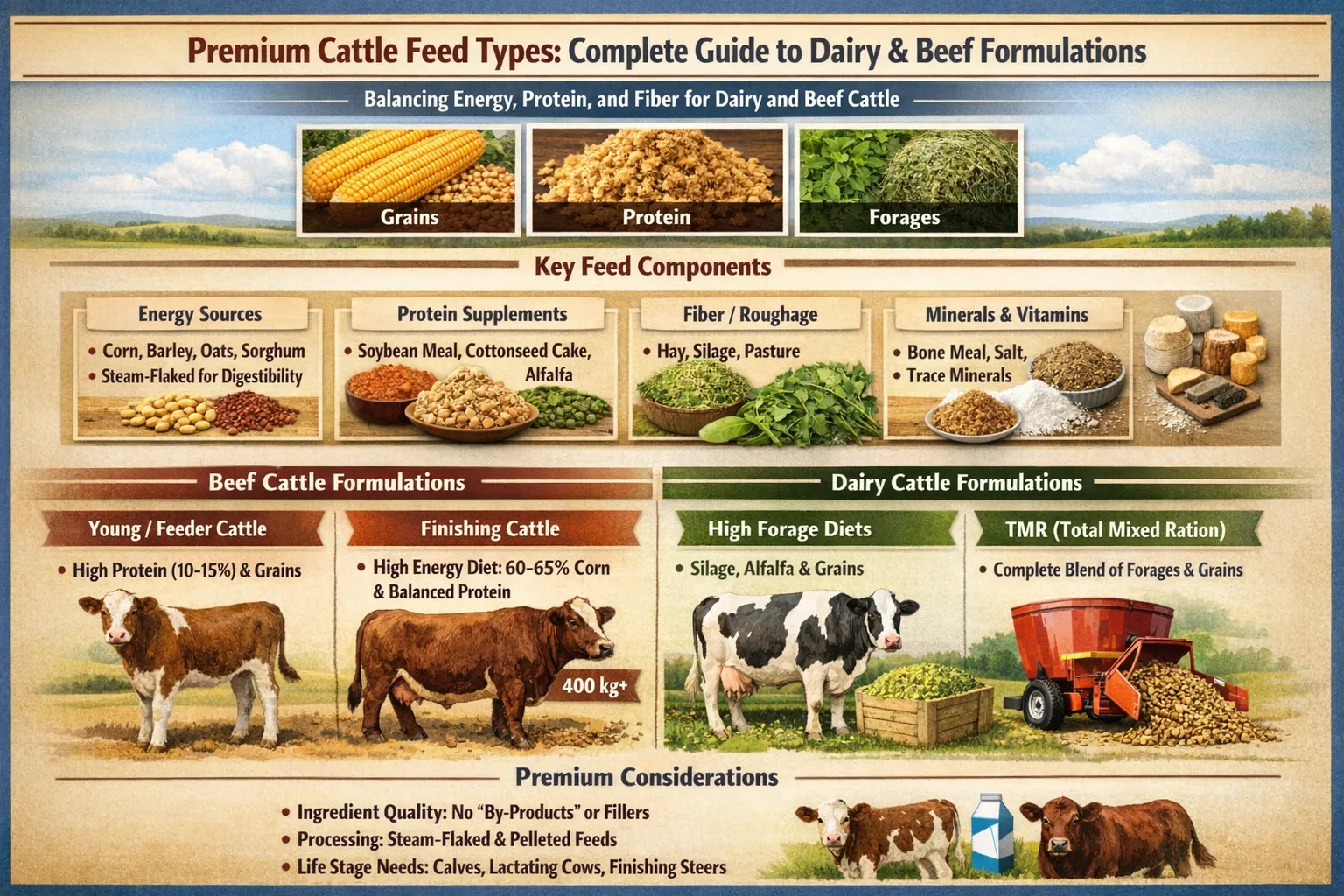
Building Herd Success Through Precision Nutrition
Cattle feed represents the single largest controllable cost in livestock operations-accounting for 55–65% of total production expenses. Yet most producers make feed selection decisions based on price alone, missing critical opportunities to improve milk yield by 1.05 kg per cow daily, increase weight gain efficiency by up to 2.02 kg per day, or reduce annual feed costs by $251 per animal through optimized nutrition.
This comprehensive guide decodes the science behind premium cattle nutrition, equips you with practical selection criteria, and provides evidence-based strategies to transform feed purchasing from a cost center into a competitive advantage. Whether you operate a 50-head beef operation or a 500-cow dairy enterprise, the information here directly addresses the question every successful producer asks: “What feed will deliver maximum return per dollar invested?”
The Cattle Feed Market Landscape
The global cattle feed market reached USD 94.0 billion in 2025 and is projected to expand to USD 124.0 billion by 2034-growing at a compound annual rate of 4.35%. This expansion reflects fundamental shifts in production philosophy: away from commodity-based formulations and toward precision nutrition systems that optimize feed conversion, animal health, and environmental sustainability.
Market Composition by Product Type:
Concentrates dominate the market, representing approximately 49.3% of ingredient demand, with cereals (primarily corn, barley, and wheat) serving as the primary energy source. Additives represent the fastest-growing category, expanding at 5.4% annually as producers shift from antimicrobial growth promoters toward functional ingredients including enzymes, probiotics, and phytogenics. Pellets account for 52.8% of feed form preference due to reduced waste, improved handling, and superior nutritional density compared to mash or crumbled alternatives.
Types of Cattle Feed: Structural Categories and Applications
1. Forage-Based Feeds: Foundation of Cattle Nutrition
Forages include hay, silage, pasture, and straw-all derived from grasses, legumes, or other plant material. These foods comprise the fundamental dietary component for all cattle, providing essential fiber required for proper rumen function and digestive health.
Hay (dried forage) offers consistency and storability, with quality varying dramatically by harvest timing, storage conditions, and botanical composition. Legume-dominant hay (alfalfa) typically contains 17–18% crude protein and 280–350 NEm (net energy for maintenance, measured in Mcal/kg on a dry matter basis), while grass hay averages 7–10% protein with lower energy density. Quality assessment requires laboratory analysis measuring dry matter, crude protein, acid detergent fiber (ADF), neutral detergent fiber (NDF), and minerals including calcium and phosphorus.
Silage (fermented forage) preserves nutrients from fresh plant material and improves digestibility through controlled fermentation. Corn silage provides superior energy density (2.8–3.2 NEm) compared to grass silages (2.2–2.6 NEm), making it the preferred choice for high-producing dairy cows and finishing beef cattle. Proper fermentation requires pH below 5.0; samples above this threshold indicate failed fermentation and risk of mycotoxins.
Pasture provides seasonal nutrition with variable quality dependent on forage species maturity, stocking density, and rainfall patterns. Grazing cattle gain 0.40–0.61 kg/day on irrigated pasture but may lose 18 kg during dormant seasons (December–March in temperate regions) without supplemental nutrition.
2. Energy Concentrates: Fueling Production
Energy feeds primarily consist of grains (corn, barley, oats) and processed by-products that provide metabolizable energy (ME) for milk production, growth, and body maintenance.
Whole grains deliver high energy density but often require supplemental protein when fed as sole concentrate. Corn grain provides approximately 3.3 Mcal ME/kg (dry matter basis), exceeding barley or oats by 8–12%.
Processed grains and by-products maximize nutrient extraction and digestibility:
- Corn distillers dried grains (DDGS): Contain 12–14% crude protein, serving dual roles as energy and protein supplement; cost 20–30% less than soybean meal on a protein-equivalent basis
- Hominy chop: Provides concentrated energy (3.1 Mcal ME/kg) with 8–10% protein; often used in finishing cattle rations
- Barley grain: Offers slightly lower energy (3.0 Mcal ME/kg) than corn with superior digestibility of starch, beneficial for cattle prone to acidosis
3. Protein Concentrates: Building Tissue and Supporting Production
Protein feeds provide amino acids essential for muscle development, milk synthesis, immune function, and reproductive efficiency.
Plant-based protein sources:
- Soybean meal: Industry standard at 44–48% crude protein; balanced amino acid profile includes lysine and methionine (first-limiting amino acids for milk synthesis)
- Canola meal: 36–40% crude protein; higher fiber content (12%) suits forage-based diets
- Distillers solubles: Excellent palatability due to high molasses content; enhances voluntary intake when incorporated at 5–8% of total ration
Animal-based protein sources (limited availability and regulatory constraints):
- Fish meal: Exceptional amino acid balance; rarely used in cattle diets due to cost and regulatory limitations
- Insect proteins: Approved in select markets; cricket meal and insect concentrates provide 40–65% crude protein with superior sustainability metrics compared to soybean production
Urea and non-protein nitrogen sources: Feed-grade urea and slow-release urea compounds reduce feed costs by 15–25% when properly formulated, providing rumen-available nitrogen for microbial protein synthesis. However, meta-analysis of 44 dairy studies found no significant advantage in milk yield between true protein supplementation and slow-release urea alternatives when crude protein requirements are balanced.
4. Mineral and Vitamin Supplements: Preventing Metabolic Deficiencies
Trace mineral deficiencies directly reduce immune function, fertility, milk composition, and growth rates. Precision mineral supplementation improves calving ease, reduces disease incidence by 12–18%, and supports optimal milk production.
Macro-mineral requirements (percentage of dry matter intake):
| Nutrient | Dairy Lactating | Dairy Dry Cows | Beef Cattle | Stressed Calves |
|---|---|---|---|---|
| Calcium | 0.50–0.65% | 0.30–0.40% | 0.40–0.60% | 0.60–0.80% |
| Phosphorus | 0.30–0.35% | 0.20–0.25% | 0.22–0.30% | 0.25–0.35% |
| Magnesium | 0.18–0.22% | 0.12–0.18% | 0.08–0.12% | 0.15–0.20% |
| Potassium | 0.90–1.20% | 0.55–0.65% | 0.60–0.80% | 0.50–0.70% |
| Sulfur | 0.15–0.25% | 0.15–0.20% | 0.15–0.20% | 0.15–0.20% |
Trace mineral requirements (mg/kg dry matter):
| Element | Dairy | Beef | Growing Cattle | Calves |
|---|---|---|---|---|
| Copper | 10–14 | 10–12 | 8–10 | 15–20 |
| Zinc | 40–50 | 30–40 | 30–40 | 75–100 |
| Manganese | 20–40 | 20–40 | 20–40 | 20–40 |
| Cobalt | 0.1–0.2 | 0.1–0.15 | 0.1–0.15 | 0.2–0.3 |
| Iodine | 0.5–0.8 | 0.5 | 0.3–0.5 | 0.5–1.0 |
| Selenium | 0.15–0.30 | 0.10–0.15 | 0.10–0.15 | 0.25–0.40 |
Mineral interactions complicate supplementation: excessive potassium (>1.3% DM) reduces magnesium absorption, increasing milk fever risk in peripartum cows. Copper bioavailability decreases with high molybdenum or sulfur; therefore, copper should be supplemented in amino acid-chelated form rather than as sulfate salts when using high-sulfur byproducts.
5. Performance-Enhancing Additives: Modern Feed Technology
Advanced additives improve feed efficiency, animal health, and environmental sustainability-representing the fastest-growing segment of the cattle feed market.
Methane-reducing additives:
- Tannin supplements: Reduce enteric methane emissions by 9.3–10.2%, with greater effectiveness in beef systems; tannin sources include acacia extract at 1.33–2.5% inclusion rates
- Corn fermentation byproducts: Marks & Spencer’s novel supplement (launched April 2024) reduces methane formation by inhibiting digestive enzymes while being naturally metabolized in the rumen
- 3-NOP (3-nitrooxypropanol): Methane reduction of 25–35% with minimal effects on productivity; regulatory approval pending in North America
Enzyme and probiotic complexes:
- Improve fiber digestibility by 8–15%, particularly beneficial in high-forage rations
- Support rumen microbial balance, reducing disease incidence in transition cows by 20–25%
- Cost $0.50–1.50 per head per day; ROI typically achieved within 90–120 days through improved feed conversion and milk production
Phytogenic additives (plant extracts):
- Replace antimicrobial growth promoters banned in most developed nations
- Enhance feed palatability and intake, particularly important for high-stress calves or recently weaned animals
- Examples include essential oil blends from oregano, thyme, and anise
Nutritional Requirements by Cattle Type and Production Stage
Dairy Cattle: Precision Nutrition for Milk Yield
Lactating dairy cows require metabolizable energy (ME) formulations calculated as multiples of maintenance requirements plus production demands.
A 600 kg Holstein cow in mid-lactation producing 40 kg of milk daily requires:
- Maintenance ME: 55–60 Mcal/day (approximately 9.2–10 Mcal/kg dry matter intake)
- Production ME: 0.45–0.50 Mcal per kg of milk (assuming 3.5% fat, 3.2% protein composition)
- Total daily requirement: 82–88 Mcal ME, demanding rations with energy density of 1.65–1.75 Mcal NEL (net energy for lactation)/kg DM
Protein requirements stratify by milk production level:
| Milk Production | Crude Protein | Metabolizable Protein | Crude Protein % DM |
|---|---|---|---|
| 20 kg/day | 1,000 g/day | 650 g/day | 12.5–13.0% |
| 30 kg/day | 1,350 g/day | 850 g/day | 14.0–14.5% |
| 40 kg/day | 1,650 g/day | 1,050 g/day | 15.0–16.0% |
| 50 kg/day | 1,900 g/day | 1,200 g/day | 16.5–17.5% |
High-producing dairy cows (>45 kg/day milk) benefit from amino acid balancing beyond crude protein percentages. Methionine and lysine represent first-limiting amino acids; supplementing rumen-protected methionine improves milk production by 0.8–1.2 kg/day when protein is not limiting.
Mineral considerations for peripartum cows (3 weeks precalving through 3 weeks postcalving):
Dietary cation-anion difference (DCAD) fundamentally influences calcium metabolism. Target a DCAD of -50 to -100 mEq/kg dry matter during the precalving period (achieved through potassium restriction and chloride supplementation) to reduce milk fever incidence from 5–8% to <2%.
Beef Cattle: Protein and Energy for Growth and Finish
Growing cattle (steers and heifers from weaning to finishing) require moderate crude protein (12–14% DM) with energy density dependent on growth target.
- Steers gaining 0.9 kg/day: Require 2.0–2.2 NEg (net energy for gain) Mcal/kg
- Steers gaining 1.5+ kg/day: Demand ≥2.3 NEg Mcal/kg, achievable through high-concentrate rations (>60% grain)
Finishing cattle (final 90–150 days to slaughter) typically receive high-grain diets where concentrate comprises 85–95% of the ration. Under these protocols, crude protein requirements decrease to 11.5–12.5% DM, as microbial protein synthesis from grain fermentation supplements dietary protein.
Grass-finished vs. grain-finished performance differential:
Research comparing intensive grain feeding with year-long grass finishing shows profound differences in production economics:
| Metric | Grain-Finished (CON) | Grass-Finished (12 mo) | Mixed (20 mo grass + 45 d grain) |
|---|---|---|---|
| Final weight | 632 kg | 283 kg | 551 kg |
| Dressing percentage | 61.8% | 50.3% | 57.5% |
| Marbling (USDA) | 421 (low choice) | <400 (select) | 400–410 |
| Feed conversion | 6.2:1 | 8.1:1 | 7.3:1 |
| Time to market | 128 days | 600+ days | 545 days |
| Cost per kg gain | $1.85–2.15 | $1.95–2.50 | $1.75–2.05 |
Grain-finished cattle reach target carcass weight 4–6 months earlier and achieve higher marbling scores (affecting retail value by $0.50–1.25/kg), partially offsetting higher feed costs.
Replacement Heifers: Programming for Lifetime Productivity
Early-life nutrition profoundly influences lifetime dairy production. Cornell University lifetime-performance studies demonstrate that each kilogram of average daily gain (ADG) during the preweaning phase translates to 850–1,113 kg of additional milk in first lactation alone.
For a 100-cow operation raising 30 replacement heifers annually:
- Conservative pre-weaning ADG (0.5 kg/day): 30 × 850 kg = 25,500 kg additional milk per generation
- Aggressive early-life programming (0.8 kg/day): 30 × 1,113 kg = 33,390 kg additional milk per generation
Annual economic value: $100,800–$132,750 at USD 0.40/kg wholesale milk pricing, compared to pre-weaning nutrition costs of $300–400 per animal.
This represents a 600–800% return on investment from optimized calf-rearing, yet most producers minimize early-life nutrition to reduce costs, losing far greater lifetime value.
Colostrum management protocol for maximum returns:
- Deliver 4 liters of high-quality colostrum (>50 mg/mL immunoglobulin G) within 2 hours of birth
- Provide 2 kg/day milk replacer at 12% solids (supporting 0.7–0.9 kg/day ADG)
- Add probiotics and enzymes ($30–50 per animal) to support rumen colonization
- Expected ROI: $1,101–1,441 additional first-lactation revenue per heifer
Feed Quality Assessment: Decoding Laboratory Analysis
Feed testing should precede all major purchasing decisions. Comprehensive feed analysis reveals true nutritional value and prevents costly formulation errors.
Essential Parameters for Feed Analysis
Forage testing should include:
- Dry matter (DM%): Represents moisture-free nutrient concentration
- Crude protein (CP): Total protein content on DM basis
- Acid detergent fiber (ADF): Cellulose and lignin; lower values indicate superior digestibility
- Neutral detergent fiber (NDF): Cell wall content; affects intake (high NDF reduces consumption)
- Minerals: Calcium, phosphorus, magnesium, potassium (on DM basis)
- pH (silage only): Values <5.0 indicate proper fermentation
Quality interpretation guidelines:
| Parameter | Excellent | Good | Fair | Poor |
|---|---|---|---|---|
| Alfalfa hay ADF | <31% | 31–35% | 35–40% | >40% |
| Grass hay CP | >14% | 11–14% | 8–11% | <8% |
| Corn silage NDF | <40% | 40–45% | 45–52% | >52% |
| Relative Feed Value | >180 | 160–180 | 120–160 | <120 |
Near infrared reflectance spectroscopy (NIRS) provides rapid analysis at lower cost than wet chemistry but carries limitations for mineral analysis, which relies on indirect relationships between minerals and organic molecules. For critical minerals (calcium, phosphorus, magnesium), wet chemistry remains superior despite higher cost.
Cost-Benefit Analysis of Premium Feeds
Feed represents 55–65% of total production costs, yet many producers default to lowest-price suppliers without calculating true nutritional value. Cost per unit of nutrient-not cost per unit of weight-determines feeding economics.
Example calculation: Soybean meal vs. distillers dried grains
Assumptions:
- Soybean meal: $480/metric ton, 44% crude protein
- Distillers dried grains: $340/metric ton, 30% crude protein
Cost per kg of crude protein:
- Soybean meal: ($480 ÷ 1,000 kg) ÷ 0.44 = $1.09/kg protein
- Distillers dried grains: ($340 ÷ 1,000 kg) ÷ 0.30 = $1.13/kg protein
While DDGS costs 11% more per protein kilogram, the amino acid profile, digestibility, and inclusion flexibility may justify premium pricing. Advanced feed formulation software or consultation with nutritionists identifies optimal ingredient combinations balancing cost, nutritional profile, and production outcomes.
Grass-Fed vs. Grain-Fed: Production Economics and Consumer Preference
System Performance Comparison
The grass-fed vs. grain-fed decision shapes herd economics, land requirements, marketing opportunities, and sustainability metrics.
Production efficiency:
- Grain-finished systems: Cattle reach market weight (600–650 kg) in 18–22 months with feed conversion ratios of 6.0–6.5:1 (kg feed per kg gain). Higher grain inclusion rates accelerate gain by 1.5–2.0 kg/day compared to grass-only systems.
- Grass-finished systems: Cattle require 24–30 months to reach market weight with feed conversion ratios of 8.0–9.5:1. Extended time on pasture delays profitability but reduces concentrate costs and improves sustainability metrics.
Carcass quality and pricing:
- Grain-finished beef: Marbling scores average 420–450 (USDA Low Choice to High Choice); premium pricing of $0.75–1.25/kg reflects consumer preference for consistent quality and consistent texture
- Grass-finished beef: Marbling scores average 350–400 (USDA Select); 10–15% price discount partially offset by marketing premiums in grass-fed-conscious consumer segments
Nutritional Differences: Implications for Human Consumption
Grass-fed beef contains higher concentrations of conjugated linoleic acid (CLA) and omega-3 polyunsaturated fatty acids, while grain-fed beef provides greater total fat and caloric density. These differences appeal to specific consumer demographics but nutritional superiority remains scientifically debated.
Environmental Impact: Land Use vs. Greenhouse Gas Intensity
Grass-fed systems require 30–40% more land per kilogram of meat produced due to slower growth and lower stocking densities. Conversely, grain-finished systems generate higher per-animal methane emissions from concentrated grain fermentation but deliver more meat per hectare, reducing land-based emissions per kilogram of output. Well-managed rotational grazing systems can achieve carbon neutrality or carbon-negative status through soil carbon sequestration, offsetting ruminant methane production.
Feed Additives and Emerging Technologies
Performance-Enhancing Compounds
Probiotics and enzymes ($0.40–0.80/head/day) improve digestive efficiency by stabilizing rumen microbial populations and increasing fiber digestibility. Lactobacillus plantarum and Saccharomyces cerevisiae formulations reduce disease incidence in calves by 15–25% while improving average daily gain by 5–8% in transition periods.
Tannin-based supplements reduce methane yield by 9–10% with greater efficacy in beef production systems. One meta-analysis of 75 treatment means across 23 studies found consistent methane reduction; however, methane intensity (per unit of production) remained unchanged due to concurrent improvements in average daily gain, limiting net sustainability benefits.
Amino acid supplementation targets first-limiting amino acids-primarily methionine (rumen-protected form) and lysine. High-producing dairy cows (>45 kg/day milk) benefit from supplemental rumen-protected methionine at 12–18 g/day, improving milk production by 0.8–1.2 kg/day and milk protein by 0.1–0.2 percentage points.
Sustainability Innovations: Meeting Regulatory Demands
Methane mitigation additives directly address regulatory pressure in the EU and emerging North American carbon accounting schemes. Products incorporating seaweed extracts (0.5–1.5% inclusion) reduce methane emissions by 15–20% without productivity penalties, commanding 20–40% premiums over commodity feeds.
Precision mineral blending reduces excess mineral excretion by 30–50% (particularly phosphorus and copper) while maintaining production performance. This lowers environmental nutrient loading and supports regulatory compliance in sensitive watersheds.
Implementation Strategy: Transitioning to Optimized Feeding Programs
Step 1: Baseline Assessment (Weeks 1–2)
Collect representative feed samples from existing hay, silage, and grain sources. Submit for comprehensive laboratory analysis including dry matter, crude protein, fiber fractions, and macro-minerals. Simultaneously, measure current production metrics (milk yield/composition for dairy; average daily gain for beef) and feed conversion efficiency.
Calculation of baseline feed conversion:
- Total dry matter intake: ÷ pounds of milk produced or pounds of gain
- Example (dairy): 45 kg DM intake ÷ 40 kg milk = 1.125 kg DM per kg milk
Step 2: Nutritional Audit (Weeks 3–4)
Engage a qualified ruminant nutritionist (credentials: MS in animal nutrition or equivalent professional certification) to formulate balanced rations matching production stage requirements. The audit should identify:
- Limiting nutrients (typically energy, protein, or specific amino acids)
- Mineral imbalances (particularly calcium-phosphorus ratios and potassium excesses)
- Forage quality deficiencies requiring supplementation
Expected cost: $300–600 per audit; ROI achieved within 60–90 days through improved feed efficiency.
Step 3: Gradual Implementation (Weeks 5–12)
Introduce feed changes incrementally over 14–21 days to prevent digestive upset and rumen acidosis. Begin with 25% of new formulation mixed with 75% previous diet, increasing proportions every 3–4 days.
Monitor during transition:
- Dry matter intake (high-producing cows should maintain >18 kg/day intake)
- Milk yield and composition (early production increases indicate proper adaptation)
- Stool consistency and overall health
- Blood metabolites (optional: MUN levels for protein adequacy; glucose for energy status)
Step 4: Performance Tracking and Adjustment (Months 3–6)
Retest forages quarterly or semi-annually (seasonal variation significantly affects quality). Monitor key performance indicators:
Dairy cattle:
- Milk yield per cow per day
- Milk protein and fat percentages (target: ≥3.2% protein, ≥3.8% fat)
- Somatic cell count (SCC <200,000 cells/mL indicates optimal immune and udder health)
- Body condition score (maintain 2.75–3.25 for lactating cows)
Beef cattle:
- Average daily gain (should improve 5–15% within 60 days of optimization)
- Feed conversion ratio (each 0.2-unit improvement in FCR represents $15–25/head profit on feedlot cattle)
- Condition score at target (ribeye area and fat depth indicate carcass quality trajectory)
Step 5: Seasonal Adjustments
Forage quality fluctuates dramatically across seasons. Winter hay typically contains 1.5–3.0 percentage points less crude protein and 4–8 percentage points higher fiber than spring growth, demanding supplemental concentrate increases of 15–25% to maintain production.
Frequently Asked Questions About Cattle Feed
Q: What do farmers feed cattle that aren’t grass-fed?
A: Non-grass-fed cattle typically receive total mixed rations (TMR) combining forage (hay or silage), grains (corn, barley), protein supplements (soybean meal, distillers grains), and mineral-vitamin mixes. The specific combination depends on production stage: growing cattle receive 40–60% forage with 40–60% concentrate; finishing cattle receive 10–30% forage with 70–90% concentrate. A typical finishing ration contains 65–70% corn, 20% forage, 8–10% soybean meal, and 2–3% mineral-vitamin supplement.
Q: What cattle feed is highest in protein?
A: Soybean meal (44–48% crude protein) and canola meal (36–40% crude protein) represent traditional plant-based sources. Fish meal (65–70% crude protein) and insect proteins (40–65% crude protein) provide superior protein concentrations, though cost and regulatory constraints limit their adoption. For practical formulations, slow-release urea (46% crude protein equivalent) offers cost-effective protein at 15–25% discount to soybean meal when properly balanced in complete rations.
Q: What are natural and effective cattle feed ingredients?
A: High-quality natural ingredients include legume hays (alfalfa, clover), small grains (oats, barley), oilseeds and their meals (soybean, sunflower), and crop byproducts (corn gluten feed, wheat middlings). Emerging alternatives include cricket meal (superior amino acid balance), seaweed extracts (methane reduction), and fermented feed additives supporting rumen microbial health. Research from 2023–2025 confirms that properly formulated natural-ingredient diets perform equivalently to synthetic supplement-heavy formulations while commanding 10–20% consumer preference premiums.
Q: Is hay or grain the preferred diet for cattle? Why?
A: Cattle naturally prefer forage (hay, pasture, silage)-their ruminant digestive system evolved to process fibrous plant material through microbial fermentation. However, production economics favor grain supplementation: dairy cows producing 40+ kg milk daily cannot consume sufficient forage to meet energy requirements. While a cow can physically consume only 16–20 kg dry matter of hay daily, high-producing dairy cows require 24–26 kg dry matter of energy-dense rations. Grains provide necessary energy density; however, excessive grain (<10% forage inclusion) increases acidosis risk, reduces milk fat percentage, and increases metabolic diseases.
Q: How can I tell if a cow is grass-fed versus grain-fed?
A: Carcass marbling score (intramuscular fat deposition) provides the most reliable indicator: grass-fed beef typically grades USDA Select (marbling score 300–399) while grain-finished beef grades Choice to Prime (marbling score 400+). Muscle color also differs-grass-fed beef exhibits darker red coloration due to higher myoglobin concentration from outdoor lifestyle. However, mixed-system cattle finishing on grain for 90–180 days can achieve Choice grades while maintaining grass-fed marketing claims, complicating visual identification.
Q: How profitable is cattle feed production as a business?
A: Feed mill profitability depends heavily on scale and operational efficiency. A small-scale operation (20–50 metric tons daily capacity) typically operates at 3–5% margin; mid-sized mills (100–200 metric tons daily) achieve 5–8% margins; large commodity mills (500+ metric tons daily) realize 2–4% margins through volume and vertical integration. The Cattle Feed Concentrate Market is growing 4.35% annually, indicating favorable demand dynamics; however, commodity price volatility (particularly for corn and soybean products) creates margin compression in 40–50% of months, requiring sufficient working capital reserves.
Q: Why is surplus grain often sold as cattle feed instead of human consumption?
A: Commodity grain exceeding human food quality standards-due to broken kernels, weather damage, mycotoxin presence, or suboptimal moisture content-becomes economically unsuitable for human food markets but remains nutritionally appropriate for cattle. Additionally, many high-yield grain byproducts (distillers dried grains, corn gluten feed, wheat middlings) emerge from human food processing and would otherwise represent waste disposal costs. This conversion of surplus agricultural output into high-quality cattle nutrition represents efficient nutrient cycling and improves agricultural profitability.
Q: Is corn or grain supplementation harmful to beef cattle?
A: Grain supplementation itself is not harmful; however, improper implementation creates significant risks. Grain overfeeding (exceeding 2.8 kg per 100 kg body weight daily) increases acidosis risk, reducing intake and feed efficiency. Rapid diet transitions to high-grain rations without 14–21 day adaptation periods trigger rumen acidosis, laminitis, and sudden death in severe cases. Mineral imbalances from high-grain diets (particularly potassium excess in distillers grains) interfere with calcium and magnesium absorption, increasing metabolic disease incidence. Properly balanced grain supplementation (1.5–2.5 kg per 100 kg body weight daily) with adequate forage, transition protocols, and mineral fortification delivers 15–25% production gains without health detriment.
Q: What protein percentage should beef cattle feed contain?
A: Growing cattle require 12–14% crude protein dry matter basis; finishing cattle (final 90–120 days to slaughter) require only 11.5–12.5% crude protein as rumen fermentation of grain supplies supplemental microbial protein. Exceeding protein requirements wastes feed resources and increases nitrogen excretion without production benefit. Conversely, protein deficiency reduces average daily gain by 0.2–0.4 kg/day and impairs immune function, increasing disease treatment costs by $20–40 per animal.
Q: How do I interpret a feed analysis report?
A: Feed test results typically report values on two bases: “As-Fed” (including moisture) and “Dry Matter” basis. Always formulate cattle rations using dry matter basis to account for moisture variations affecting nutrient concentration. Key parameters include:
- Dry matter (DM%): Represents moisture content; forage typically ranges 25–90% DM depending on harvest and storage
- Crude protein (CP%): Total protein content; compare against nutritional requirements for target cattle type
- TDN (Total Digestible Nutrients): Predictor of feed energy; higher values indicate better energy availability
- ADF (Acid Detergent Fiber): Lower values indicate superior digestibility and quality
- Minerals (Ca, P, K, Mg on %DM): Compare against NRC requirements; imbalances (particularly K excess) create metabolic disorders
Color-coded interpretation systems (green=adequate, yellow=marginal, red=insufficient) from tools like the CowBytes calculator simplify analysis for non-technical producers.
Q: What is the role of molasses in cattle feed?
A: Molasses serves multiple nutritional and practical functions: it provides rapidly fermentable carbohydrates supporting rumen microbial activity; increases palatability, improving voluntary intake by 5–10%; and acts as a binding agent in pelleted feeds, improving manufacturing efficiency and reducing fines. High-quality molasses (cane or beet-based, >75% total sugars) commands premiums due to superior palatability. However, excessive inclusion (>8% of dry matter) can reduce forage intake and slow fiber digestibility, requiring careful formulation balancing.
Q: Are pelleted feeds better than textured or mash feeds?
A: Each form offers distinct advantages:
- Pellets (52.8% of market): Reduced feed waste (10–15% waste savings versus mash), improved handling and storage, consistent nutrient delivery, easier automation in feeding systems. Premium cost of $15–30/metric ton justified by waste reduction in larger operations.
- Mash (loosely mixed): Lower manufacturing cost; allows ingredient selection flexibility; however, cattle sort for preferred particles, consuming high-energy grains first and leaving fiber, creating nutritional imbalance. Waste rates 15–25% higher than pellets.
- Textured/crumbled: Compromise between pellets and mash; moderate cost while reducing sorting. Growing market segment (5–8% annually) particularly in calf starter formulations where pellet hardness may cause palatability issues.
For operations feeding >100 head daily, pelleted feeds offer superior economic return despite higher ingredient costs through waste reduction and feeding efficiency.
Q: How do probiotics and enzymes improve cattle performance?
A: Probiotics (beneficial bacteria: Lactobacillus plantarum, Saccharomyces cerevisiae) stabilize rumen microbial populations, particularly critical during dietary transitions when pathogenic organisms proliferate. Benefits include reduced disease incidence (15–25% improvement), improved feed efficiency (5–8% gain), and enhanced milk production (0.3–0.8 kg/day) in transition cows. Enzymes (cellulase, amylase, protease) increase digestibility of forage fiber and starch, particularly beneficial in lower-quality forages. Cost ($0.40–0.80/head/day) justifies inclusion in premium feeds serving high-producing or stressed animals, with ROI typically achieved within 60 days through production improvements or disease cost reduction.
Q: Should I choose organic or conventional cattle feed?
A: Organic feeds (produced without synthetic pesticides, antibiotics, or genetically modified ingredients) command 20–40% premiums over conventional feeds but deliver equivalent nutritional profiles and production performance when properly formulated. Organic certification requires extensive documentation and supplier verification, increasing administrative burden. The decision should reflect market positioning (organic dairy commands $0.08–0.15/liter premium) and consumer base rather than production performance expectations. Research comparing organic and conventional diets in dairy systems shows equivalent milk yield, composition, and health metrics when nutritional requirements are met.
Q: How often should I test forage quality?
A: Forage testing should occur at minimum semi-annually (at harvest and mid-storage) due to seasonal variation exceeding 3.0 percentage points for crude protein and 4–8 percentage points for fiber. Producers operating year-round feeding systems should test each major forage lot before feeding, particularly hay lots stored >6 months. Silage fermentation quality (pH, fermentation products) requires testing after storage reaches equilibrium (7–10 days post-ensiling) to confirm proper preservation. Cost ($25–50 per sample via NIRS) represents 0.2–0.3% of forage value and prevents costly over-supplementation or production shortfalls from underestimated forage quality.
Q: What’s the difference between crude protein and digestible/metabolizable protein?
A: Crude protein (laboratory measurement of total nitrogen × 6.25) overestimates nutritional value, as some protein resists rumen degradation and passes intact to the small intestine. Degradable intake protein (DIP) ferments in the rumen, providing amino acids for microbial protein synthesis (supporting milk yield primarily). Undegradable intake protein (UIP) bypasses the rumen, providing amino acids directly to the small intestine for absorption (supporting milk protein synthesis and body tissue development).
Modern dairy nutrition increasingly targets metabolizable protein (the sum of microbial protein produced plus rumen-undegraded dietary protein available for absorption), which more accurately predicts milk production than crude protein percentage. A high-producing dairy cow (40+ kg milk) requires 1,050–1,200 g metabolizable protein daily compared to 1,650–1,900 g crude protein-a substantial difference affecting formulation costs and waste nitrogen excretion.
Q: How does feed efficiency affect profitability on my operation?
A: Feed costs represent 55–65% of total production expenses; therefore, a 5% improvement in feed efficiency (measured as milk per unit feed or weight gain per unit feed) directly improves margins by $0.40–0.60 per cow daily or $1.20–1.80 per finishing steer. For a 100-cow dairy operation, 5% efficiency improvement equals $14,600–21,900 additional annual profit at current feed cost structures. Strategies achieving 5% efficiency gains include precision nutrition ($50–75 additional margin per cow), residual feed intake selection for breeding ($251 annual savings per cow), and early-life programming of replacement heifers ($100–150 additional lifetime value per animal).
From Cost Center to Competitive Advantage
Cattle feed selection represents the single most significant controllable factor determining herd profitability. Yet most producers approach feed purchasing through a price-per-unit lens rather than a nutrient-value lens, systematically underinvesting in nutrition strategies yielding 5–8 year returns of 200–400%.
The evidence is unambiguous: precision nutrition improves milk yield by 1.05 kg per cow daily, reduces feed costs by $251 per animal annually, increases replacement heifer milk production by 850–1,113 kg over lifetime, and reduces greenhouse gas emissions by 422 kg CO₂ per animal lifetime.
Begin your nutrition optimization journey with a single step: collect feed samples, perform comprehensive analysis, and engage a qualified nutritionist to identify your herd’s specific limiting nutrients. The $300–600 investment in professional guidance returns thousands in efficiency gains within 90 days.
The operations thriving through 2026 and beyond won’t be the cheapest feed buyers-they’ll be the smartest feed investors, transforming feed purchasing from reactive commodity transactions into strategic competitive advantage.